











Before comparing electric motorcycles with gas motorcycles, it is important to understand what cc, kW, and hp mean.
CC (cubic centimeters) refers to engine displacement and is used to describe the size of a gas engine. In general, a larger displacement means the engine has more space to take in and burn air and fuel, but displacement itself does not directly equal power. Differences in engine design, compression ratio, RPM, and tuning mean that even two 125cc motorcycles can have different horsepower, acceleration, and top speeds.
kW (kilowatt) is a unit of power and one of the most common measurements used to describe electric motorcycle motor output. 1,000W equals 1kW. Unlike cc, kW describes how much power the motor can produce rather than the physical volume inside an engine.
HP (horsepower) is also a unit of power. For riders familiar with gas motorcycles, horsepower is often easier to understand than kW. kW and hp can be converted directly:
1kW ≈ 1.34hp
Therefore:
- 4.5kW ≈ 6.0hp
- 6kW ≈ 8.0hp
- 12kW ≈ 16.1hp
Electric motorcycles do not have cylinders, so they do not have a true cc displacement. Terms such as “125cc equivalent” or “250cc equivalent” are commonly used to describe the approximate power and performance range of an electric motorcycle by comparing it with displacement classes familiar to gas motorcycle riders.
Why Can’t Watts or kW Be Directly Converted to CC?
kW and hp both measure power, so there is a fixed mathematical conversion between them.
CC, however, measures engine displacement.
How much horsepower a 125cc engine can produce depends on factors such as engine design, compression ratio, RPM, tuning, and the type of motorcycle. Therefore, there is no fixed formula for directly calculating engine displacement from electric motor power.
For example:
6kW = 8.0hp
This is a direct conversion between two units of power.
But writing:
6kW = 125cc
would not be accurate.
A better way to understand it is that, based on power output and vehicle use, a 6kW electric motorcycle can use some 125cc gas motorcycles as a performance reference.
Electric motors and gas engines also deliver power in noticeably different ways.
Electric motors can provide torque quickly at low RPM, so power response is usually more direct during starts, low-speed acceleration, and hill climbing. Gas engines, by comparison, often need to build RPM before reaching a stronger power range.
As a result, even when two motorcycles have similar horsepower, their actual acceleration, hill-climbing ability, and sustained high-speed performance can still be noticeably different.
How Is an Electric Motorcycle’s CC Equivalent Usually Estimated?
If you want to compare an electric motorcycle’s kW with a traditional gas motorcycle, horsepower is a useful middle reference.
First, convert the motor power to hp, then compare it with the common output levels of gas motorcycles with similar displacement. Peak or continuous power, top speed, vehicle weight, drivetrain, and intended use should also be considered to roughly determine the performance range of an electric motorcycle.
|
Motor Power |
Converted Horsepower |
Gas Motorcycle Displacement Reference |
Main Performance Characteristics |
|
1.5–2.2kW |
2.0–3.0hp |
About 50cc class |
Lower speeds and light use |
|
3–5kW |
4.0–6.7hp |
About 50–125cc class |
Lighter weight, quicker starts, and low- to mid-speed riding |
|
6kW |
8.0hp |
About 125cc class |
Stronger acceleration, hill-climbing power, and recreational off-road capability |
|
8–12kW |
10.7–16.1hp |
About 125–250cc class |
Higher speeds and greater power reserve, with higher demands on sustained output |
|
15kW+ |
20.1hp+ |
250cc and above |
Enters a higher-performance range, placing greater demands on the frame, brakes, and thermal management |
Gas motorcycles with the same displacement can still produce different levels of power, so there are no absolute performance boundaries between displacement classes.
Which performance range an electric motorcycle is closest to also depends on the overall vehicle design.
The same 6kW motor installed in motorcycles with different weights, tire sizes, and drivetrain setups can produce different top speeds, acceleration, and hill-climbing performance.
What’s the Difference Between Peak Power and Continuous Power?
When evaluating an electric motorcycle’s power, it is also important to confirm what the power rating in the specifications represents.
Rated power, or continuous power, is closer to the output a motor can maintain over a longer period.
Peak power refers to the maximum output the power system can reach for a short period.
These two figures do not represent exactly the same level of performance.
For example, if a motorcycle is rated at 12 kW peak, it does not mean the motor can continuously maintain 12 kW throughout the entire ride.
If you directly compare an electric motor’s peak power with the power a gas engine can sustain, you may overestimate how closely the two match.
Therefore, before comparing different models, in addition to checking how many kW the motor produces, you should also confirm whether the manufacturer is listing peak power or continuous power.
Why Does Torque Also Matter When Comparing Electric and Gas Motorcycles?
Horsepower can help indicate the general power range of a motorcycle, but how strong it actually feels to ride also depends on torque and how that torque is delivered.
Electric motors and gas engines differ significantly in this respect.
Electric motors can deliver torque quickly, so during starts from a standstill, repeated acceleration, or hill climbing, they can provide a noticeable power response even when the listed horsepower is not very high.
Gas engines usually need to build RPM before reaching a stronger power range. As a result, electric and gas motorcycles with similar horsepower can have very different power characteristics at low and high speeds.
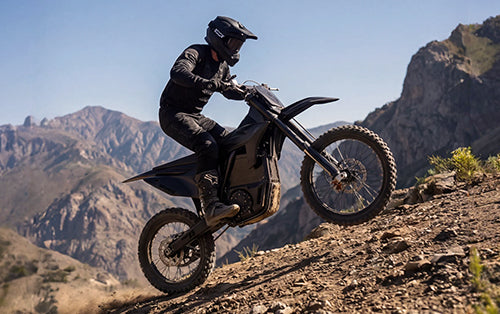
For off-road riding, this difference is especially noticeable.
On hills, loose terrain, and sections that require frequent speed control, when the power arrives and how easy it is to control are just as important as maximum power.
What Performance Level Do Qronge 4.5kW, 6kW, and 12kW Models Fall Into?
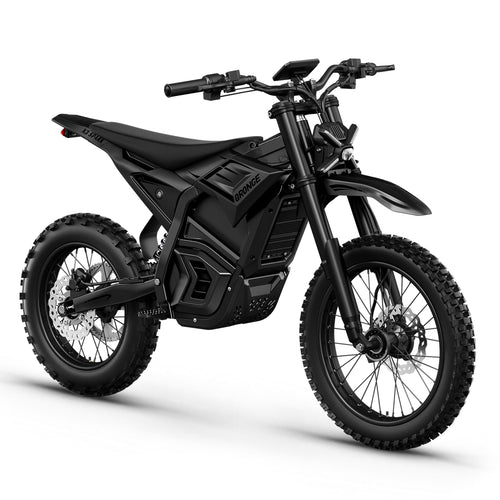
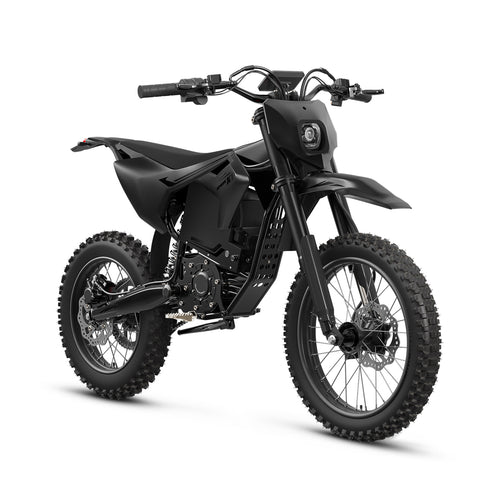
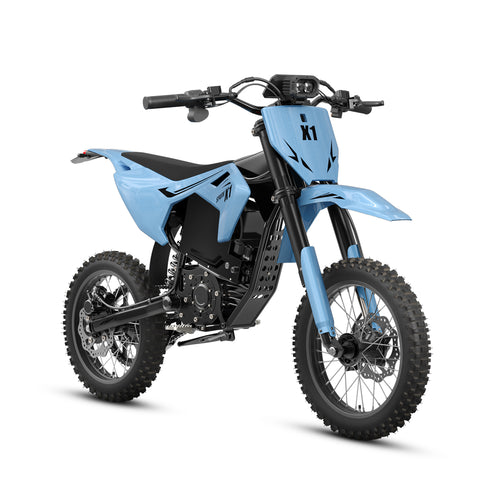
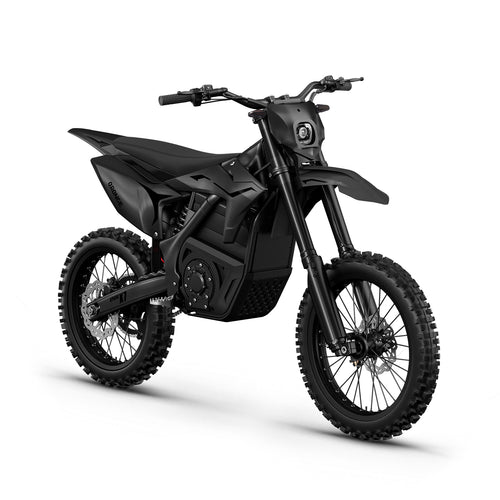
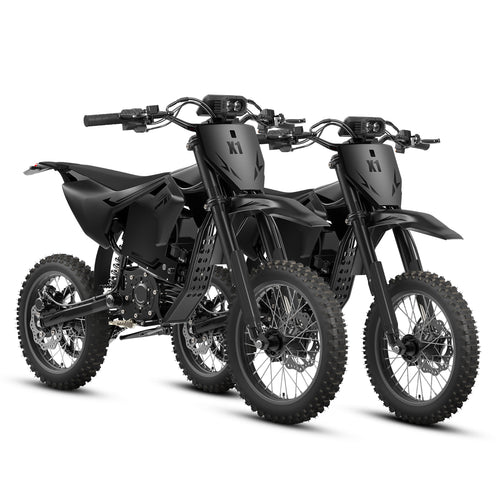
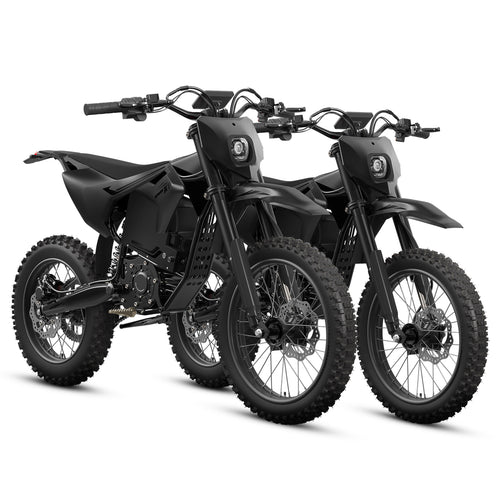
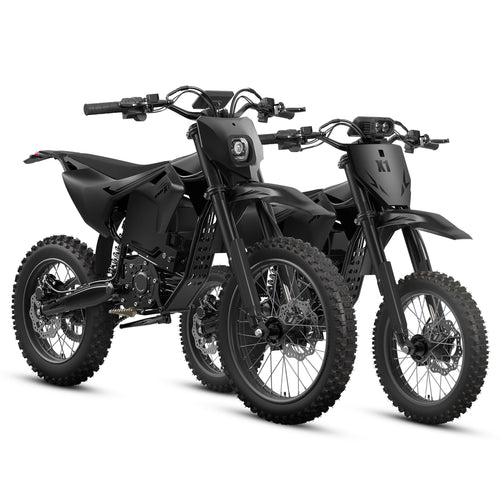
The Qronge X1 Spark M, X1 Spark L, X5 Spark, and X7 Spark cover power platforms ranging from 4.5kW to 12kW, making it easier to understand how performance changes as motor output increases.
|
Qronge Model |
Motor Output |
Converted Horsepower |
Rated Top Speed |
Gas Motorcycle Performance Reference |
|
X1 Spark M |
4.5kW peak |
6.0hp |
50mph |
About 50–125cc class |
|
X1 Spark L |
4.5kW peak |
6.0hp |
50mph |
About 50–125cc class |
|
X5 Spark |
6kW peak |
8.0hp |
65mph |
About 125cc class |
|
X7 Spark |
12kW peak |
16.1hp |
70mph |
About 125–250cc class |
X1 Spark M and X1 Spark L: Same Power, Different Bike Sizes
The X1 Spark M and X1 Spark L both use a 4,500W peak mid-drive motor, which converts to about 6.0hp, and both have a rated top speed of 50mph.
Based on power and speed, both models fall within the approximate performance range of 50–125cc small-displacement motorcycles.
However, the main difference between the two models is not motor output but bike size.
The X1 Spark M has a more compact overall size, while the X1 Spark L uses a 17/14-inch wheel setup. Differences in wheel size, seat height, and overall dimensions can affect riding position, steering feel, and stability over uneven terrain.
This also shows that even when two electric motorcycles have exactly the same motor power and top speed, their riding experience can still be different.
X5 Spark: 6kW Can Be Compared With the 125cc Class
The X5 Spark uses a 6,000W peak mid-drive motor, which converts to about 8.0hp, and has a rated top speed of 65mph.
Based on power output, 125cc can be used as a straightforward gas motorcycle performance reference for 6kW.
Compared with the 4.5kW platform, the higher output provides a higher speed ceiling while also offering more power reserve for hills, loose terrain, and repeated acceleration.
If you look only at top speed, the X5 Spark may overlap with some larger-displacement gas motorcycles. If you compare it by converted horsepower, it is closer to the 125cc class.
These two results are not contradictory because top speed and engine displacement are different performance indicators.
X7 Spark: 12kW Enters the 125–250cc Performance Range
The X7 Spark uses a 12,000W peak mid-drive motor, which converts to about 16.1hp, and has a rated top speed of 70mph.
Based on power output, it falls within the approximate performance range of 125–250cc gas motorcycles.
Because 12kW is a peak output figure, a more accurate way to understand it is that some aspects of the X7 Spark’s performance fall within this range, rather than directly defining it as a “250cc electric motorcycle.”
As power and speed increase, the motorcycle also places greater demands on the rider’s power control, braking, and overall handling skills.
Why Can Electric Motorcycles With the Same kW Still Perform Differently?
Motor power only explains part of a motorcycle’s overall performance.
Even if two electric motorcycles are both rated at 6kW, it does not mean they will have exactly the same speed, acceleration, or hill-climbing performance.
Other factors that affect actual performance include overall vehicle weight, drivetrain setup, motor layout, wheel size, battery, and controller.
Overall Vehicle Weight
When the same amount of power is used to move motorcycles with different weights, the power-to-weight ratio changes, so acceleration performance will also be different.
Drivetrain Setup
The gear ratio affects how the motorcycle distributes power between acceleration and top speed.
A setup focused on torque output usually places more emphasis on low-speed acceleration and hill-climbing performance, while a different drivetrain setup may allow the motorcycle to reach a higher top speed.
Motor Layout
A mid-drive motor is mounted in the middle of the frame, with power transferred to the rear wheel through the drivetrain. A rear hub motor is mounted directly in the rear wheel.
This structural difference changes weight distribution, unsprung mass, and how power is delivered. As a result, even with the same rated power, the motorcycles may feel different to handle on off-road terrain.
Wheel Size
Tire and wheel size affect not only terrain capability but also vehicle geometry, steering, and stability.
Even with the same motor output, different wheel setups can create different riding experiences.
Battery and Controller
High-power motors require the battery and controller to provide the corresponding current and power support.
If the system cannot maintain higher output for long periods, sustained riding performance may still differ even if the motorcycle has a high peak power rating.
To learn more about the differences between mid-drive and rear hub motors in power delivery, weight distribution, and off-road handling, read: Mid-Drive Motor vs Rear Hub Motor: What’s the Difference Between Mid-Drive and Rear Hub Motors on Electric Dirt Bikes?
What Other Specifications Should You Consider When Choosing an Electric Motorcycle?
If you have already used the relationship between kW and CC to get a general idea of the power range you need, the next step is to look at the motorcycle as a whole.
Battery
Voltage affects how the power system operates; Ah can indicate battery capacity, and Wh is more useful for comparing the actual amount of energy stored in the battery.
A larger motor does not automatically mean longer range.
Speed, grade, loose terrain, temperature, and rider weight can all affect actual energy consumption, so power and range should be evaluated separately.
Torque
Torque directly affects how strong the motorcycle feels during starts, acceleration, and hill climbing.
It is important to note that torque figures published for different models may be measured at different points, so they should only be compared directly when the measurement method is the same.
Bike Size and Rider Fit
Seat height, wheel size, frame size, and riding position all affect whether the rider can control the motorcycle steadily.
This is especially important for off-road models, where more power does not necessarily mean a better fit.
A higher-powered motorcycle that is clearly the wrong size for the rider is often harder to control than a moderately powered model with dimensions that fit the rider properly.
Suspension, Tires, and Brakes
On trails, gravel, continuous hills, and uneven terrain, suspension performance, tire grip, and braking capability all affect how effectively the available power can be used.
Therefore, when deciding whether an electric dirt bike is suitable, motor power is only one factor. Power, size, range, and overall vehicle control should also be considered together.
How Should You Understand “125cc Equivalent” or “250cc Equivalent”?
“125cc equivalent” is better used to describe the approximate performance range of an electric motorcycle.
For example:
A 6kW electric motorcycle converts to about 8.0hp. Based on power and intended use, a 125cc gas motorcycle can be used as an approximate performance reference.
But it should not be understood as:
A 6kW motor equals a 125cc engine.
Similarly, an electric motorcycle with 12kW peak power can fall within part of the performance range of 125–250cc gas motorcycles, but its actual performance will still be affected by continuous power, battery, controller, overall vehicle weight, and drivetrain setup.
Therefore:
12kW ≠ a fixed 250cc equivalent.
For riders who are already familiar with gas motorcycles, the main value of a CC comparison is to translate the less familiar kW rating into a more familiar power range, rather than assigning an engine displacement to an electric motorcycle.
Start With the Power You Actually Need
CC can help riders familiar with gas motorcycles understand an electric motorcycle’s kW rating, but when choosing a motorcycle, you also need to consider power, size, range, riding experience, and the main terrain you plan to ride.
The X1 Spark M and X1 Spark L both use a 4.5kW power platform but have different bike sizes. The X5 Spark increases power to 6kW, providing a higher speed ceiling and more power reserve. The X7 Spark uses 12kW peak output to enter a higher performance range.
Rather than focusing only on a single “CC equivalent” number, it is more important to determine whether the motorcycle’s power and overall setup match your actual riding needs.


