


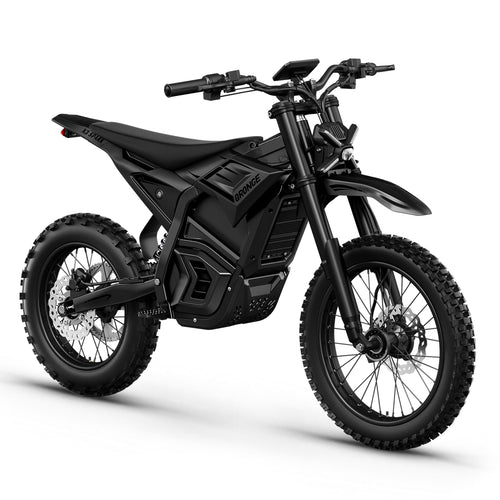
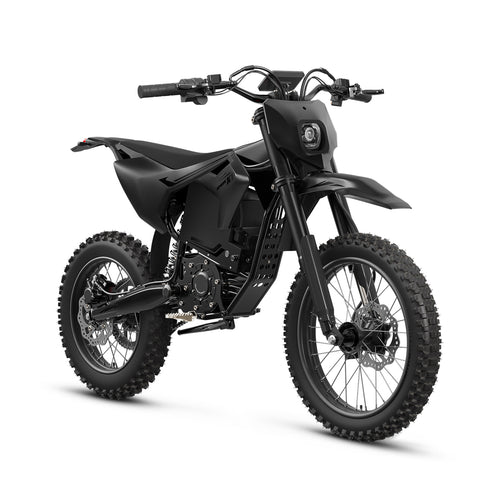
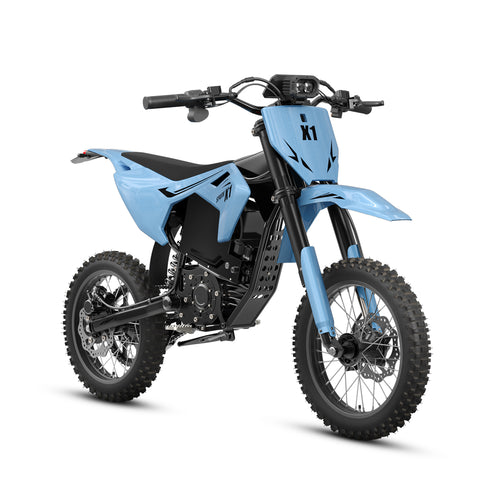
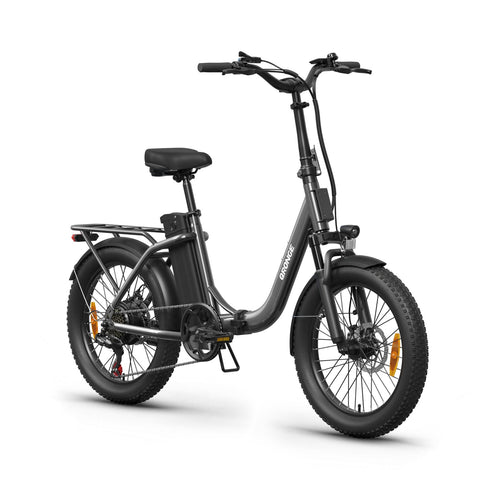

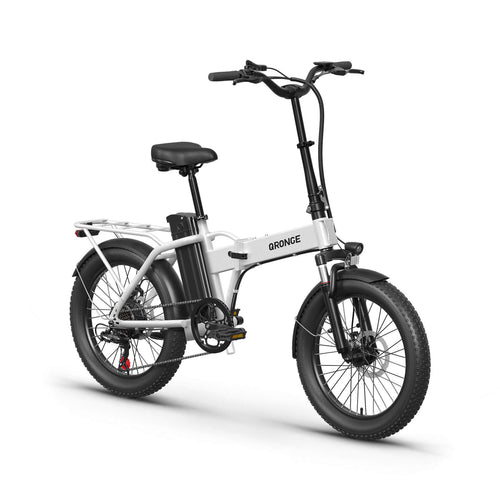
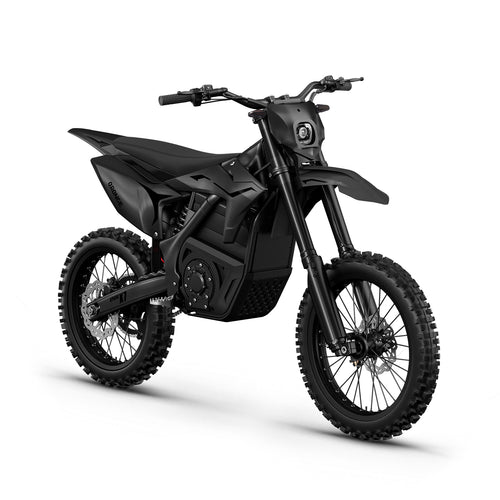


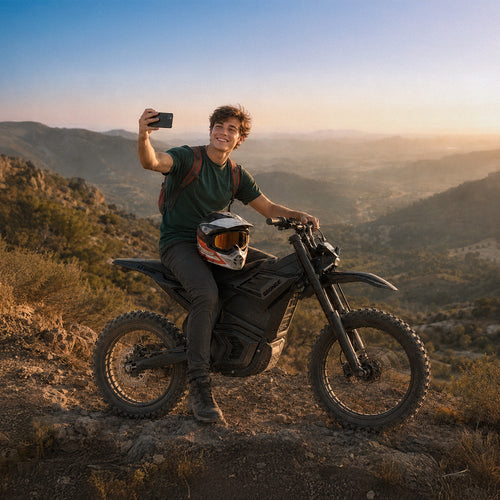
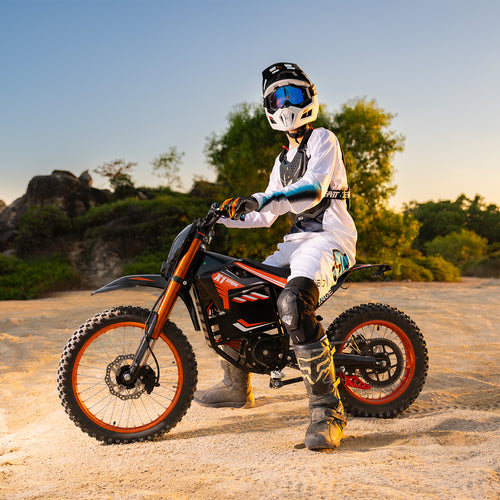

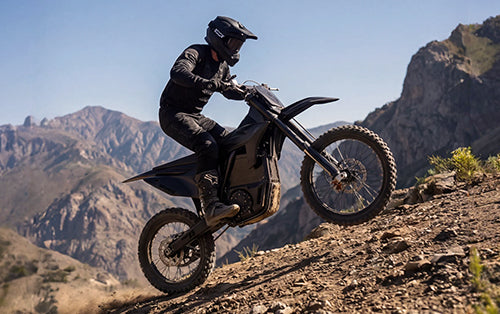

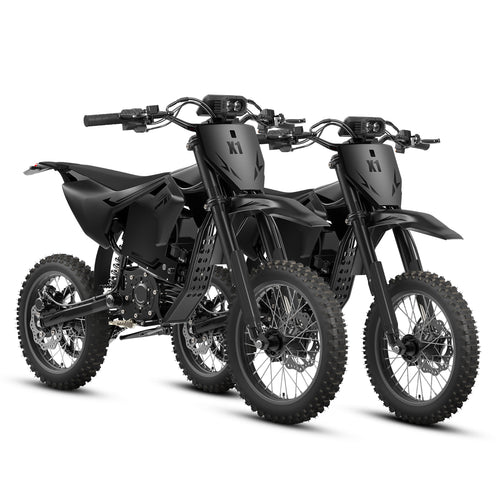
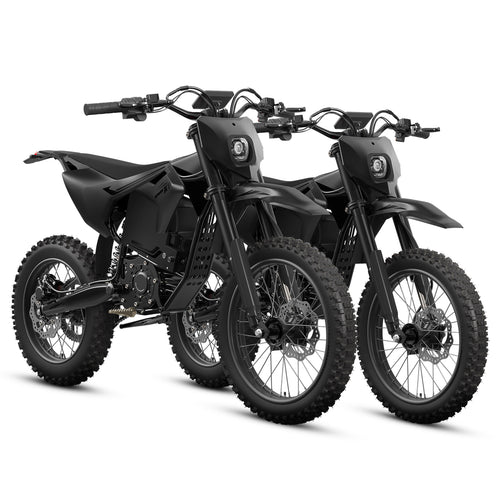
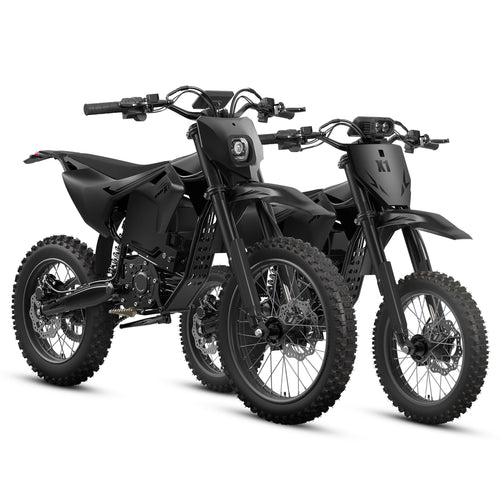
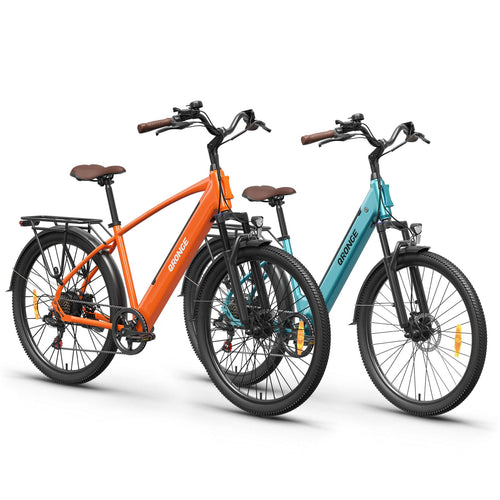


Electric dirt bikes and electric motorcycles both use a battery, motor, and controller to drive the wheels, and both can deliver more immediate power response than traditional gas-powered models. However, the two cannot replace each other simply by changing the tires or adjusting the speed. What truly determines a vehicle’s purpose is whether its frame, suspension, tires, power tuning, and road-compliance system are designed for the intended riding environment.
These differences in intended use also affect how the vehicles are classified under regulations. In market discussions, an electric dirt bike is often placed within the broader electric motorcycle category, but this does not mean that every electric dirt bike qualifies as a motorcycle under the NHTSA definition. The NHTSA classification first requires the vehicle to be a motor vehicle. Pure off-road models designed and sold primarily for use outside public roads may fall outside its regulatory scope. To avoid confusion, “electric motorcycle” in this comparison refers specifically to a street electric motorcycle designed mainly for paved surfaces and public roads.
Electric Dirt Bike vs Street Electric Motorcycle: Quick Comparison
|
Comparison |
Electric Dirt Bike |
Electric Motorcycle |
|
Primary Riding Environment |
Trails, gravel, mud, sand, and closed off-road areas |
City streets, suburban roads, and paved highways |
|
Design Focus |
Low-speed control, terrain capability, and maneuverability |
Sustained speed, road stability, and adaptability to traffic conditions |
|
Frame and Riding Position |
Narrow body for standing while riding and shifting body weight |
Wider seat designed for a stable seated riding position |
|
Tires |
Deep-tread or knobby off-road tires |
Street tires better suited to paved surfaces |
|
Suspension |
Designed to absorb larger bumps and repeated impacts |
Designed for stability during braking, cornering, and road riding |
|
Power Delivery |
Focuses on low-speed torque and throttle response |
Focuses on sustained acceleration and cruising at higher speeds |
|
Range Planning |
Strongly affected by slopes, surface resistance, and frequent acceleration |
Strongly affected by sustained speed, wind resistance, and traffic conditions |
|
Legal Use |
Private property, OHV areas, and routes open to motor vehicles |
Public paved roads after meeting local requirements |
Riding Environment Shapes the Vehicle’s Core Design
An electric dirt bike does not operate on consistently smooth surfaces. Instead, it faces constantly changing levels of traction. The front wheel may move from hard-packed dirt directly into loose gravel, ruts, or mud. The rider must quickly adjust body position, stand to reduce the impact of rough terrain, and control both front-wheel direction and rear-wheel power at low speeds.
For this reason, models designed as an electric dirt bike for trail riding typically feature a narrower body, a seat area that is easier to grip, higher ground clearance, and handlebar and footpeg positions that allow the rider to move forward and backward more easily. The vehicle may not always be lighter than a street motorcycle, but its weight distribution and frame geometry place greater emphasis on low-speed corrections, hill starts, and the ability to move through difficult terrain.
Electric motorcycles operate in relatively stable conditions. They need to travel in a straight line, change lanes, corner, and brake repeatedly on paved roads while keeping pace with other vehicles. As a result, these motorcycles typically have more complete bodywork, wider seats, a riding triangle better suited to extended seated riding, and stability designed around higher road speeds.
Tires, Suspension, and Brakes Are More Than Simple Specification Differences
The deeper tread blocks on off-road tires can find traction on loose dirt, mud, and gravel, but they may create a more noticeable rolling feel and more tire noise on smooth roads. Road tires have a more continuous contact patch and can provide more stable steering feedback on dry or wet pavement, but they are not suited to deep mud, loose sand, or repeated ruts.
Suspension differences also cannot be judged by travel numbers alone. Electric dirt bike suspension must handle rocks, roots, drops, and repeated uneven terrain, then recover quickly after compression to help the wheels maintain contact with the ground. Electric motorcycle suspension must control front-end dive during braking, provide support through corners, and manage body movement at higher speeds. Even when two motorcycles have similar front fork travel, their internal damping, spring settings, and chassis geometry may be completely different.
The goals of brake tuning are also different. Off-road riding often takes place on low-traction surfaces, so riders need precise control over braking force to prevent the wheels from locking suddenly. Electric motorcycles must provide stable, predictable, and repeatable braking at higher speeds. Brake disc diameter is only one factor; tire grip, vehicle weight, caliper design, and brake force distribution all affect actual stopping distance.
Similar Motor Power Does Not Mean the Same Power Experience
When comparing electric vehicles, consumers often look first at peak power. However, peak power only indicates the motor’s maximum output under specific conditions. By itself, it does not represent acceleration, climbing ability, or sustained high-speed performance.
Electric dirt bikes place greater emphasis on torque response at low to medium speeds. After entering a steep slope, loose surface, or sharp turn, the rider needs to regain power quickly without suddenly causing the rear tire to lose traction. Controller tuning, gear ratio, rear wheel size, and riding modes all affect how easy the throttle is to control.
In addition to initial acceleration, an Electric Motorcycle must consider motor efficiency, heat management, and power stability at sustained speeds. It may have a higher top speed on the road, but a higher top speed does not make it more suitable for off-road riding. Likewise, a higher electric dirt bike top speed does not prove that the vehicle is suitable for highway cruising, because its tires, frame, suspension, and road certification may still be designed for off-road use.
Therefore, when comparing the two types of vehicles, instead of asking only which one is faster, it is more useful to determine whether the power suits your route. Off-road routes require controllable torque and the ability to regain speed across difficult terrain, while road routes require sustained speed and stable power delivery in traffic.
Range Figures Must Be Understood in Relation to Riding Conditions
Even when two vehicles have the same battery capacity, they may deliver completely different real-world range. Soft terrain increases tire rolling resistance, continuous climbing requires the motor to operate under high load for extended periods, and frequent hard acceleration continues to increase current demand. Therefore, the range measured for an off-road model on flat, hard-packed ground cannot directly represent its performance on mud, sand, or mountain routes.
When evaluating electric dirt bike battery range, riders should consider total route length, cumulative elevation gain, terrain type, riding mode, rider and gear weight, tire pressure, and the power needed for the return trip. Off-road routes often have limited charging access, so the maximum stated range should not be treated as fully usable mileage. Riders should also reserve enough power for detours, low temperatures, and continuous climbs.
The range of an Electric Motorcycle also changes with riding conditions. Low-speed city riding and energy recovery may use less power than sustained high-speed cruising, while air resistance increases quickly as speed rises. Road riders need to consider charging locations, charging ports, and stop times, while off-road riders need to confirm charging at the starting point, whether the battery is removable, and how the vehicle will be transported back.
Legal Riding Depends on the Vehicle and the Location
Installing a headlight, taillight, turn signals, and mirrors does not mean a vehicle has become a street legal electric motorcycle. Public-road use usually also involves vehicle classification, a vehicle identification number, compliance documents, registration, a license plate, insurance, and local licensing requirements. The NHTSA requires motor vehicles sold in the United States to receive vehicle identification numbers under the applicable rules, but specific registration and riding requirements must still be confirmed under state and local regulations.
Electric dirt bike license requirements also cannot be answered with a single “yes” or “no.” Riding on private property or a closed course may involve different registration, permit, age, and equipment requirements than riding on state OHV routes, public roads, or national forest routes. Riders should check both the vehicle classification and the area they plan to enter rather than relying only on the product name.
Within national forests, a Motor Vehicle Use Map lists the roads and routes open to motor vehicles, along with opening dates and seasonal restrictions. Routes not shown on the applicable MVUM cannot be assumed to be open to motor vehicles. BLM-managed areas also classify OHV routes as open, limited, or closed and require vehicles to follow applicable state regulations.
An electric vehicle does not automatically qualify for access to nonmotorized trails simply because it is quieter. A high-powered off-road electric motorcycle is not the same category as a Class 1, 2, or 3 electric bicycle, and a route that allows bicycles cannot automatically be understood to allow electric dirt bikes. The BLM also requires explicit authorization before electric bicycles can enter nonmotorized routes.
To learn more about how vehicle classification and riding location affect licensing, read: Do You Need a License to Drive an Electric Dirt Bike
Transportation, Maintenance, and Ownership Costs Should Be Considered in Advance
Electric dirt bikes usually need to be transported to an approved riding area. Before purchasing, riders should look beyond the vehicle price and confirm whether a pickup bed, trailer, or carrier can support the vehicle’s weight and whether suitable tie-down points are available. After riding, mud and sand must be cleaned off, and the tires, spokes, brake pads, drivetrain components, and suspension should be checked for impact damage.
An Electric Motorcycle can usually be ridden directly from home to the destination, but it may involve costs for registration, insurance, road equipment, parking, and charging. Tire life is easier to predict on paved roads, although sustained high-speed riding also creates wear.
Both types of vehicles reduce the need for oil changes, exhaust system service, and traditional engine maintenance, but this does not mean they are maintenance-free. Battery storage temperature, charging habits, brake systems, tire condition, bearings, and drivetrain design still affect the long-term ownership experience.
Which One Is Right for You?
If you mainly ride on trails, gravel, grass, or closed off-road courses, value low-speed torque, difficult-terrain capability, and standing control, and can transport the vehicle by pickup truck, trailer, or another method, an electric dirt bike better fits your actual needs. Before choosing one, you should also confirm whether local off-road routes or riding areas allow motor vehicles.
If your main use is city commuting and paved-road riding, you need to travel directly from home to work or other daily destinations, and you value sustained speed, lighting systems, and road stability, an Electric Motorcycle will be more suitable. Riders must also complete any required registration, licensing, insurance, and driving procedures under local regulations.
Some riders want one vehicle to handle both serious off-road riding and daily road commuting, but these two environments place different demands on vehicle design. Off-road tires, suspension, and body layout may not suit sustained road riding, while the weight, tires, and riding position of a road-focused model may limit maneuverability in mud, ruts, and steep terrain.
Electric dirt bikes and Electric Motorcycles are not simply better or worse than one another. The former designs its power, suspension, and chassis around changing terrain, while the latter focuses on sustained speed, stability, and legal use on public paved roads. When choosing, first identify the routes you ride most often, then compare battery capacity, power, range, and price instead of looking for one vehicle with no trade-offs in every situation.


