


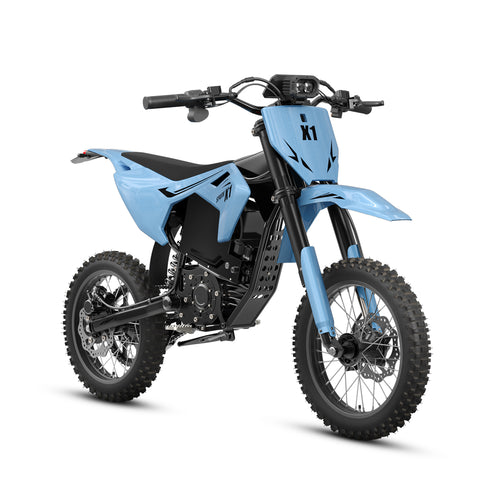
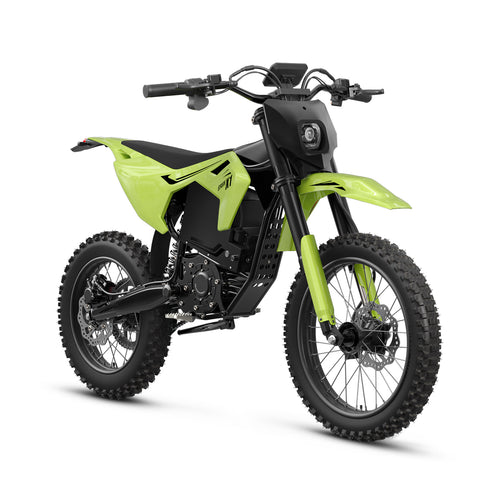

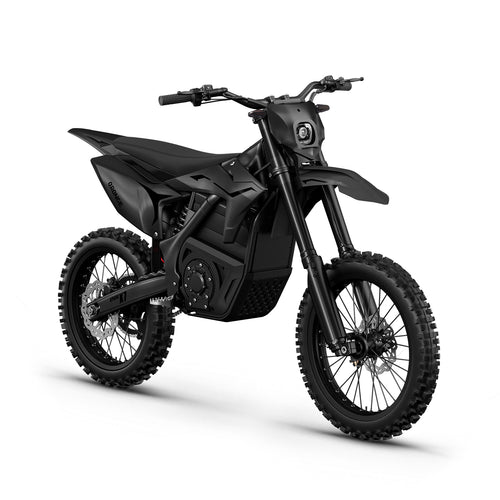
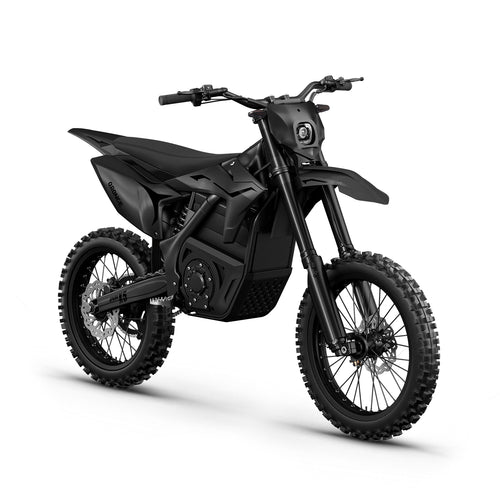


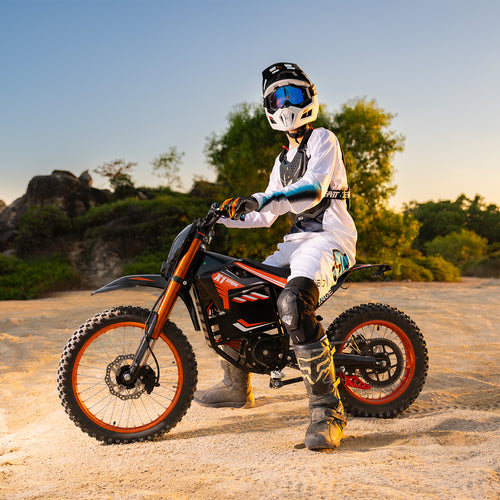
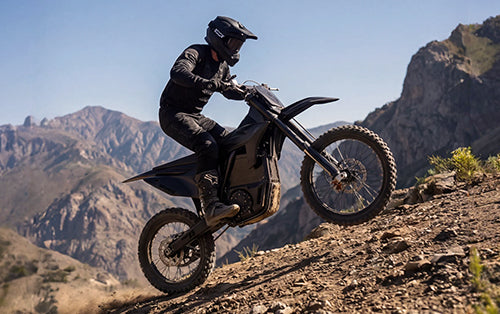

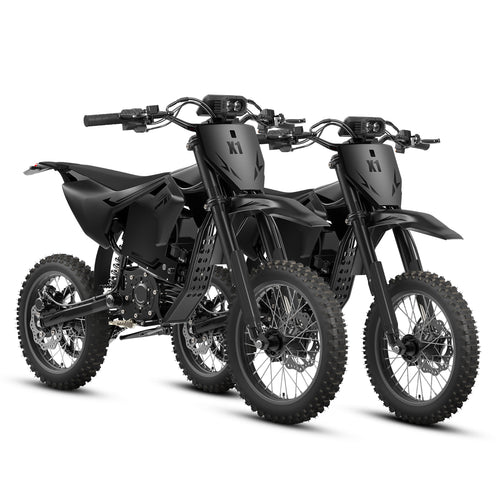
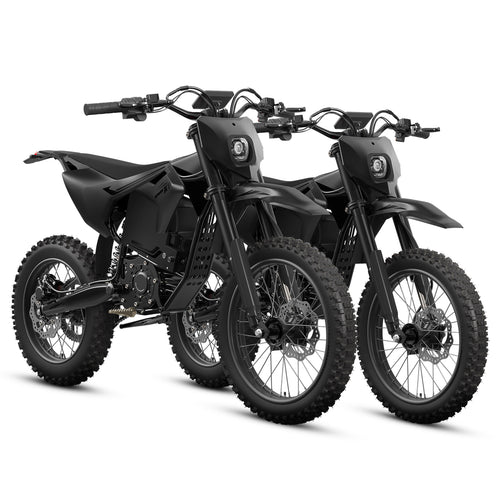
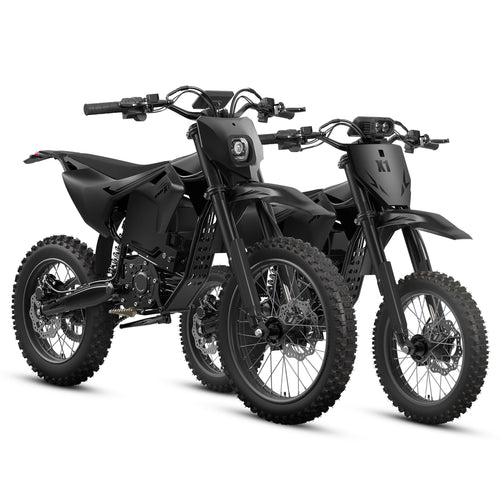


The GT54 Pro and X1 Spark M both feature a 14-inch front wheel, a 12-inch rear wheel, a 60V battery, and multiple power settings. For riders looking for a compact electric dirt bike, these two models naturally fall within the same consideration set.
However, similar specifications do not necessarily create the same riding experience. The GT54 Pro combines 3,000W of peak power, a 60V 25Ah battery, and three speed levels. The X1 Spark M Mini Electric Dirt Bike features 4,500W of peak power, a 60V 28.8Ah battery, and ECO, Sport, and Turbo riding modes.
The key question is not which bike leads in every category, but how each model combines power, speed, range, suspension, braking, and price—and whether that combination fits the rider’s usual routes.
GT54 Pro vs X1 Spark M Specifications
|
Specification |
Ridingtimes GT54 Pro |
Qronge X1 Spark M |
|
Price |
$1,199.00 |
$999.99 |
|
Peak Motor Power |
3,000W |
4,500W |
|
Maximum Torque |
338 N·m |
283 N·m |
|
Battery |
60V 25Ah |
60V 28.8Ah |
|
Charger |
67.2V 3A |
67.2V 2A |
|
Top Speed |
40 mph |
50 mph |
|
Maximum Range |
62 miles |
Up to 60 miles |
|
Riding Modes / Speed Levels |
15 / 22 / 40 mph |
ECO / Sport / Turbo |
|
Front Tire |
60/100-14 |
14 × 2.4 in |
|
Rear Tire |
60/100-12 |
12 × 3.0 in |
|
Braking System |
Front and rear hydraulic disc brakes + electronic braking |
200 × 3 mm hydraulic disc brakes |
|
Front Suspension |
Adjustable hydraulic front suspension, 8.3 in |
150 mm front suspension |
|
Rear Suspension |
Rear shock absorber |
75 mm rear suspension |
|
Recommended Rider Height |
4'2"–5'9" |
4'0"–5'5" |
|
Wheelbase |
41.7 in |
43 in |
X1-M
How Do Power and Speed Settings Feel in Real-World Riding?
The GT54 Pro delivers 3,000W of peak power and 338 N·m of torque, with three speed levels limited to 15, 22, and 40 mph. Its setup is straightforward: choose a speed range before riding. New riders can start in the lowest setting, then move up gradually as they become more familiar with the bike and the riding area.
The X1 Spark M delivers 4,500W of peak power and 283 N·m of torque, with a top speed of 50 mph. Instead of using only fixed speed limits, it adjusts power and range through ECO, Sport, and Turbo modes:
- ECO mode: up to 60 miles, 110 N·m of torque;
- Sport mode: up to 30 miles, 185 N·m of torque;
- Turbo mode: up to 50 mph, 283 N·m of torque.
The difference between the two bikes is not simply that one has more power while the other has more torque. The GT54 Pro separates its speed ranges clearly, allowing riders to choose a level based on the riding area. The X1 Spark M adjusts power and range together, allowing riders to reduce output on longer routes and switch modes when more power is needed.
In real-world riding, torque directly affects starts, low-speed traction, and uphill response, while peak power has more influence on sustained acceleration and available output at higher speeds. The choice mainly depends on whether the rider prefers fixed speed levels or wants to adjust power and range based on the route.
Battery Capacity, Range, and Charging
The GT54 Pro uses a removable 60V 25Ah battery, provides 62 miles of range, and comes with a 67.2V 3A charger. A full charge takes approximately 8 to 8.5 hours.
The X1 Spark M uses a 60V 28.8Ah battery with 1,728Wh of energy, provides up to 60 miles of range, and comes with a 67.2V 2A charger. It also provides range figures for different modes: up to 60 miles in ECO, up to 30 miles in Sport, and approximately 21 miles in Turbo.
The battery and charging setups of the two bikes address different needs:
The GT54 Pro includes a 3A charger and a removable battery, allowing riders to take the battery indoors for charging or replacement.
The X1 Spark M has a larger battery capacity and provides clearer range figures for each mode. Before setting out, riders can plan battery use based on route length, hills, and the expected riding mode instead of relying only on a single maximum-range figure.
When a route includes flat sections, gravel, hills, and open areas, the X1 Spark M can distribute battery use through mode changes. Riders can use ECO or Sport for longer rides and switch to Turbo when more power is needed for a shorter period, making it easier to balance range and output.
How Do Suspension and Braking Handle Continuous Changes in Terrain?
The suspension system does more than absorb a single impact. It also helps the tires maintain contact through continuous gravel, shallow holes, uneven grass, and changing slopes.
The GT54 Pro uses adjustable hydraulic front suspension and a rear shock absorber. The adjustable setup allows riders to change the front-end response based on rider weight, terrain, and personal preference. For braking, it uses front and rear hydraulic disc brakes with electronic braking.
The X1 Spark M uses 150 mm front suspension and 75 mm rear suspension. The front suspension absorbs the uneven surfaces encountered by the front wheel first, while the rear suspension helps the rear wheel maintain contact when riding over gravel, shallow holes, and grass. It uses 200 × 3 mm hydraulic disc brakes, providing a clear braking hardware foundation for its 50 mph speed range.
For an electric dirt bike for trail riding, the suspension and brakes need to work together:
- The brakes help the rider reduce speed before entering uneven terrain;
- The front suspension handles the first impact encountered by the front wheel;
- The rear suspension helps the rear wheel continue delivering power;
- After clearing the obstacle, stable chassis feedback helps the rider accelerate again.
The GT54 Pro provides adjustable front suspension and electronic braking, allowing riders to make changes based on their riding preferences. The X1 Spark M provides clearly stated front and rear suspension travel along with 200 × 3 mm hydraulic disc brakes, making it easier to assess its equipment for regular outdoor routes.
What Do They Have in Common in Terms of Handling with the Same Wheel Sizes?
Both the GT54 Pro and X1 Spark M use a 14-inch front wheel and a 12-inch rear wheel. Compared with full-size electric dirt bikes, this compact wheel setup reduces the bike’s overall space requirements and makes it easier to change direction through corners, wooded trails, and campground areas.
The GT54 Pro uses a 60/100-14 front tire and a 60/100-12 rear tire. The X1 Spark M uses a 14 × 2.4-inch front tire and a 12 × 3.0-inch rear tire. Because the two models use different tire measurement formats, each setup is better evaluated together with tread pattern, tire pressure, and actual terrain.
With a 14"/12" wheel setup, the front wheel mainly affects steering and line choice, while the rear wheel delivers drive power and influences traction on hills and softer ground. Actual handling is also affected by wheelbase, suspension, bike weight, and rider input, so it cannot be judged by tire dimensions alone.
The X1 Spark M combines a 12 × 3.0-inch rear tire with its 4,500W power system, providing a larger rear contact area for gravel, dirt, grass, and common outdoor routes. The GT54 Pro uses motorcycle-style tires at both ends, which work together with its compact frame and speed levels as part of the bike’s overall control system.
Which One Better Fits Your Riding Needs?
Choosing between the GT54 Pro and X1 Spark M ultimately depends on how the rider plans to use the bike. Both are compact, high-powered electric motorcycles, but they serve different needs.
Consider the GT54 Pro when these features matter more:
- Clear speed levels: Three settings at 15, 22, and 40 mph make it easy to choose a speed range before riding.
- Lighting and turn signals: LED headlights, taillights, and turn signals make the bike easier to see in different lighting conditions.
- Charger specifications: The 67.2V 3A charger suits riders who pay more attention to daily charging arrangements.
- Suspension adjustment: The adjustable hydraulic front suspension allows riders to change front-end feedback based on the rider and terrain.
- Electronic braking: Electronic braking is added to the front and rear hydraulic disc brakes.
Consider the Qronge X1 Spark M when your riding includes these needs:
- A wider power range: The 4,500W peak power provides more output for starts, hills, and repeated acceleration.
- A higher speed limit: The 50 mph top speed can cover open dirt roads, farm routes, and larger private riding areas.
- Mode changes based on the route: ECO, Sport, and Turbo allow riders to switch between range, regular riding, and higher-power needs.
- A larger battery: The 60V 28.8Ah battery provides an energy base for longer outdoor rides.
- Clear off-road hardware: The 150 mm front suspension, 75 mm rear suspension, and 200 × 3 mm hydraulic disc brakes support regular trails, gravel, and grass.
- Core performance value: At $999.99, it provides 4,500W of power, a 50 mph top speed, and 1,728Wh of battery capacity.
Riders looking for a small electric dirt bike for adults should not decide based only on bike size. Both models have high power and speed, so the rider needs to maintain stable control of the throttle, brakes, and bike weight, while also having access to a spacious area where this type of vehicle is clearly allowed.
The decision is not simply about which bike is “better,” but which set of features is closer to the rider’s actual needs. The GT54 Pro provides tiered speed levels, a 3A charger, adjustable suspension, and lighting equipment. The Qronge X1 Spark M provides higher peak power, a larger battery, a higher top speed, and three riding modes at a lower price.
Put Speed, Range, and Control Back into Real-World Routes
The GT54 Pro combines 3,000W of power, three speed levels, a 3A charger, adjustable front suspension, electronic braking, and lighting features. It suits riders who value clear speed control, charging arrangements, and additional equipment.
The Qronge X1 Spark M combines 4,500W of peak power, a 60V 28.8Ah battery, a 50 mph top speed, three riding modes, and a $999.99 price, with a setup focused more closely on power, range, and recreational off-road riding. For riders who want to switch between low-speed practice, regular trail riding, and higher-power modes on the same bike, this combination provides a clear path for use.
The final choice should come back to three questions: what kind of terrain you ride most often, how much range you need for each ride, and how much power you can control confidently. The bike that matches your actual routes and riding ability is the one worth choosing.


