








How well a bike rides does not depend on any single number.
Riders need to change direction quickly in tight turns, maintain rear-wheel traction on gravel slopes, and consider the remaining battery level as the route gets longer. Different riders also expect different things from a bike: some prefer light, direct handling feedback, while others place greater importance on stability, riding modes, and enough range to complete the ride.
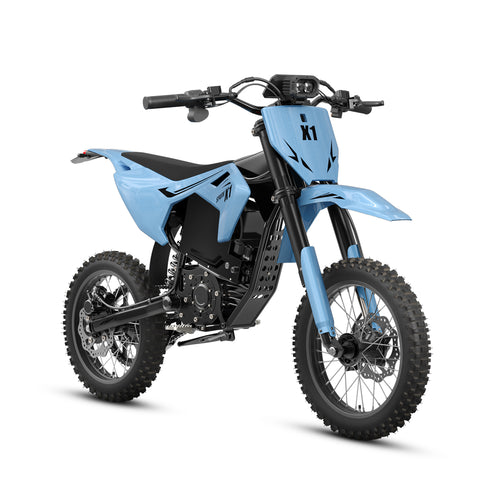
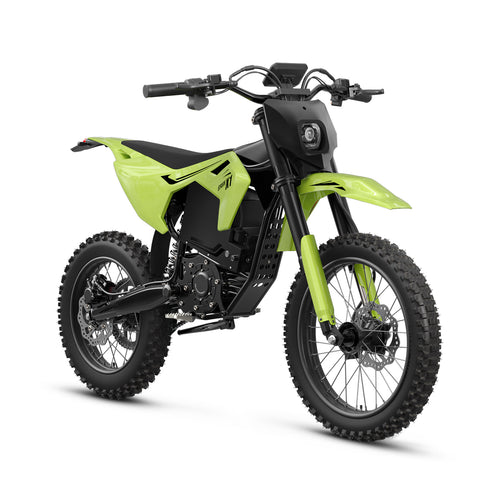
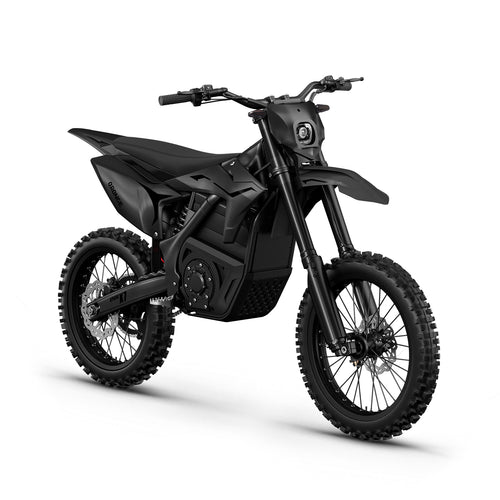
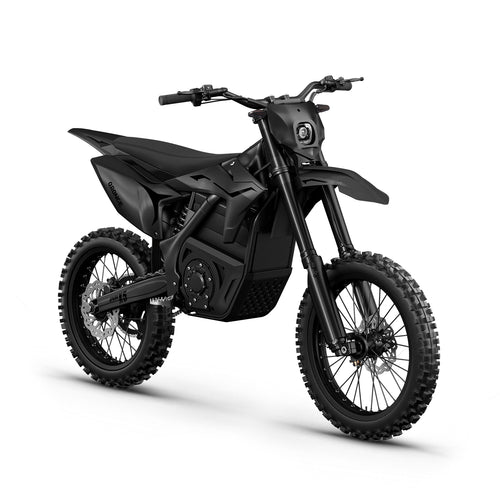
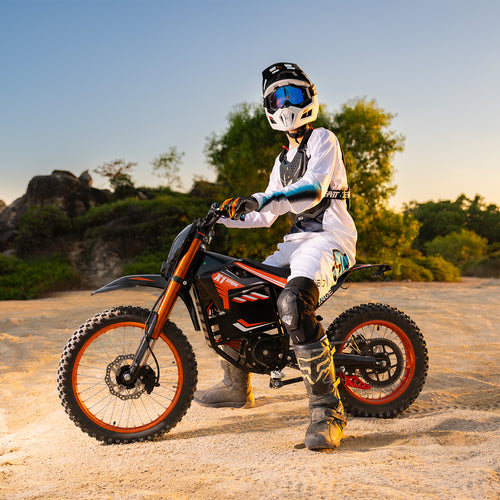
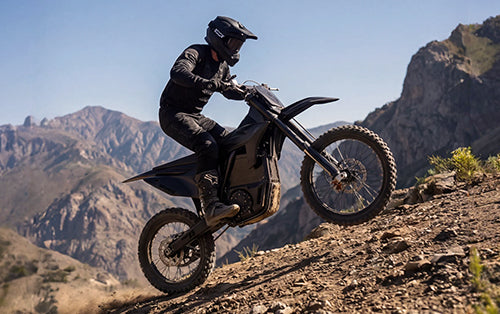
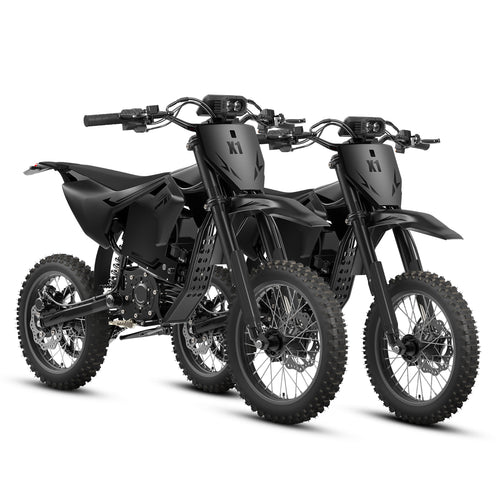
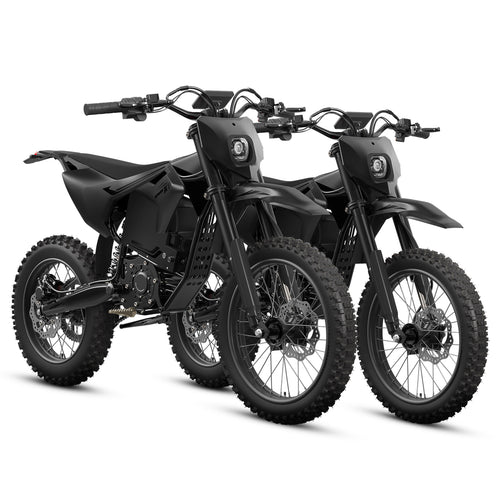
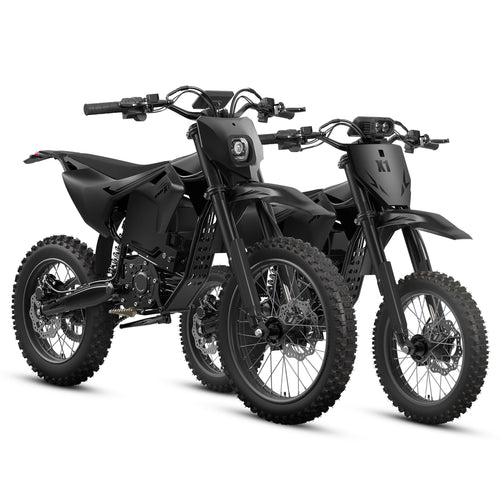
The Sur-Ron Hyper Bee and Qronge X1 Spark M both use compact wheel setups, but they take different approaches to what makes a bike enjoyable to ride. The Hyper Bee focuses on a lightweight chassis, power response, and suspension travel, while the X1 Spark M places more emphasis on speed range, battery capacity, and switching between different riding modes.
The real question in this comparison is not which bike has the biggest individual specifications, but which setup better matches the routes a rider uses most often.
Sur-Ron Hyper Bee vs Qronge X1 Spark M Specifications
|
Specification |
Sur-Ron Hyper Bee |
Qronge X1 Spark M |
|
Peak Power |
8,000W |
4,500W |
|
Motor Type |
Longitudinal Permanent-Magnet Synchronous Motor |
Mid-Drive Motor |
|
Battery |
58V 22Ah |
60V 28.8Ah |
|
Battery Capacity |
Approx. 1,276Wh |
1,728Wh |
|
Top Speed |
40 mph |
Up to 50 mph |
|
Claimed Range |
35 miles, tested at about 25 mph |
Up to 60 miles |
|
Claimed Torque |
136 ft-lbs, approx. 184Nm of wheel torque |
283Nm, measurement point not specified |
|
Riding Modes |
3 Modes + Reverse |
ECO, Sport, Turbo |
|
Bike Weight |
Approx. 86 lbs |
143 lbs |
|
Front/Rear Wheel Sizes |
14"/12" |
14"/12" |
|
Front Suspension Travel |
Approx. 170mm |
150mm |
|
Rear Suspension Travel |
Approx. 185mm |
75mm |
|
Brakes |
Front and Rear Hydraulic Disc Brakes |
Front and Rear Hydraulic Disc Brakes |
|
Brake Rotors |
180mm Front, 160mm Rear |
200mm × 3mm |
What Is Different About the Tire Setup Despite the Same Wheel Sizes?
Both bikes use a 14-inch front wheel and a 12-inch rear wheel, but their tire specifications and design priorities are not the same.
The Hyper Bee is equipped with a 60/100-14 front tire and a 70/100-12 rear off-road tire. The “60” and “70” indicate the nominal tire widths, while “100” indicates the ratio of the tire height to its width. This setup maintains relatively narrow front and rear tire profiles. Combined with the lighter overall weight, it helps create agile, direct steering feedback. In tight turns, quick direction changes, and sections that require frequent line adjustments, riders can respond more quickly to the front wheel and chassis movement.
The X1 Spark M uses a 14" × 2.4" front tire and a 12" × 3.0" rear tire. The front tire is close in width to the Hyper Bee’s front tire, while the rear uses a wider 3.0-inch size. The wider rear tire increases the contact area with the ground, helping the mid-drive motor deliver power more steadily on gravel, dirt, grass, and softer surfaces.
Both front- and rear-tire setups follow the off-road principle that the front wheel handles direction while the rear wheel provides drive and traction, but their priorities differ. The Hyper Bee places more emphasis on a light feel and line correction, while the X1 Spark M focuses more on rear-wheel traction, straight-line stability, and sustained power delivery.
For riders choosing a mini electric dirt bike, wheel diameter determines the bike’s general size, while tire width, tread pattern, and front-to-rear setup further affect steering feel, traction, and performance across different surfaces.
X1-M
Two Power Configurations, Two Riding Rhythms
The Hyper Bee combines its power system with a lower overall weight, placing more emphasis on quick response. On short climbs, consecutive turns, or routes that require frequent changes in body position, riders can quickly feel how the bike reacts to throttle input.
The X1 Spark M uses a 4,500W mid-drive motor and offers ECO, Sport, and Turbo modes for different riding rhythms. ECO helps control power consumption and extend riding time; Sport balances power and range; Turbo delivers the full range of speed and torque output.
For this reason, power figures are not the only factor to consider. The Hyper Bee is better suited to riders who prefer direct feedback and active chassis control, while the X1 Spark M allows riders to adjust the power mode based on experience, terrain, and remaining battery level.
For forest trails, areas around campsites, and open private land, multiple riding modes mean the bike does not have to use the same level of output throughout the entire ride. Riders can preserve range on flatter sections, then switch to a higher-power mode for climbs and softer terrain, making the full route easier to manage.
How Does Weight Affect Real-World Riding?
The Hyper Bee weighs about 86 lbs, with its advantage mainly seen in moving the bike and making quick adjustments. When the bike needs to be loaded frequently, redirected through tight turns, or actively controlled on technical sections, the lower weight can reduce physical effort for the rider.
The X1 Spark M weighs 143 lbs, but it is not designed around lightweight construction alone. Its larger battery, wider rear tire, and more substantial chassis work together to create a more stable riding foundation. On gravel, grass, and open forest trails, riders can maintain a more consistent line without relying on frequent, large body movements to correct the bike.
For this reason, the weight difference should be considered together with the intended riding environment. Riders who transport the bike often, navigate tight turns, or perform more technical maneuvers may place greater value on the Hyper Bee. Those who prioritize route stability, battery capacity, and longer riding sessions may find the X1 Spark M better suited to their needs.
What Types of Terrain Suit 40 mph and 50 mph?
The Hyper Bee has a top speed of 40 mph, while the X1 Spark M can reach up to 50 mph. Both bikes have reached a performance level that requires careful throttle control, braking, and route selection.
On off-road courses with tight turns, frequent elevation changes, or limited space, riders rarely have the opportunity to maintain top speed for long. In these conditions, it is more important to consider whether the bike can slow down, turn, and accelerate again in time, and whether the chassis and suspension can handle constantly changing terrain.
The Hyper Bee’s speed setup works together with its lighter chassis, higher peak power, and long-travel suspension, making it better suited to technical routes with frequent changes in pace.
The X1 Spark M’s higher speed limit provides a wider speed range for open dirt roads, farm routes, and larger private riding areas. Riders can also use ECO, Sport, and Turbo modes to control output based on route length and surface conditions, without always riding at top speed.
For this reason, 40 mph and 50 mph are not simply a matter of lower versus higher speed. The more turns and terrain changes a route has, the more important the bike’s overall setup becomes; the more open the route, the easier it is to make use of a higher speed reserve.
How Do Battery and Range Affect a Full Day of Riding?
The Hyper Bee uses a 58V 22Ah battery with a claimed range of 35 miles, while the X1 Spark M uses a 60V 28.8Ah battery with a claimed range of up to 60 miles.
The Hyper Bee uses a relatively compact battery to help control overall weight, making it better suited to short technical rides, repeated practice sessions, and agile handling.
The X1 Spark M has a 1,728Wh battery capacity and can reach up to 60 miles in ECO mode, about 30 miles in Sport mode, and up to about 21 miles in Turbo mode. Riders can adjust the balance between range and power based on the day’s route.
The most direct effect of these differences is how the ride is planned. On shorter routes with more technical sections, bike weight and response may matter more. On longer routes, or when riders do not want to return frequently to a charging point, a larger battery and multiple riding modes may be more practical.
Actual range is also affected by elevation, temperature, tire pressure, soft terrain, rider weight, and throttle use. The claimed range is better used as a reference for route planning rather than a fixed result.
What Types of Terrain Suit Each Suspension Setup?
The Hyper Bee has about 170mm of front suspension travel and about 185mm of rear suspension travel. The longer travel provides more room to absorb repeated elevation changes, ruts, and landing impacts, making it better suited to routes with frequent terrain changes and riding styles that actively use the suspension.
The X1 Spark M uses 150mm of front suspension travel and 75mm of rear suspension travel. It is mainly designed for forest trails, gravel, grass, shallow holes, and common off-road bumps. Its focus is not frequent jumps with large drops, but maintaining a stable, controlled riding pace on regular outdoor routes.
Both bikes use front and rear hydraulic disc brakes. Actual braking performance depends not only on rotor size, but also on bike weight, tire traction, surface conditions, and rider input. Before entering soft dirt, riders should first become familiar with front-to-rear brake balance to avoid suddenly locking a wheel on low-traction surfaces.
How Should You Choose Based on Real Riding Needs?
The Sur-Ron Hyper Bee is better suited to riders who value lightweight handling, quick steering, and technical-trail performance. The Qronge X1 Spark M is better suited to riders who prioritize wide rear-tire traction, a 50 mph speed range, a larger battery, and multiple riding modes.
The final choice should come back to real needs: the terrain you ride most often, the range needed for each ride, and the level of power you can control confidently.
The electric dirt bike that best matches your regular routes and your ability to control it is the one worth choosing.
To learn more about the differences between similarly sized electric motorcycles, read “Qronge X1 Spark vs Yozma IN 10: Power, Range, Features, and Riding Positioning Compared.”


