






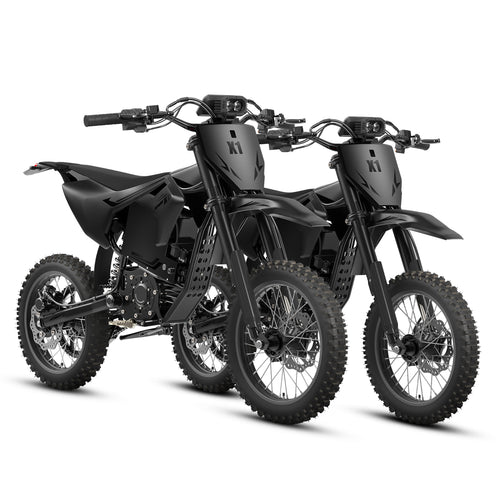
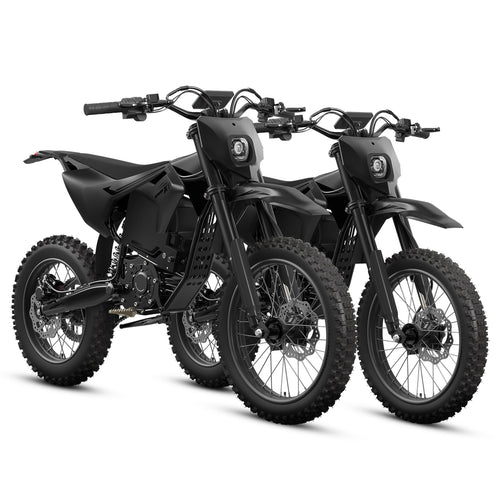



Winter doesn't mean you have to stop off-road riding, but cold temperatures, wind, slippery surfaces, and snow can create additional challenges for riders. For electric dirt bike riders, standard riding gear may not provide enough warmth and protection in winter conditions. For example, prolonged exposure to cold wind can make fingers stiff and affect throttle and brake control, while slippery trails and icy surfaces increase the risk of tire slippage.
In addition to staying warm, winter riding also requires attention to basic protection and bike preparation. A properly fitted Motocross Helmet that meets off-road riding requirements is essential protective gear and should be securely fastened and properly paired with goggles. Riders should also consider goggle anti-fog performance, the waterproofing of motocross boots, and tire traction. Cold temperatures can also affect available battery energy, reducing range compared with riding in warmer weather. Preparing the right winter riding accessories and checking the bike beforehand can help riders better handle different winter off-road conditions.
8 Essential Winter Accessories For Electric Dirt Bike Riders
1. Winter Riding Gloves
Hands are often one of the body parts most exposed to cold wind during winter riding. Since electric dirt bike riders must continuously operate the throttle, brakes, and handlebars, cold fingers can lose flexibility and affect riding control.
Therefore, when choosing winter riding gloves, warmth alone is not enough. Windproofing, waterproofing, and grip are also important. Compared with regular lightweight motocross gloves, insulated winter gloves typically use thicker thermal materials and windproof fabrics to reduce cold air exposure. However, gloves should not be too thick, as this can reduce finger sensitivity when operating the brakes and throttle.
Riders who frequently ride in cold conditions can also consider heated gloves. These gloves use built-in heating elements to provide additional warmth, but battery life, heat settings, and flexibility should also be considered. It is best to test how comfortably they fit around the handlebars and allow brake operation before choosing a pair.
2. Thermal Base Layers
Wearing a thick jacket alone may not be enough for extended winter off-road rides. As riders move along trails, cold headwinds continuously draw heat away from the body. Meanwhile, sweat produced during physical activity can make clothing damp if it is not properly wicked away, increasing the feeling of cold.
Therefore, the three-layer clothing system is generally more practical. The first layer is a moisture-wicking base layer that draws sweat away from the skin. The second layer provides insulation to retain body heat, while the outer layer blocks cold wind and rain or snow.
Thermal base layers can be made from merino wool or synthetic fabrics. Merino wool offers good insulation and moisture absorption, while synthetic fabrics typically dry faster and are well suited to high-intensity activities. Regardless of the material, clothing should allow unrestricted movement and should not interfere with standing, turning, or shifting body weight while riding off-road.
3. Balaclavas & Neck Gaiters
A helmet provides head protection, but it cannot completely block cold air from reaching the face and neck. During winter riding, continuous exposure to cold wind can make the cheeks, ears, and neck uncomfortable, especially during extended trail rides.
A balaclava typically covers the head, ears, and part of the face, providing more comprehensive protection against the cold. A neck gaiter mainly covers the neck and can also be pulled up to cover the lower face, depending on its design. A full-coverage balaclava may be more suitable in colder conditions, while a neck gaiter is generally easier to adjust when temperatures are milder.
When choosing one, pay attention to breathability and fit. A mask that is too thick may interfere with helmet fit and allow moisture from breathing to accumulate near the goggles. Therefore, choose a breathable, lightweight design that does not interfere with proper helmet fit.
4. Anti-Fog Motocross Goggles
Goggle fogging is an easily overlooked problem during winter riding. When a rider's warm breath comes into contact with cold lenses, moisture can condense on the surface and create fog, reducing visibility. On wooded trails, in low-light conditions, or across challenging terrain, reduced visibility can make riding even more difficult.
When choosing anti-fog motocross goggles, pay attention to dual-pane lenses, anti-fog coatings, and ventilation. Dual-pane lenses help reduce temperature differences between the inner and outer lens surfaces, while anti-fog coatings help reduce condensation. Proper ventilation also allows warm, moist air to escape.
Lens selection should also depend on riding conditions. Clear lenses are suitable for low-light trails and cloudy conditions, while darker lenses are better suited to bright sunlight. Regardless of the lens type, visibility should remain clear, and the goggles should fit properly with the helmet.
5. Waterproof Motocross Boots
Winter off-road riding often involves wet mud, standing water, and damp terrain. If boots allow water to enter, feet can become cold more quickly, affecting comfort during extended rides. Therefore, waterproof motocross boots are an important item to consider for winter riding.
Compared with regular athletic shoes, professional motocross boots typically feature sturdier uppers, ankle support, and protective structures that help reduce injuries caused by impacts from rocks, branches, and motorcycle components. Some waterproof models also use waterproof membranes and sealed construction to reduce water entry.
When choosing winter motocross boots, consider waterproofing, insulation, and ankle support together. Waterproofing does not necessarily mean warmth. If riding in particularly cold conditions, moisture-wicking thermal riding socks can provide additional comfort. Also, make sure the boots fit properly with the footpegs and do not interfere with foot control.
6. Motocross Protective Gear
A thick jacket can help keep riders warm in winter, but it cannot replace dedicated off-road protective gear. On muddy trails, gravel paths, and uneven terrain, a motorcycle can lose balance due to tire slippage or changing ground conditions, potentially exposing different parts of the body to impact.
A chest protector primarily protects the chest and upper body, knee guards help reduce impacts to the knees, and elbow guards provide additional protection for the elbows. Riders who need more comprehensive protection can also consider a back protector.
When wearing multiple layers in winter, it is especially important to ensure that protective gear fits properly against the body. If thick outerwear pushes the protective gear out of position or causes it to shift while riding, its effectiveness may be reduced. Choose protective gear suitable for winter layering and check that it stays securely in place without restricting movement before riding.
7. Studded Winter Tires
During winter off-road riding, tire contact with the ground directly affects motorcycle handling. Regular off-road tires can handle some muddy, gravel, and soft-soil conditions, but their tread may not provide enough traction on packed snow or icy surfaces.
Studded tires use metal studs embedded in the tire tread to provide additional mechanical grip on ice. They are therefore more suitable for environments where riding on icy surfaces is a specific concern. Compared with regular off-road tires, studded tires can provide better traction in certain icy and snowy conditions, but they may not be the best choice for ordinary dirt trails or dry surfaces.
Additionally, fat tires are not the same as studded tires. Wider tires can provide different contact areas and flotation characteristics, but tire width alone does not determine grip on ice. When choosing winter tires, consider the actual terrain, tire size, rim specifications, and the manufacturer's compatibility requirements. Even with studded tires, riders should reduce speed and avoid sudden acceleration, hard braking, and sharp turns on icy surfaces.
8. Motorcycle Handguards
Motorcycle handguards are typically mounted on both sides of the handlebars to reduce direct contact with branches, gravel, and mud while providing additional external protection for the hands. During winter riding, they can also help reduce the amount of cold air blowing directly against the backs of the hands.
Common handguard designs include open-end handguards and full-wrap handguards. Open-end designs are typically attached to the handlebars with mounting brackets and provide basic hand protection. Full-wrap designs offer more complete external support and can provide greater protection on challenging trails.
When choosing handguards, appearance and coverage are not the only considerations. You should also confirm that they are compatible with the motorcycle's handlebar configuration. After installation, check that the throttle returns smoothly, the brake levers operate normally, and the handguards do not interfere with other components. For winter riding, handguards provide additional protection but cannot replace insulated riding gloves.
What Should You Prepare For Winter Electric Dirt Bike Riding?
After preparing your personal gear and bike accessories, you also need to check the condition of your electric dirt bike. Unlike gas-powered dirt bikes, electric dirt bikes require special attention to the battery, charging system, and electrical connections, while tire, brake, and drivetrain maintenance should not be overlooked.
1. Battery Checks And Range Planning
Cold temperatures affect ion movement inside lithium batteries, increasing internal resistance and reducing available energy and power output at certain temperatures. Therefore, even if the battery shows a full charge before departure, the actual riding range in winter may be shorter than in warmer weather.
Before riding, check the battery level, physical condition, and connections. Plan your route based on the weather, terrain, and riding mode. Extra battery capacity should be reserved for the return trip, especially on long trails and continuous uphill sections, to avoid unexpected power consumption in cold conditions.
If the battery has been exposed to low temperatures for an extended period, allow it to naturally return to the manufacturer's recommended charging temperature range before charging. Do not use a heat gun, open flame, or other direct heat source to warm the battery, and make sure the charging port is dry.
Further Reading | Why Do Electric Dirt Bikes Lose Range And Power In Cold Weather?
2. Tire And Brake Checks
As temperatures drop in winter, tire pressure can change, so you should not automatically use the same pressure settings as in warmer weather. Before riding, check the actual tire pressure with a pressure gauge and adjust it according to the owner's manual, tire specifications, and terrain. Do not lower tire pressure arbitrarily just to increase traction.
In addition to tire pressure, check the tread, sidewalls for cracks or damage, and make sure the rims and spokes are not loose. For the brakes, confirm that both front and rear brakes respond properly and that the brake pads and rotors show no obvious problems. Wet and slippery surfaces can increase stopping distances, so slow down early and avoid sudden braking.
3. Post-Ride Cleaning And Maintenance
After winter off-road rides, promptly remove snow, mud, and debris from the wheels, chain, and braking components. Keep electrical connections dry and check the tires for missing studs, damaged tread blocks, or other abnormalities.
After each ride, remove visible dirt and debris, then inspect the chain, sprockets, brakes, and suspension areas. When cleaning an electric dirt bike, avoid directing high-pressure water at the battery connections, charging port, or electrical components. Once the bike is completely dry, lubricate the chain according to its type and the manufacturer's recommendations, and check for loose parts or unusual wear.
If you plan to stop riding for an extended period after winter, manage the battery charge level and storage environment according to the owner's manual, and inspect the bike regularly.
Is Every Electric Dirt Bike Suitable For Winter Riding?
Not every electric dirt bike is suitable for the same winter riding conditions. Different models vary in motor power, battery capacity, tire size, suspension setup, and overall weight. These factors all affect how a bike performs across different terrains.
For example, riding on light mud and regular trails requires different bike capabilities than tackling continuous uphill sections, deep snow, or icy surfaces. Rider experience is also important. Even with strong power and suitable tires, a bike cannot guarantee safe riding on every challenging surface, especially for riders unfamiliar with snowy and icy terrain.
Therefore, when choosing an electric dirt bike for winter riding, consider its size, power delivery, range, and the terrain you ride most often rather than focusing only on top speed or battery voltage. If conditions involve severe ice, poor visibility, or terrain beyond your riding ability, stop riding.
Get Ready For Your Next Winter Off-Road Adventure
Winter electric dirt bike riding requires more than warm clothing. It also calls for suitable goggles, protective gear, motocross boots, and tire setups. Checking the battery, brakes, and overall bike condition in advance, and adjusting your riding plans based on the weather and terrain, can help you better handle the challenges of cold-weather riding. Choosing a bike that matches your riding experience and off-road needs is also important for a better riding experience.


