


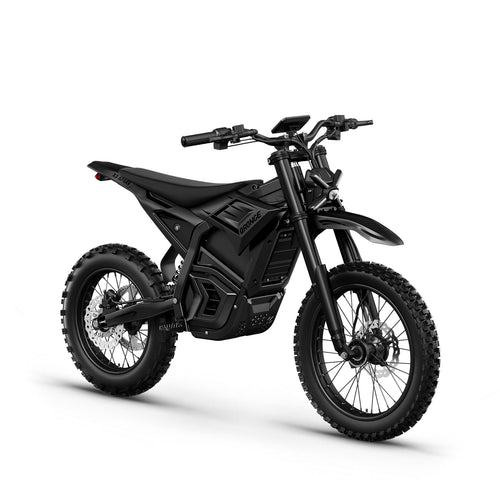
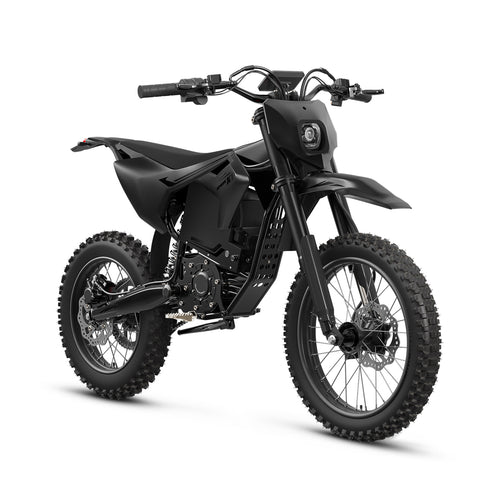
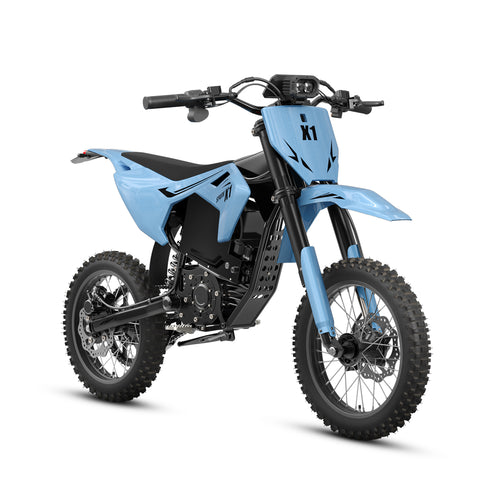
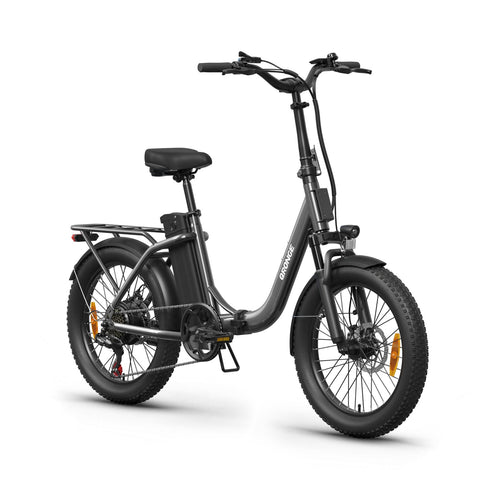



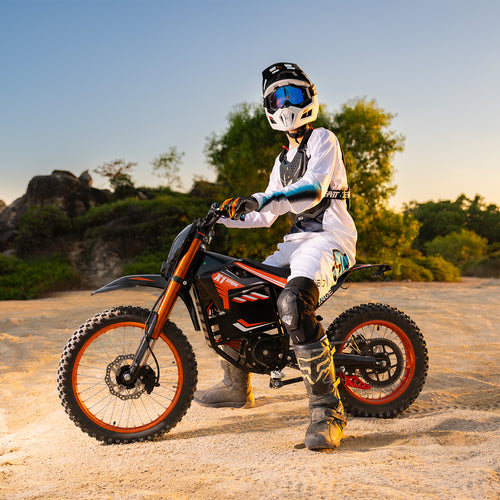

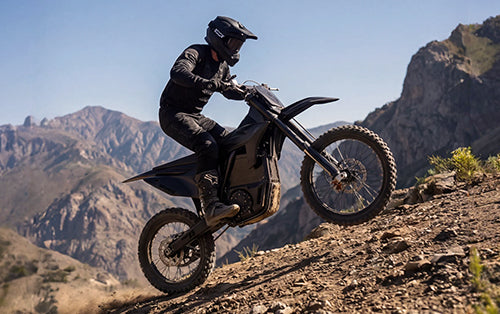

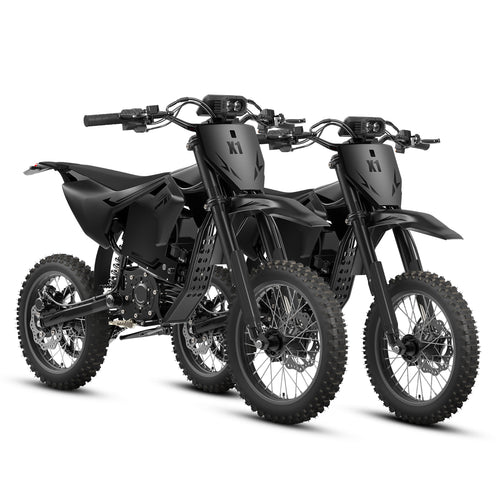
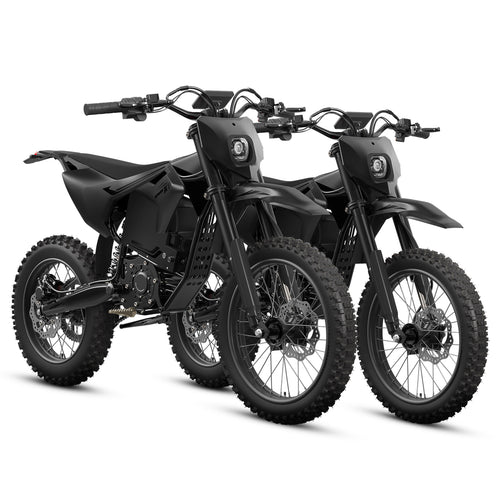
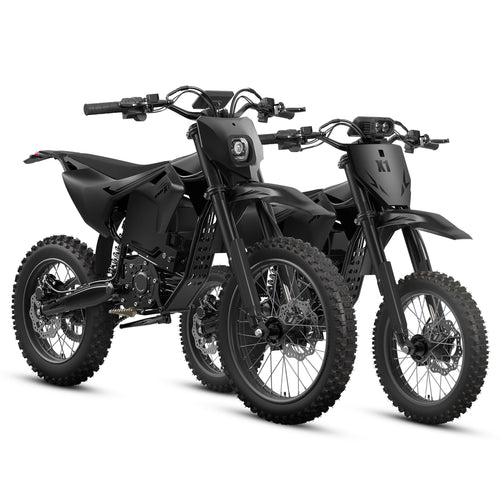


There is no single PSI that works for every electric dirt bike and every type of terrain. For common off-road pneumatic tires, softer sand and loose mud can usually use lower tire pressure within the bike and tire’s allowed range, while hardpack, gravel, and rocky terrain generally require more tire support.
When making adjustments, first check the cold tire pressure specified for the bike and tires. Then make small changes based on terrain, the combined weight of the rider and gear, front and rear tire load, and tire specifications, rather than simply copying the PSI from another electric dirt bike.
What PSI Should You Use for Different Terrain?
Different types of terrain place different demands on tires.
On sand, tires need a larger contact patch to reduce sinking. On gravel or rocky terrain, they need more support to reduce the risk of direct impacts to the rims.
For adult dirt bikes with inner tubes, the following can be used as an initial testing reference:
|
Terrain |
Front Tire Reference PSI |
Rear Tire Reference PSI |
Adjustment Goal |
|
Deep sand, soft sand |
11–13 PSI |
12–14 PSI |
Increase the contact patch and reduce sinking |
|
Mud, soft soil |
11–13 PSI |
12–14 PSI |
Help the tires conform better to soft surfaces |
|
Loose gravel |
12–14 PSI |
13–15 PSI |
Balance traction and tire support |
|
Mixed trails |
13–15 PSI |
14–16 PSI |
Balance traction, handling, and impact resistance |
|
Hardpack |
14–16 PSI |
15–17 PSI |
Increase tire support and steering stability |
|
Rocky, sharp gravel terrain |
15–17 PSI |
16–18 PSI |
Reduce the risk of rim impacts and pinch flats |
Notice:These numbers are only starting points for off-road tuning and are not the standard factory tire pressures for all Qronge models. If the bike manual, tire markings, or specific tire manufacturer gives a different range, follow those specifications first.
What matters most is not remembering “13 PSI” or “16 PSI,” but understanding one basic rule: soft terrain needs more tire contact area, while hard terrain needs more tire support. Lower tire pressure does not always mean better traction. If the pressure is too low, the tire can deform more, which may increase the risk of pinch flats, rim impacts, or vague handling on rocks, roots, or uneven terrain.
Why should you usually lower tire pressure on sand?
When riding on sand, if tire pressure is near the higher end of the allowed range, the tire has a smaller contact patch and is more likely to cut into the soft surface.
Lowering the cold tire pressure slightly allows the tire to deform more, increasing the contact area with the ground. That is why sand riding usually starts with a relatively lower PSI.
However, do not keep releasing air just to increase traction. If the tire starts to feel noticeably unstable or the rim is more likely to hit hard objects, the pressure may already be too low. Lowering it further will not provide better traction and may instead increase the risk of tire and rim damage.
Can mud and sand use the same tire pressure?
Not necessarily. Although mud and sand are both generally soft surfaces, they do not place exactly the same demands on tires.
Sand places more emphasis on increasing the contact patch and reducing sinking. In mud, the tire also needs enough tread to cut through soft ground and clear mud effectively.
So if traction is poor in mud, lowering PSI alone may not solve the problem. Tire tread, mud depth, and surface slipperiness also affect performance.
Why does rocky terrain usually require higher tire pressure?
On routes with rocks, sharp gravel, or roots, traction is not the only concern. The tire also needs enough support to absorb impacts.
If tire pressure is too low, a hard impact can compress the tire enough for rocks or other hard objects to come closer to the rim.
For bikes with inner tubes, this type of impact can also increase the risk of a pinch flat.
So when the same electric dirt bike moves from soft sand to rocky terrain, tire pressure usually needs to be increased within the allowed range to provide more support for the tire and rim.
Does a heavier rider always need higher tire pressure?
More load usually requires more tire support, but you should not simply apply a fixed formula such as “add a certain amount of PSI for a certain amount of body weight.”
What really matters is the total riding load, including:
- Rider weight
- Helmet and protective gear
- Backpack
- Tools or other carried equipment
For the same 180 lb rider, riding without extra gear and carrying an additional 20 lb of equipment do not place exactly the same load on the tires.
If the total load increases, start from the bike’s original cold tire pressure and, within the allowed range, increase it by about 1 PSI at a time and then do a short test ride.
Focus on three things: whether the tires have enough support, whether steering remains stable, and whether the rims frequently feel like they are hitting through the tires over bumps or rocks.
So rider weight is better treated as an adjustment factor rather than something that directly corresponds to a fixed PSI.
Does tire size always mean different tire pressure?
Wheel diameter alone does not determine how much PSI should be used.
For example, 14/12, 17/14, and 19/16 represent different front and rear wheel size combinations, but actual tire pressure is also affected by: tire width, tire construction, tube or tubeless setup, bike weight, rider load, and riding terrain.
Qronge electric dirt bike models currently use different wheel setups. For example, the X1 Spark M uses a more compact 14/12 setup, the X1 Spark L uses 17/14, and the X5 Spark uses a 19-inch front wheel and a 16-inch rear wheel, with 2.8-inch front and 3.5-inch rear tires.
So it is not accurate to assume that a 19-inch tire always needs lower PSI or that a 14-inch tire always needs higher pressure. A more reliable approach is to first find the cold tire pressure baseline for the specific bike and tire, then adjust it based on the current terrain and load.
Should the front and rear tires use the same PSI?
Not necessarily. The front and rear tires have different jobs.
The front tire has more influence on steering, braking, and directional control over bumps, while the rear tire supports part of the bike and rider weight and also transfers power from the motor to the ground. This is especially noticeable on high-torque electric dirt bikes, where the rear tire carries more driving load during acceleration and climbing. As a result, some off-road setups use slightly higher pressure in the rear tire than in the front, but this is not a rule that applies to every bike.
If the bike or tire manufacturer specifies separate front and rear PSI values, use those figures first rather than changing one just to make the pressures match.
How can you tell if your tire pressure is too high or too low?
In addition to checking with a tire pressure gauge, the way the bike feels while riding can also help determine whether the current setup is appropriate.
|
Riding feel |
Possible tire pressure issue |
Check first |
|
Feels harsh and bounces easily over small rocks and roots |
Tire pressure may be too high |
Compare with the cold tire pressure baseline |
|
Tires sink or slip easily on soft ground |
Tire pressure may be too high |
Terrain and tire tread |
|
Front tire feels soft or less direct in turns |
Front tire pressure may be too low |
Front cold tire PSI |
|
Frequent rim impacts on rocky terrain |
Tire pressure may be too low |
Front and rear tire pressure and rims |
|
Frequent pinch flats |
Tire pressure may be too low for the current load |
Tire pressure, inner tube, and rim |
|
Rear tire feels unstable under heavy throttle |
Rear tire support may be insufficient |
Rear tire pressure and load |
However, poor traction or unstable handling is not always caused by tire pressure. Tire tread, suspension setup, surface conditions, and power input can also affect performance, so it is not recommended to solve the problem by continuously lowering PSI alone.
How to properly check and adjust electric dirt bike tire pressure?
Tire pressure is best checked when the tires are cold, meaning the bike has been parked for a while and the tires have not noticeably warmed up from riding.
For actual adjustments, follow this order:
- Check the tire pressure range specified for the bike and tires.
- Measure the cold PSI of the front and rear tires before riding.
- Decide whether adjustments are needed based on the main terrain and total riding load for the day.
- Adjust only about 1 PSI at a time.
- Test on a familiar short route and record the front and rear values along with the riding feedback.
Compared with making a large PSI change all at once, small adjustments, testing on the same route, and recording the results make it easier to find the right setup for the bike and terrain.
Further reading: To learn what else should be checked before the first ride on an electric dirt bike, read: What Should You Check Before Your First Electric Dirt Bike Ride?
Find the Right Tire Pressure for Your Bike
The right tire pressure for an electric dirt bike is not a fixed number.
Start with the correct cold tire pressure baseline, then make small adjustments based on terrain, riding load, and tire setup. Soft sand requires more contact area, while rocky and hard terrain need more tire support. If rider and gear weight increases, the current tire pressure should also be checked again.
The goal is not to find the “most common PSI online,” but to find the PSI that fits the bike, tires, and current riding conditions.


