








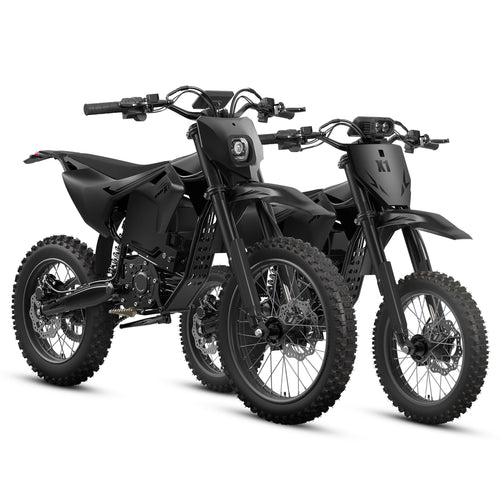



Electric dirt bikes don’t require engine oil changes or spark plug replacements, and they don’t have a traditional fuel system to maintain. But that doesn’t mean they can be ridden indefinitely without maintenance. The battery and electrical system, chain and sprockets, brakes, tires, wheels, suspension, and frame connections all need regular inspection and maintenance over time.
The key question isn’t just what needs attention, but when maintenance is due and when you shouldn’t wait until the next scheduled service interval.
For regular off-road riding, start with a basic maintenance schedule, then adjust it based on how often you ride and the conditions you ride in. Mud, sand, water, repeated bumps, and hard riding can cause some components to collect dirt, loosen, or wear faster, so maintenance shouldn’t be based on the calendar alone.
Exact tire pressure, chain slack, fastener torque, wear limits, and professional service intervals should always follow the owner’s manual for the specific model.
How Often Should You Maintain an Electric Dirt Bike?
Maintenance can be divided into routine care, monthly checks, periodic maintenance, and annual or as-needed professional service.
|
Timing |
Main Maintenance Tasks |
|
After every off-road ride |
Remove visible mud and dirt, and check for new damage, looseness, leaks, or unusual wear |
|
Monthly |
Check the chain and sprockets, brake pads and rotors, tires, wheels, spokes, key fasteners, visible wiring, and fork seal areas |
|
Every 3–6 months |
Perform a more thorough check of the drivetrain, braking system, wheels and bearings, suspension condition, battery and charging equipment, and electrical connections |
|
Annually or as required by the model |
Carry out a more comprehensive inspection or professional service of the suspension, hydraulic braking system, bearings, and electrical system |
|
Before long-term storage |
Clean and fully dry the bike, and take care of the chain, battery, tires, and storage conditions |
|
After riding in mud, water, sand, or under high-intensity conditions |
Inspect affected areas early based on contamination and use rather than waiting for the regular schedule |
This schedule is better used as a routine maintenance reminder than as a strict rule for every model.
For example, a bike ridden only two or three times a month on dry trails should not follow exactly the same maintenance schedule as one used every week in mud, on rocky slopes, or over continuously rough terrain.
Battery Maintenance Is More Than Just Remembering to Charge
The battery is one of the parts of an electric dirt bike that benefits most from consistent maintenance habits, but many problems can appear before the battery is completely drained.
For regular charging, use charging equipment that matches the bike and follow the requirements for the specific model. Before charging, take a quick look at the battery case, charging port, and cables for visible damage, dirt, or looseness.
If the bike is often ridden in muddy or wet conditions, pay closer attention to keeping the connection areas dry. When cleaning the bike, avoid using a continuous high-pressure water stream directly on the battery port, electrical connections, or other sealed areas just to remove mud.
The battery also needs attention during long periods without riding. Different batteries may have different requirements for storage charge levels and storage conditions, so follow the manufacturer’s storage guidelines and check the battery periodically to make sure it has not discharged too far.
Changes that are noticeably different from normal should be addressed early, such as a sudden change in charging time, a noticeable drop in range, damaged connectors or cables, unusual changes to the battery case, or repeated battery-related error messages.
In these situations, it is not recommended to open the battery and inspect the internal cells yourself.

Adjust Chain and Sprocket Maintenance Based on Riding Conditions
Dust, sand, and mud from off-road riding can easily collect on the chain, so chain maintenance is difficult to reduce to a simple rule like “once a month.”
On dry, clean trails, the chain may not need frequent deep cleaning. After riding through mud, water, or sand, however, it may need to be cleaned and lubricated again, even if the last maintenance was only a few days ago.
Routine maintenance should focus on three things: cleaning, lubrication, and chain tension.
If the chain is covered with mud or sand, remove the contamination first, then use a suitable chain lubricant based on the chain type and the bike’s requirements. Adding more lubricant without first removing stuck sand can make it easier for more dirt to remain in the drivetrain.
Also pay attention to how smoothly the chain runs. If it develops stiff spots, persistent noise, obvious looseness, or becomes loose again soon after adjustment, simply adding more lubricant is not enough. The chain and sprockets should be checked for wear.
The sprockets should not be overlooked either. If the teeth show obvious abnormal wear, continuing to adjust the chain alone will not solve the problem.
Use the chain slack specification for the specific model rather than applying a generic value from another electric dirt bike.

Brake Maintenance Should Follow Wear and Changes in Brake Feel
Brake maintenance should not be based only on a fixed monthly schedule.
Brake pads are normal wear items, and long descents, frequent braking, mud and sand, and riding intensity can all affect how quickly they wear. A monthly check can serve as a basic routine, but if braking feel changes, the system should be checked sooner.
For the brake pads, mainly check the amount of friction material remaining and whether both sides are wearing evenly. For the brake rotors, look for unusual scoring, deformation, persistent rubbing, or other visible damage.
For hydraulic braking systems, also pay attention to how the brake lever feels.
If the lever suddenly feels noticeably softer, braking performance changes from normal, or fluid appears around the lines or connection points, do not wait until the next scheduled maintenance date.
Brake fluid replacement and bleeding intervals should follow the requirements of the specific braking system. If you do not have the proper experience or tools, this work is better handled by a professional.

Tire Maintenance Should Include the Rims and Spokes
During off-road riding, the tires come into direct contact with rocks, potholes, roots, and soft ground, so tire maintenance is about more than just checking whether they still have air.
Tire pressure should be adjusted based on the bike, the tires, and actual riding needs. Regularly check for tread wear, cuts, cracks, bulges, and other visible damage.
If the bike has taken a harder impact, the inspection should go further.
Are the rims bent? Does the wheel show noticeable side-to-side movement when it spins? Are any spokes loose? These issues may not be obvious on smooth ground, but repeated bumps and impacts put more stress on the wheel assembly.
For bikes that are often ridden on rocky trails, rough routes, or more technical terrain, the tires, rims, and spokes are best checked together as one complete wheel system.
If the wheel already has a noticeable wobble, simply adding more air to the tire will not solve the problem.

Suspension Maintenance Should Focus on Cleanliness, Seals, and Performance
The suspension does not need frequent lubrication like the chain, but mud and grit from off-road riding can easily build up around the forks and seal areas.
After riding on muddy or dusty trails, remove dirt from around the fork tubes promptly to prevent mud and debris from sitting around the seals for long periods.
During monthly checks, look for any new oil residue around the forks or rear shock, and pay attention to whether suspension compression and rebound feel noticeably different from normal.
The part that truly requires professional maintenance is the inside of the suspension.
As riding time increases, internal fluid, seals, and other components will also wear. The correct service interval depends on the bike model, suspension type, riding time, and terrain, so a fixed rule such as “the suspension must be taken apart every six months” should not be applied to every bike.
If there is persistent oil leakage, obvious unusual noise, abnormal rebound, sticking, or a sudden change in suspension performance while riding, the suspension should be checked early rather than waiting until the next scheduled service.

Don’t Overlook Bolts, Bearings, and Frame Connection Points
Some owners pay close attention to the battery, brakes, and tires but rarely check the connection points that actually absorb off-road impacts.
The handlebars, axles, footpegs, brake mounting points, suspension mounts, and other key fasteners can gradually change with vibration and repeated impacts.
The goal of inspection is not to retighten every bolt each time.
Repeatedly overtightening a fastener that is not loose can also cause problems. What matters is checking key areas for looseness, movement, or unusual play. If a fastener needs to be tightened, follow the torque specification for the specific model.
Do not apply the torque specification from another model.
Bearings are another commonly overlooked maintenance item. Wheel bearings, the steering area, and some suspension connection points can gradually wear over time.
If there is noticeable play, rough movement, unusual noise, or a loose feeling while riding that was not there before, the bike should be checked further rather than waiting until the annual service.
For the frame, mainly look for new cracks, obvious deformation, impact marks, or unusual movement. It should be checked soon after a crash, a hard impact, or extended high-intensity off-road riding.

Riding Conditions Determine Which Parts Need Earlier Maintenance
A fixed schedule is only a starting point. The environment you have ridden in often has a greater effect on how soon maintenance is needed.
Muddy and Wet Trails
Mud can work its way into the chain, wheels, and small gaps around the bike, and moisture should not be left on the bike for long periods before storage.
After the ride, remove visible mud first and allow the bike to dry thoroughly. Pay closer attention to the chain, wheels, suspension seal areas, and external electrical connections.
In these conditions, you should not skip an inspection just because the bike has already been serviced once that month.
Sand and Dust
Fine sand and dust can easily collect on the chain, sprockets, and moving suspension areas.
After riding in sand, it is better to remove any grit that has already built up before adding more chain lubricant.
If the bike is regularly ridden in these conditions, the drivetrain and suspension seal areas should also be checked more often.
Rocks, Potholes, and Repeated Rough Terrain
These conditions usually put more stress on the wheels, suspension, and major fastening points.
After the ride, check the rims, spokes, tires, axles, and suspension connection areas first. If the bike develops a new noise or a loose feeling, the cause should be identified as soon as possible.
Riding Less Does Not Mean No Maintenance
Another situation that is easy to overlook is when the bike is not ridden for a long period.
Even without new riding wear, the battery will continue to self-discharge, humid conditions may affect metal parts and electrical connections, and the tires can still change over time.
So “I haven’t ridden for a month” does not mean “I don’t need to check anything for a month.”
What Changes Mean You Shouldn’t Wait Until the Next Service?
Routine maintenance follows a schedule, but unusual changes do not need to wait for that schedule.
|
Change You Notice |
Check First |
|
The chain keeps making noise, skipping, or quickly becomes loose again |
Chain, sprockets, and drivetrain |
|
The brake lever suddenly feels softer, or the braking performance changes noticeably |
Brake pads, brake rotors, and hydraulic system |
|
The wheel develops a noticeable wobble or a loose feeling |
Rim, spokes, axle, and bearings |
|
The fork or rear shock continues to show oil residue |
Suspension and seal system |
|
The bike develops a new vibration or looseness that was not there before |
Fasteners, bearings, frame, and suspension connections |
|
Battery charging or range changes suddenly and noticeably |
Battery, charger, and related electrical system |
|
Cables or connectors show damage, looseness, or unusual marks |
Electrical system |
This is why a maintenance schedule should not be understood as simply “wait until three months have passed before checking.”
Changes in the bike itself often tell you what needs attention before the calendar does.
Which Maintenance Tasks Can You Handle Yourself, and Which Are Better Left to a Professional?
|
Maintenance Task |
Best Approach |
|
Removing mud and routine cleaning |
Basic owner maintenance |
|
Checking tires and tire pressure |
Basic owner maintenance |
|
Basic chain cleaning and lubrication |
Basic owner maintenance |
|
Visual checks of the bike, wiring, and fasteners |
Basic owner maintenance |
|
Checking remaining brake pad material |
Can be checked with basic experience |
|
Replacing or adjusting some drivetrain components |
Depends on experience and model requirements |
|
Hydraulic brake bleeding and system repair |
Best handled by a professional if you lack experience |
|
Internal suspension service |
Professional service recommended |
|
Opening the battery or repairing internal cells |
Not recommended for owner repair |
|
Internal motor or controller repair |
Professional service recommended |
|
Structural frame damage |
Professional inspection recommended |
The general rule is simple: external cleaning, visual checks, and basic adjustments can be part of regular maintenance. Once the work involves the inside of a high-voltage battery, the braking system, suspension disassembly, or structural damage, it should not be taken apart casually just to avoid a service visit.
Long-Term Storage Also Requires Maintenance
If the bike will not be ridden for several weeks or even months, it is not recommended to return from an off-road ride and park it in the garage while it is still covered in mud.
Clean and fully dry the bike first, then take care of the chain and areas where dirt tends to collect. Check the tires for slow leaks or visible damage, and follow the vehicle and battery manufacturer’s requirements for battery charge level and storage conditions.
It is also a good idea to check the bike periodically during storage instead of waiting until the next ride.
After a long period of storage, check the battery, electrical system, tires, brakes, drivetrain, and key connection points again before riding.


