


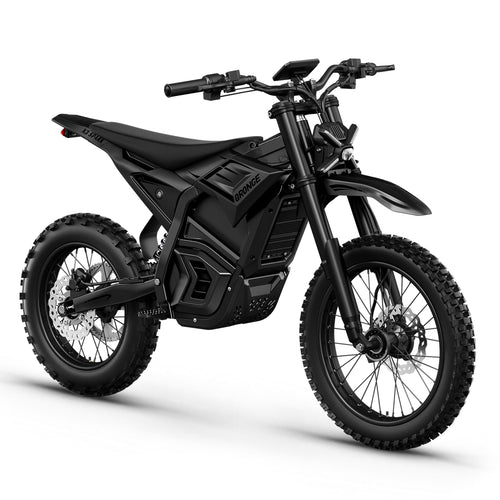
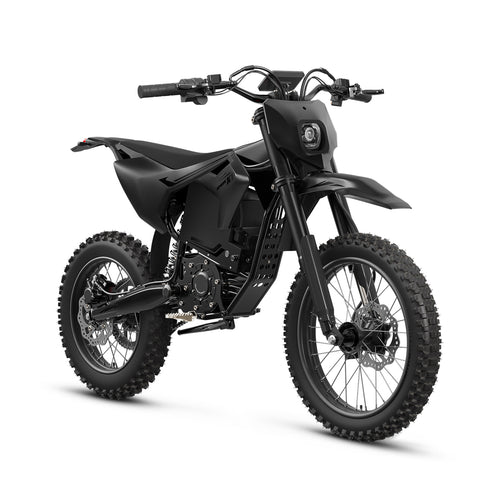
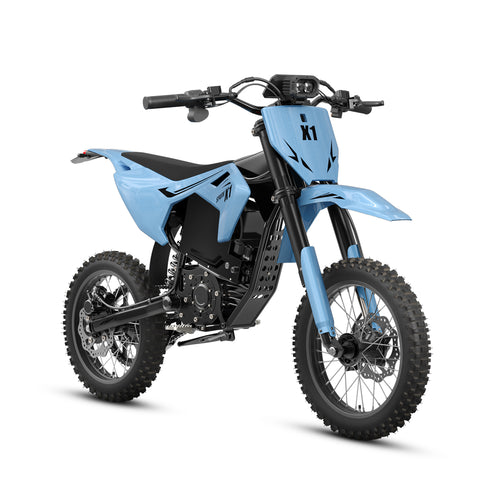
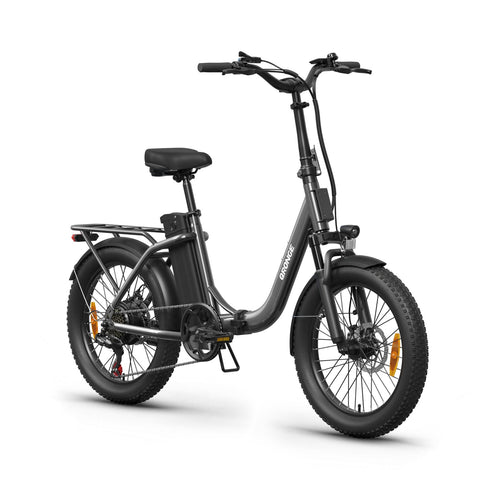

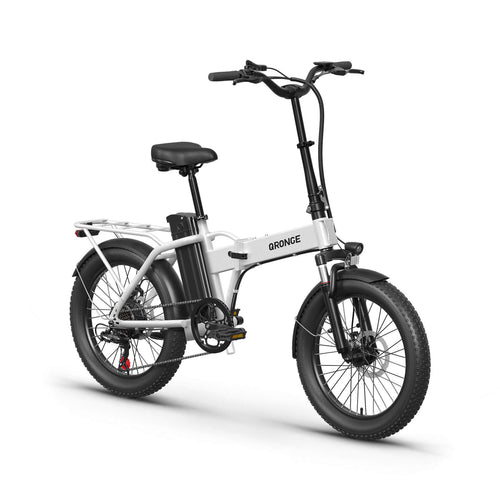
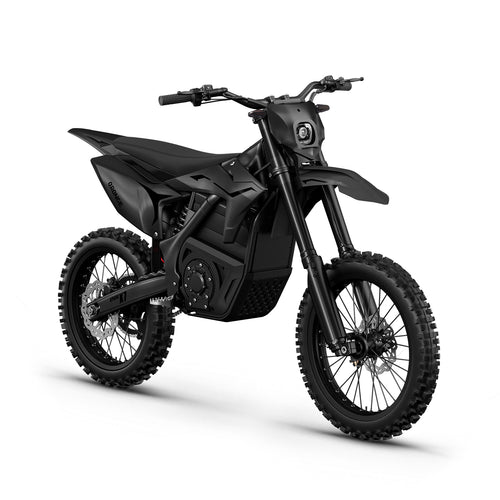



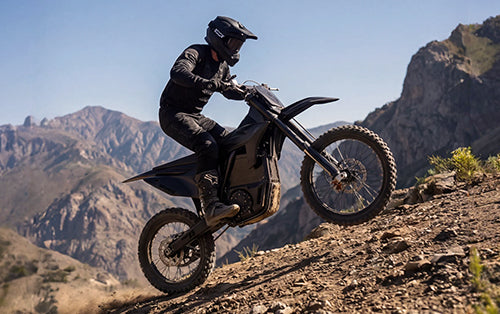



Mini electric dirt bikes and electric pit bikes are both electric-powered and often feature compact frames and smaller wheels, so it can be difficult to draw a clear line between them based on appearance alone. Some models on the market are even described as both “electric mini bikes” and “pit bikes,” which shows that the two categories overlap to some extent.
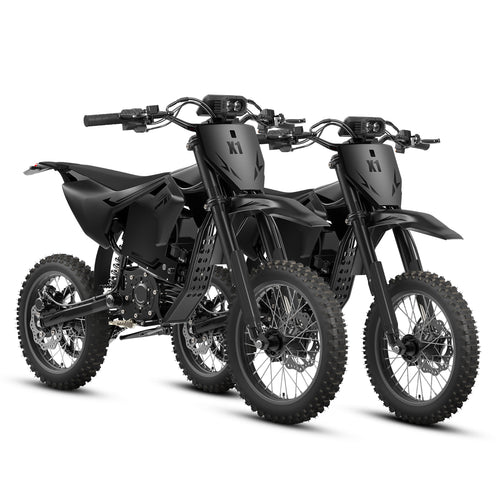
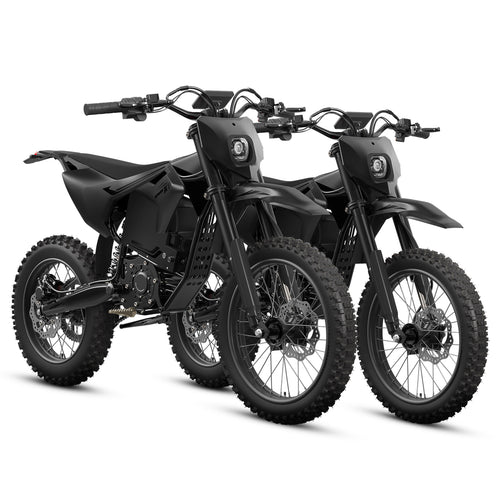
A mini electric dirt bike can be understood as an electric dirt bike with a more compact design. It retains the basic off-road design of a dirt bike while using smaller wheels and a smaller frame to keep the overall size down, making it more agile during off-road riding.
“Mini” does not mean these bikes are toys, nor does the name alone determine what age group they are suitable for. Some mini electric dirt bikes now come with full front and rear suspension, hydraulic brakes, and higher power output, so rider height, riding experience, and actual vehicle performance still need to be considered when choosing one.
An electric pit bike follows the compact and agile design of a traditional pit bike, but replaces the gas engine with an electric motor and battery. Pit bikes were originally associated with racetrack pit areas and small riding spaces, and today they are also widely used for recreational riding, backyard riding, and small closed riding areas. Some brands even use both “electric mini bike” and “pit bike” to describe the same type of compact electric bike, which is one reason the two categories are often confused.
Mini Electric Dirt Bike vs Electric Pit Bike: Key Differences
Since both types use electric power, factors such as power source, noise, or traditional engine maintenance are not the most useful points of comparison. What matters more to the riding experience is how they differ in frame design, rider fit, and intended riding environment.
|
Comparison |
Mini Electric Dirt Bike |
Electric Pit Bike |
|
Product Positioning |
Emphasizes off-road capability in a compact package |
Retains the compact format of a small pit bike |
|
Frame Design |
Often keeps dirt bike-style wheels, suspension, and riding position |
Often uses more compact frame proportions and riding space |
|
Handling |
Focuses more on stability and agility on unpaved terrain |
Emphasizes quick steering in smaller riding areas |
|
Typical Use |
Trails, dirt roads, and other unpaved routes |
Small closed riding areas, private riding spaces, and pit bike tracks |
|
What to Look For |
Suspension, tires, ground clearance, rider fit, and power control |
Vehicle size, steering agility, power response, and riding-area fit |
An electric pit bike can still have capable suspension and trail performance, while a mini electric dirt bike can also work well in smaller closed riding areas. For that reason, the final choice should still come down to the specific model’s wheel setup, suspension, weight, power tuning, and rider fit.
Which Is Easier to Ride and Control?
For these two types of compact electric bikes, a smaller frame does not necessarily mean the bike is easier to ride.
The first thing to consider is whether the bike’s size fits the rider. Seat height, frame length, wheel size, and riding space all affect stopping, low-speed movement, turning, and body-position adjustments. If a bike is too tall or too compact for the rider, it can still feel difficult to control even if the overall bike is small.
The advantage of an electric pit bike often comes from its compact frame. In backyards, small riding areas, or routes with frequent turns, riders need to slow down, steer, and accelerate again repeatedly. A shorter frame and compact riding position can make directional changes feel more direct.
A mini electric dirt bike, on the other hand, often needs to balance agility with off-road stability. When a route includes repeated bumps, loose rocks, or changes in elevation, the rider not only needs to change direction quickly but also needs the bike to remain stable over uneven terrain.
Power also affects how difficult a bike is to control.
Electric bikes do not require riders to manage power through a clutch and gear shifting like traditional gas motorcycles, but instant torque also makes throttle response more direct. As a result, even a small, high-powered mini electric dirt bike may not be easy for every inexperienced rider to control.
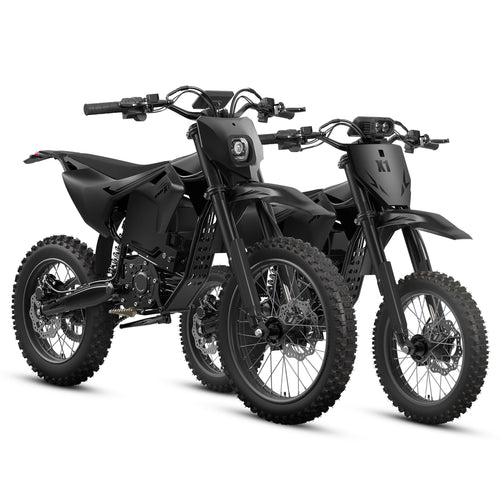
The Qronge X1 Spark M uses a compact 14-inch front and 12-inch rear wheel setup and offers ECO, Sport, and Turbo riding modes, allowing riders to adjust power output for different routes and riding rhythms. However, a compact size does not mean a lower control threshold, so the rider’s size, experience, and ability to manage the bike’s power still need to be considered.
When deciding which one is easier to ride, three questions matter more than the category name:
- Does the bike fit the rider?
- Is the power response easy to manage?
- Does the handling design suit the routes you ride most often?
To learn more about how different electric off-road bikes differ in positioning and riding environments, read: Electric Dirt Bike vs Electric Motorcycle: Which One Is Right for You?
Which Is Better for Trails, Backyards, and Tracks?
The differences between a mini electric dirt bike and an electric pit bike become more noticeable once they are used in different riding environments.
Trails and More Varied Unpaved Routes
Trails are not always smooth.
Roots, loose rocks, ruts, soft ground, and changing slopes constantly affect how the bike behaves. In these conditions, tire traction, suspension, ground clearance, and overall stability become much more important.
For riders who mainly ride trails, dirt roads, and longer stretches of unpaved terrain, a mini electric dirt bike with a more dirt bike-oriented design is worth considering.
A compact size can still help riders handle narrow paths and repeated turns, but the bike should not be chosen simply because it is small. How well the suspension handles uneven terrain, whether the tires suit loose surfaces, and how manageable the power feels at low speeds all directly affect the riding experience.
The Qronge X1 Spark M follows this approach by keeping off-road features within a smaller frame. Its 4500W peak mid-drive motor, 14"/12" wheel setup, and three riding modes make it suitable not only for compact recreational riding, but also for casual trails and unpaved terrain.
Backyards and Smaller Riding Areas
If most riding takes place in a limited private area, the priorities change.
There is usually less need to maintain higher speeds for long periods. Riders are more likely to make U-turns, maneuver at low speeds, accelerate over short distances, and handle repeated turns. A bike that is too large can make these movements harder to manage.
The compact frame of an electric pit bike is better suited to this kind of environment. It keeps the small, agile character of a traditional pit bike while using electric power to reduce the need for traditional gear shifting.
Of course, “backyard riding” does not mean that any residential area can be used freely. Riders still need to confirm private land permission, local noise requirements, and applicable OHV or motor vehicle rules.
Small Tracks and Dirt Tracks
On small closed tracks, both types of bikes can be suitable.
The compact wheelbase and agile steering of an electric pit bike can work well on smaller tracks with frequent turns. If the route includes more noticeable elevation changes, ruts, or sections that place greater demands on suspension, a more dirt bike-oriented model may be worth considering.
For this reason, it is too simple to say that “pit bikes are for tracks” and “mini dirt bikes are for trails.”
Track width, corner density, surface conditions, elevation changes, and rider experience can all affect the final choice.
Which One Should You Choose?
If you mainly ride trails, dirt roads, and other varied unpaved routes, a mini electric dirt bike is worth considering first, as it typically places more emphasis on suspension, wheel setup, and off-road stability. If most of your riding takes place in backyards, small tracks, or closed riding areas, the compact frame and agile steering of an electric pit bike may be a better fit.
There is no absolute boundary between the two categories. The final choice should consider rider size, bike dimensions, power level, and the riding environment you use most often, rather than relying only on the terms “mini” or “pit bike.”
⚡ Find the right balance of speed, power, and control
🏍️ Explore Qronge Mini Electric Dirt Bikes


