


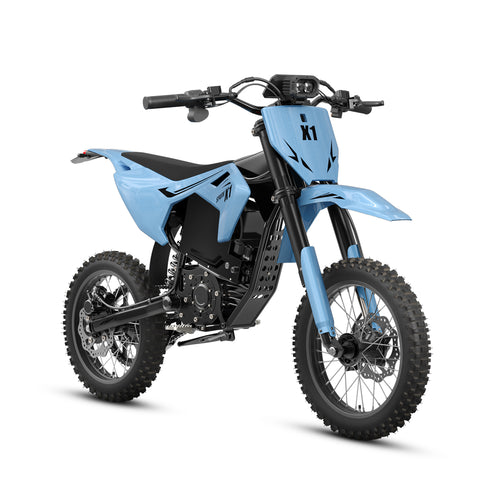
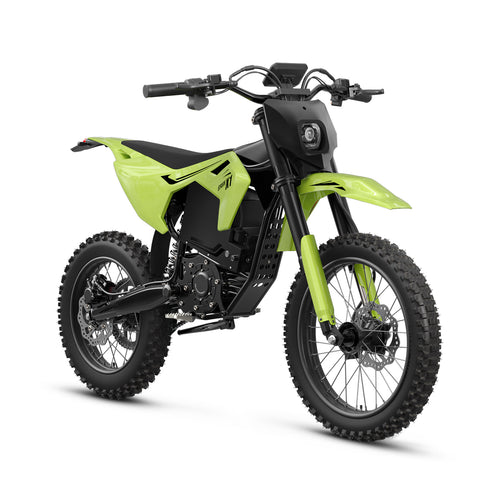

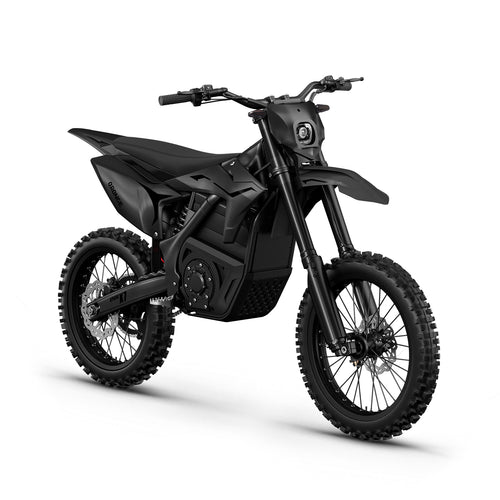
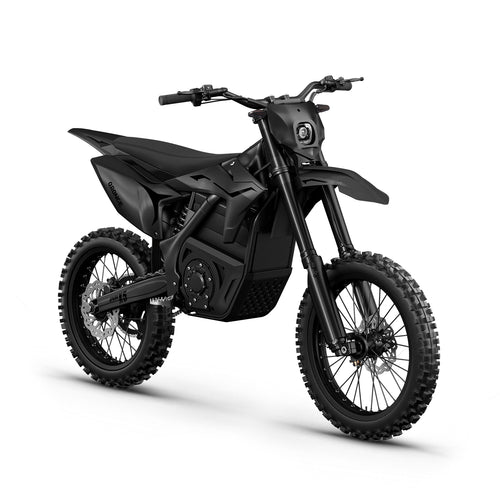



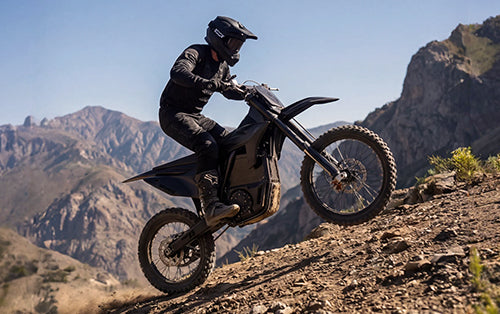

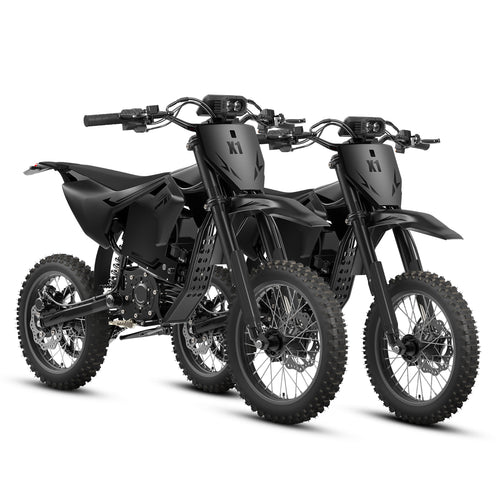
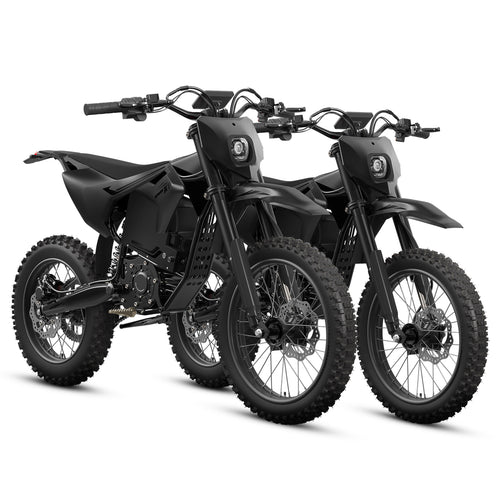
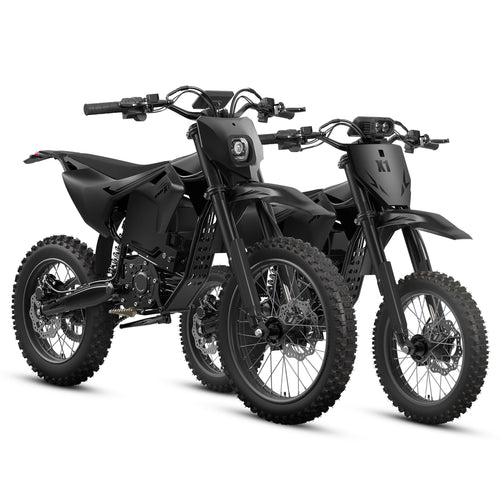


When choosing an electric mini dirt bike, a smaller frame does not necessarily mean limited power. The HappyRun G300 SE and Qronge X1 Spark M both feature a 14-inch front wheel, a 12-inch rear wheel, and a 4500W peak mid-drive motor, making them suitable for riders seeking off-road power in a compact size.
However, the same peak power does not mean the two bikes will deliver the same speed, range, or handling experience. Battery voltage, capacity, torque, weight, suspension, and riding settings all affect how each bike performs on forest trails, gravel roads, grass, and continuous slopes.
HappyRun G300 SE vs. X1 Spark M Specifications
|
Specification |
HappyRun G300 SE |
Qronge X1 Spark M |
|
Price |
$799 |
$999.99 |
|
Motor Type |
Mid-Drive Motor |
Mid-Drive Motor |
|
Peak Power |
4500W |
4500W |
|
Peak Torque |
220 N·m |
283 N·m |
|
Battery |
48V 26Ah |
60V 28.8Ah |
|
Battery Capacity |
1248Wh |
1728Wh |
|
Top Speed |
Up to 36 MPH |
Up to 50 MPH |
|
Maximum Range |
Up to 45 miles |
Up to 60 miles |
|
Power Settings |
3 adjustable speed levels |
ECO, Sport, Turbo |
|
Front Tire |
60/100-14 |
14" × 2.4" |
|
Rear Tire |
80/100-12 |
12" × 3.0" |
|
Wheel Size |
14"/12" |
14"/12" |
|
Braking System |
Hydraulic Disc Brakes |
Hydraulic Brake |
|
Brake Disc Size |
190 mm |
200 × 3 mm |
|
Front Suspension |
Adjustable Hydraulic Fork |
150 mm Suspension Front Fork |
|
Rear Suspension |
Rear Coil Suspension |
75 mm Rear Suspension |
|
Bike Weight |
123.5 lbs, including battery |
143 lbs |
|
Maximum Load |
330 lbs |
350 lbs |
|
Recommended Rider Height |
3'11"–6'1" |
4'0"–5'5" |
|
Seat Height |
29.1" Seat Height |
28" Minimum Seat to Floor |
|
Throttle |
Full Twist Throttle |
Full Throttle |
Why Do Two Bikes with the Same 4500W Peak Power Deliver Different Speed and Performance?
The 4500W rating represents the peak power each motor can produce, but peak power is not the only factor that determines acceleration, climbing ability, and top speed. The G300 SE uses a 48V 26Ah battery, delivers 220 N·m of peak torque, and reaches a top speed of 36 MPH. The X1 Spark M uses a 60V 28.8Ah battery, delivers 283 N·m of peak torque, and reaches a top speed of 50 MPH. The difference is 63 N·m of torque and 14 MPH in top speed.
The G300 SE provides three adjustable speed levels, mainly allowing riders to change the speed range gradually. The X1 Spark M uses ECO, Sport, and Turbo modes, which adjust power output, torque, and range along with speed. Both three-level systems are useful for riders who need to manage their learning pace. The difference is that the G300 SE focuses on graduated speed adjustment, while the X1 Spark M is better suited to switching power settings based on the route.
Top speed should not be treated as the speed used during every ride. Trail width, the number of turns, surface traction, and rider experience all affect what speed is appropriate. On gravel, mud, or continuously uneven routes, maintaining controlled power delivery is more important than constantly riding at the maximum speed.
X1-M
How Do Battery Differences Affect Route Planning?
The G300 SE’s 1248Wh battery provides a maximum range of 45 miles, while the X1 Spark M’s 1728Wh battery provides a maximum range of 60 miles. The difference is 480Wh in capacity and 15 miles in maximum range. For shorter rides on closed courses or fixed routes with convenient access to charging, a 45-mile maximum range can cover many recreational riding plans. For longer rides, routes with more hills, or fewer charging stops, the larger battery provides more remaining capacity.
However, range is affected by the riding mode, average speed, rider weight, slope, surface resistance, and temperature. Sand, soft dirt, and frequent hard acceleration usually consume more power than firm, level dirt roads. When planning a round trip, riders should not use the entire maximum range for the outbound route. They should calculate the return distance in advance and leave enough capacity for detours, climbs, and changes in battery use.
Does a Compact Frame Mean the Same Handling Experience?
Not necessarily. Both bikes use a 14"/12" wheel setup, and their wheelbases are also very close: 43.9 inches for the G300 SE and 43 inches for the X1 Spark M. This places both within the compact-frame category. However, differences in overall weight and length can affect how each bike feels in use. The G300 SE weighs 123.5 lbs and measures 68.5 inches long. Its lighter weight makes it easier to push, load, unload, and adjust direction at low speeds. The X1 Spark M weighs 143 lbs and measures 62 inches long, so it takes up less overall space. However, because the two bikes have similar wheelbases, turning agility cannot be judged by overall length alone.
The fit between the rider and the bike also affects control. The G300 SE has a 29.1-inch seat height and is recommended for riders from 3'11" to 6'1". The X1 Spark M has a 28-inch seat-to-floor height and is recommended for riders from 4'0" to 5'5". When choosing between them, riders should consider inseam length, stability when placing both feet on the ground, knee room while seated, and the distance to the handlebars when standing. The handling benefits of a compact wheel setup can only be fully realized when the rider can support the bike steadily and move naturally through turns and weight shifts.
How Do Suspension and Braking Match Different Off-Road Routes?
The G300 SE uses an adjustable hydraulic front fork, rear coil suspension, and 190 mm hydraulic disc brakes. The adjustable fork suits riders who want to change front-end support based on rider weight and surface feedback. The X1 Spark M provides 150 mm front suspension, 75 mm rear suspension, and 200 × 3 mm hydraulic brakes, making it easier for riders to understand the front and rear travel and brake disc setup in advance.
For mostly firm dirt roads, grass, and light gravel, riders should focus on low-speed control and front fork feedback. For routes with shallow holes, continuous uneven sections, and longer descents, front and rear suspension, braking setup, rider weight, and speed before entering obstacles should all be considered. Longer suspension travel does not replace proper route judgment, and hydraulic brakes do not replace early braking and correct weight control.
Which Bike Better Fits Your Needs?
The G300 SE is better suited to riders who value a lighter frame, an adjustable front fork, a removable battery, and a lower price. The X1 Spark M is better suited to riders who focus on a 60V power system, a larger battery, a higher speed limit, and three riding modes.
The main point is not simply deciding which bike is better, but determining whether the power, rider fit, route distance, transportation needs, and budget form the right combination.


