





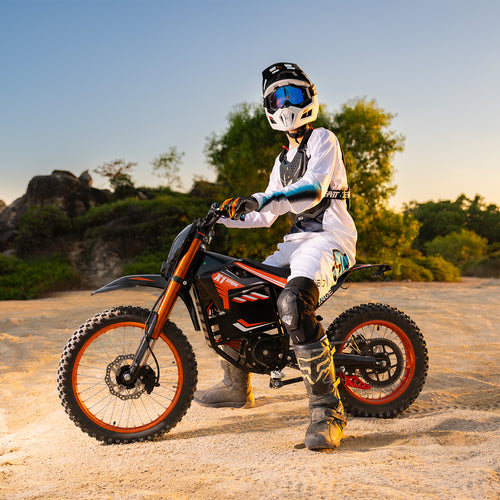
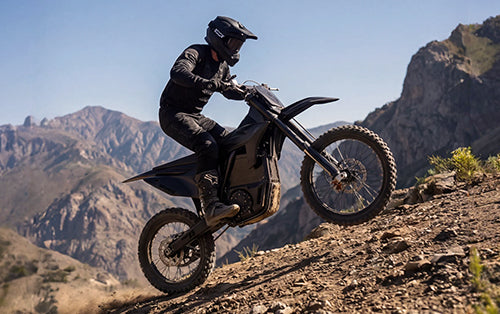



When kids ride electric dirt bikes, safety gear should protect the head and face, eyes, hands, feet and ankles, knees and elbows, and torso. Basic gear usually includes a properly fitted motorcycle helmet, off-road goggles, full-finger gloves, a long-sleeve top, long pants, and over-the-ankle riding boots. Depending on the riding environment and intensity, knee pads, elbow pads, and chest and back protection can also be added.
The Motorcycle Safety Foundation (MSF) also recommends DOT-compliant helmets, goggles, long sleeves, long pants, over-the-ankle boots, and gloves as basic gear for dirt bike riding.
But when preparing electric dirt bike safety gear for kids, it is not enough to simply check whether they are wearing it. Each piece of gear also needs to properly protect the intended part of the body without interfering with vision, movement, or vehicle control.
To learn more about choosing the right bike based on a child’s age, height, speed, and safety needs, read:Kids Electric Dirt Bike Buying Guide: Age, Height, Speed, and Safety
Kids Electric Dirt Bike Safety Gear Overview
Instead of trying to remember a long list of gear, a simpler approach is to start with the parts of the body that need protection while kids are riding.
|
Body Area to Protect |
Recommended Gear |
Main Purpose |
What to Look For |
|
Head and face |
Full-face motorcycle/off-road helmet |
Protects the head and adds facial coverage |
Suitable for motorcycle riding, meets applicable safety standards, secure fit |
|
Eyes |
Off-road goggles |
Blocks dust, dirt, and other debris |
Compatible with the helmet, clear vision, lens in good condition |
|
Hands |
Full-finger riding gloves |
Adds hand coverage and helps maintain a secure grip |
Does not interfere with throttle, brake, or handlebar control |
|
Feet and ankles |
Off-road riding boots |
Adds coverage for the feet, ankles, and part of the lower legs |
Covers the ankles, fits securely, does not interfere with control |
|
Knees and elbows |
Knee and elbow guards |
Adds protection to joints that may contact the ground |
Stays in place during movement without noticeably restricting motion |
|
Chest and back |
Chest and back protection |
Adds torso coverage |
Covers the correct areas while allowing normal movement |
|
Skin |
Long-sleeve top, long pants, or off-road riding gear |
Reduces direct skin exposure |
Provides full coverage without interfering with riding movement |
These pieces of gear serve different protective purposes. A helmet does not replace eye protection, long pants do not replace knee guards, and regular shoes do not provide the same coverage as over-the-ankle riding boots.
Head and Face Protection Should Come First
A helmet is one of the most important pieces of protective gear for kids riding dirt bikes.
The MSF recommends that dirt bike riders wear motorcycle helmets that meet DOT requirements. A full-face design can also provide additional coverage for the face and chin.
Parents often see the DOT label when choosing a helmet. More precisely, DOT does not individually “approve” each helmet. Manufacturers are responsible for certifying that their products comply with Federal Motor Vehicle Safety Standard No. 218 and labeling them accordingly.
So instead of looking for a so-called “DOT-approved helmet,” it is more accurate to check whether the helmet clearly meets the applicable motorcycle safety standards and to review the product information provided by the manufacturer.
Can Kids Use a Bicycle Helmet Instead?
A standard bicycle helmet should not automatically be considered a direct replacement for a helmet designed for kids riding electric dirt bikes.
Bicycle helmets and motorcycle helmets are designed for different riding environments and uses and are subject to different safety standards. Kids riding electric dirt bikes should use helmets specifically designed for the appropriate motorcycle or off-road riding use.
Can I Buy a Larger Helmet for My Child to Grow Into?
Safety gear should fit a child’s current size rather than being intentionally oversized to extend how long it can be used.
Once the helmet is properly worn and the retention system is secured, it should stay stable. If the helmet moves noticeably when the child turns or shakes their head, the size and fit should be checked again.
Kids grow quickly, which may mean replacing gear more often, but “they can wear it longer” should not be a reason to choose an oversized helmet.
Goggles Should Be Considered Together With the Helmet
Off-road goggles do more than protect the eyes from larger debris.
On dirt trails, muddy terrain, and other unpaved surfaces, dust, dirt, small debris, and low branches can enter the eye area or affect visibility. That is why the MSF also includes goggles as part of basic dirt bike riding gear.
Regular sunglasses and everyday glasses can provide some coverage, but they do not offer the same level of eye coverage as off-road goggles.
For kids’ goggles, the main things to check are:
- whether they fit properly with the helmet’s eye opening;
- whether they tend to slip after being put on;
- whether they press on the bridge of the nose or noticeably affect visibility;
- whether the lens is clear and free from serious scratches or cracks.
For this reason, the helmet and goggles are better treated as a coordinated head-and-face protection system rather than two completely separate pieces of gear.
Gloves Should Protect the Hands Without Interfering With Bike Control
Kids’ off-road riding gloves should generally have a full-finger design.
Gloves can reduce direct contact with branches, dirt, and other off-road debris, while also affecting how kids grip the handlebars and operate the throttle and brakes.
That is why thicker riding gloves are not always better.
A suitable pair of gloves should allow the fingers to move naturally, keep the palms stable on the handlebars, and still allow normal operation of the bike’s controls.
If the gloves are noticeably too large, the hands can move around inside them. If the material is too thick or the size is not right, it may also reduce flexibility when kids use the throttle and brakes.
This is also why regular winter gloves or loose everyday gloves should not be treated as the same as riding gloves simply because they cover the hands.
Why Shouldn’t Kids Wear Regular Sneakers on an Electric Dirt Bike?
Foot protection in off-road riding involves more than just the feet. It also includes the ankles and part of the lower legs.
The MSF recommends over-the-ankle boots as part of basic dirt bike riding gear. Compared with regular low-top sneakers, off-road riding boots provide more coverage around the ankles and lower legs, and their construction is designed for powered off-road riding.
The differences can be understood simply:
|
Protection Area |
Regular Sneakers |
Off-Road Riding Boots |
|
Foot coverage |
Yes |
Yes |
|
Ankle coverage |
Usually limited |
More complete |
|
Lower-leg coverage |
Usually minimal |
Usually more |
|
Designed for off-road motorcycle riding |
Usually no |
Yes |
|
Riding-specific protective structure |
Usually none |
Usually more |
This does not mean kids need the highest-level motocross boots the first time they try off-road riding, but regular low-top sneakers should not be treated as an equivalent substitute for off-road riding boots.
If dedicated off-road boots are not available, sturdy boots with good structure and ankle coverage can provide more coverage than low-top shoes. As riding intensity increases, purpose-built dirt bike boots become more suitable for the corresponding off-road riding conditions.
What Do Knee, Elbow, Chest, and Back Protection Cover?
Helmets, goggles, gloves, and riding boots protect several basic areas, but a child’s knees, elbows, and torso can still be directly exposed during off-road riding.
For this reason, a complete set of kids dirt bike gear can also include joint and torso protection depending on the riding conditions.
Knee and Elbow Protection
The knees and elbows are prominent joints and may be among the first areas to contact the ground during a fall.
Knee and elbow guards add dedicated coverage to these areas.
When choosing protective gear for kids, the main concern is not how large the outer shell looks, but whether the guards stay over the areas they are meant to protect when the child bends their knees and elbows or changes body position.
Gear that is too loose can shift out of place, while gear that is too tight may restrict normal movement.
Chest and Back Protection
A chest protector and back protector mainly add protection to the chest, back, and parts of the torso.
Some off-road body protection also includes protective sections for the shoulders, elbows, or spine.
Whether a child needs these additional pieces can depend on the riding environment and riding intensity. More importantly, once the gear is on, the child should still be able to turn their body normally, bend their arms, and maintain a natural riding position.
The purpose of body protection is to add coverage, not to make the bike harder to control because the gear is too heavy or restricts movement.
Long Sleeves and Long Pants Are Part of Protective Gear, but They Do Not Replace Body Armor
Long sleeves and long pants are often underestimated because they do not look like professional safety gear.
The MSF also includes long sleeves and long pants as part of basic dirt bike riding gear. Full skin coverage can reduce direct contact between exposed skin and dirt, vegetation, debris, and the ground.
However, two different types of protection need to be distinguished:
Riding clothing mainly provides skin coverage, while dedicated protective gear adds protection to specific areas of the body.
Therefore:
- Long sleeves do not replace chest protection;
- Long pants do not replace knee guards;
- Regular clothing does not provide the same protection as dedicated body armor.
For kids, a more appropriate setup is to first ensure full skin coverage, then add suitable joint and torso protection based on the riding environment.
Safety Gear Should Match a Child’s Riding Needs
Kids’ electric dirt bike gear should meet two conditions: it should protect the intended areas of the body, and it should fit properly without interfering with vision or vehicle control. A helmet, goggles, gloves, over-the-ankle riding boots, long sleeves, and long pants are basic gear, while knee pads, elbow pads, and chest and back protection can be added based on the riding environment and intensity.
Regular sports gear should not be treated as a direct substitute for dedicated off-road riding gear simply because it looks similar. Before buying, also make sure each piece of gear matches the child’s current size, helmet design, and vehicle control needs.


