





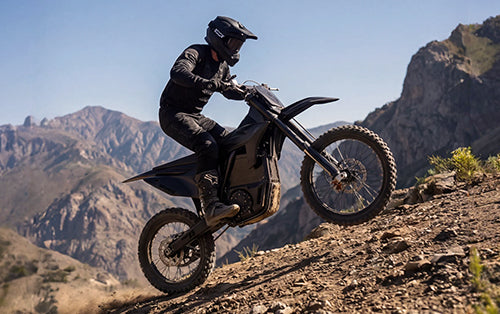



A 10-year-old can start riding an electric dirt bike for kids, but age alone should not determine which bike to choose. What really matters is whether the child can control the bike’s size, speed, and power response.
When choosing an electric dirt bike for 10 year old riders, consider size → speed → power → actual control ability in that order. If any one of these clearly exceeds the child’s current ability, it is better to consider another model rather than choosing higher performance just so the bike can “last a few more years.”
What Size Electric Dirt Bike Is Right for a 10-Year-Old?
Size should be the first thing to check. Parents need to look at seat height, the child’s height and inseam, handlebar position, and overall bike weight rather than relying only on wheel size or the age range listed on the product page.
|
What to Check |
Good Fit |
Signs You Need a Different Size |
|
Seat Height |
The rider can support the bike steadily when stopped |
The rider can barely touch the ground with their toes |
|
Leg Length / Inseam |
The riding position feels natural, with room for the knees to move |
The legs are clearly overextended or bent too much |
|
Handlebar Position |
The arms stay naturally bent, and the rider can turn the handlebars fully |
The rider has to lean noticeably forward to operate the bike |
|
Bike Weight |
The child can hold, push, and turn the bike around without power |
The child struggles to bring the bike upright after it tilts slightly |
|
Wheel Size |
The wheel size matches the seat height and the rider’s proportions |
The wheels make the bike noticeably too tall or create an awkward riding position |
When choosing an electric dirt bike for kids, a simple no-power test can help: have the child get on the bike, hold it upright, get off, push it forward, and turn it around.
If these basic movements already require adult help, the bike is not truly the right size, even if its speed and power seem appropriate.
What Speed Is Suitable for a 10-Year-Old on an Electric Dirt Bike?
When judging speed, don’t start by asking how fast the bike can go. Instead, look at which riding skills the child has already learned.
|
Speed Range |
What It Feels Like to Ride |
Best-Matched Riding Skills |
|
Under 10 mph |
Slower pace, with more time to steer and brake |
Learning how to start, ride straight, and stop |
|
10–15 mph |
Acceleration feels more noticeable, and the rider needs to slow down before turns |
Can independently control the throttle, brakes, and basic steering |
|
15–20 mph |
Bumps and turns have a greater effect on the bike |
Can make consecutive turns and judge when to slow down in advance |
|
Over 20 mph |
The bike feels noticeably faster, and the riding pace becomes more demanding |
Requires more developed speed and bike control skills |
During a test ride, set up a short fixed route: start on a straight section, make two wide turns, and stop at a designated point.
If the child can complete the route consistently without a parent repeatedly reminding them to “let off the throttle,” “slow down,” or “brake,” the current speed is likely within a range they can actively control.
When choosing an electric dirt bike for kids with multiple speed or riding modes, check whether the lowest mode is appropriate for the child first rather than making top speed the main buying consideration.
How Much Motor Power Does a 10-Year-Old Rider Need?
For young riders, motor power most directly affects how strongly the bike moves forward from a stop, how quickly it accelerates, and how the power changes on grass and slopes.
|
Power Range |
Riding Feel |
Best-Matched Riding Stage |
|
250–500W |
Power delivery is relatively smooth, making starts easier to anticipate |
Learning basic throttle and brake control |
|
500–1000W |
Acceleration and power on gentle slopes feel more noticeable |
Can consistently start, turn, and slow down |
|
Over 1000W |
Power reserve and acceleration response increase noticeably |
Has more developed speed control, bike control, and real riding experience |
Power ratings alone do not fully determine how a bike feels to ride. Controller tuning, torque, bike weight, and throttle response can all change how the bike accelerates.
During a test ride, watch two things: whether the child can maintain a normal riding position after gently applying the throttle, and whether they can independently let off the throttle when they need to slow down.
If the child becomes stiff, grips the handlebars tightly, or forgets to let off the throttle as soon as the bike accelerates, that level of power response is not appropriate for them at this stage.
What Design Features Appeal to Kids?
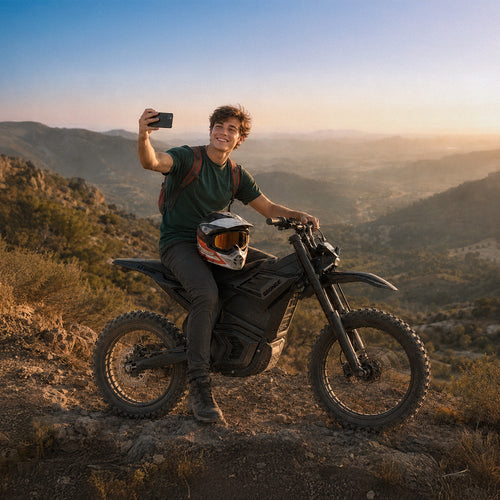
Around age 10, kids start paying more attention to how a bike looks and often want it to look like a real dirt bike rather than a kids’ toy.
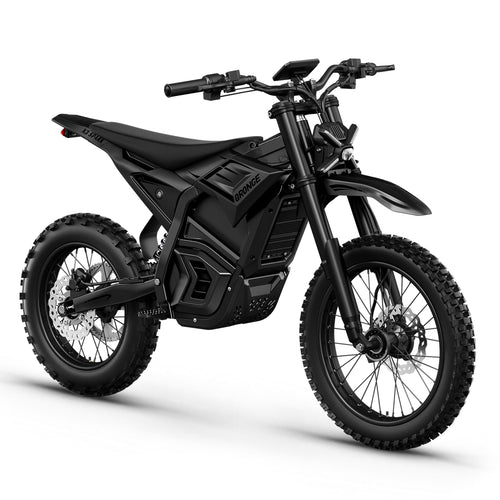
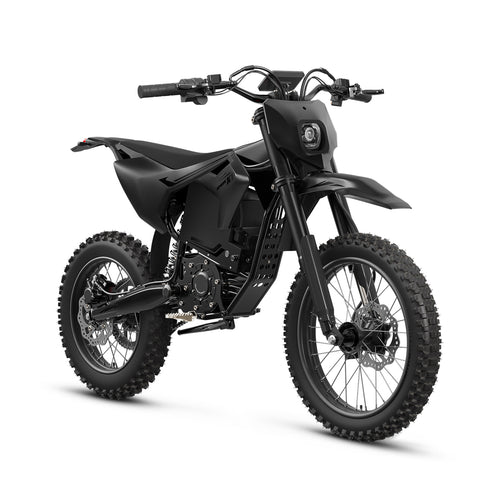
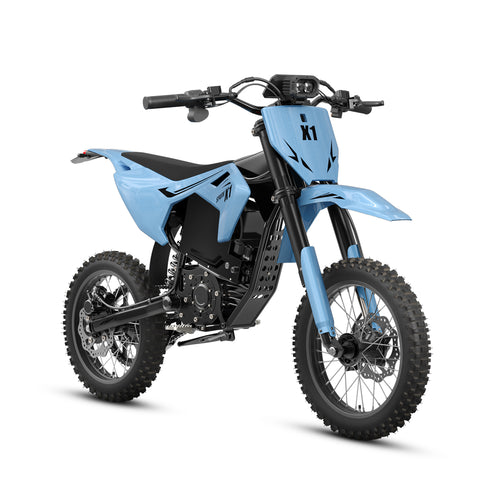
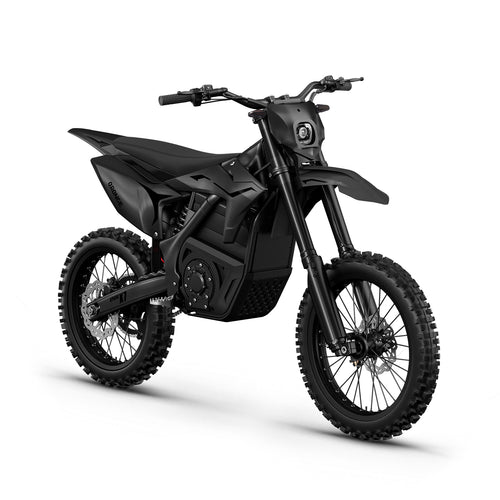
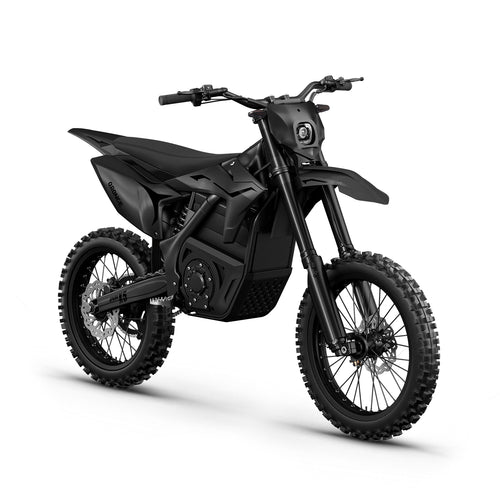
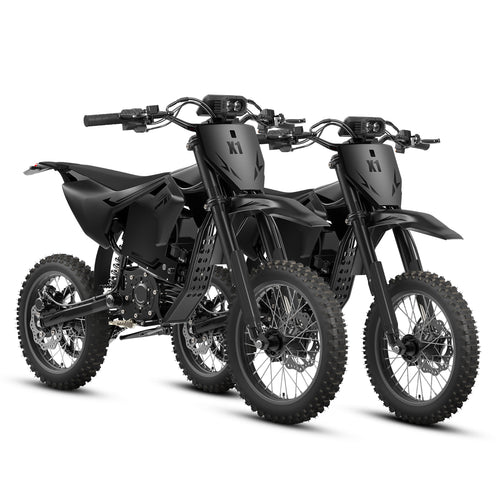
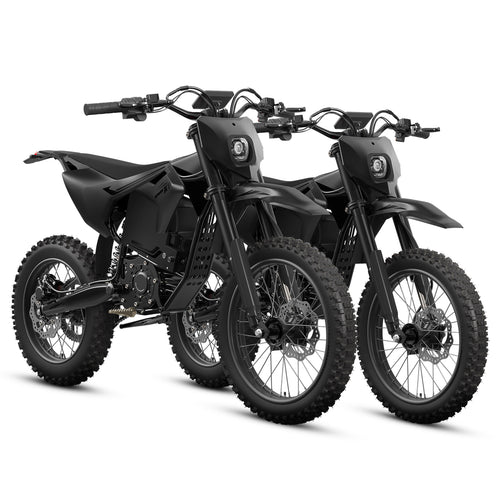
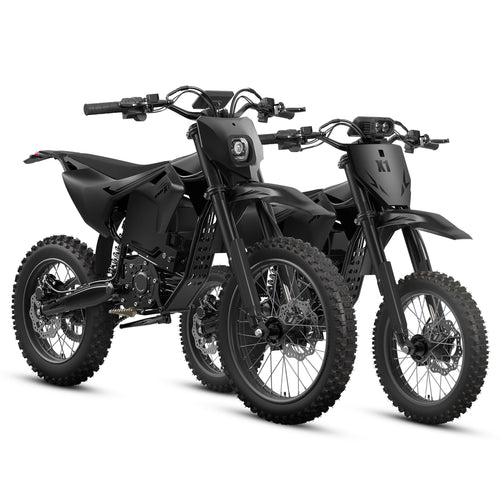
The Qronge X1 Spark M comes in red and black. Red stands out more and gives the bike a sportier look, while black has a cleaner, tougher appearance that feels closer to a real off-road motorcycle. Letting kids choose the color they prefer can also make the bike feel more like their own.

The bike features a compact mini dirt bike design while keeping the off-road motorcycle look that young riders like. For kids who are already interested in dirt bikes, this more authentic dirt bike styling can be more appealing than a design that clearly looks like a toy.
How Should You Balance Size, Speed, Power, and Riding Experience When Choosing a Bike?
First, narrow down the options by size. If the child cannot support the bike steadily, or already struggles to hold it upright and turn it around without power, rule it out without spending more time on performance.
Second, check the lowest available speed. If even the gentlest mode causes the child to frequently miss braking points, become noticeably tense while turning, or need constant reminders from an adult to let off the throttle, the bike is not a good fit right now.
Third, look at power. If normal acceleration already affects riding position, steering control, or the ability to let off the throttle independently, the power does not match the rider’s current experience.
After these three checks, compare suspension, range, tires, riding modes, and room to grow among the remaining electric dirt bike options for kids. This approach puts “what the child can control now” first, then considers “what they can grow into later,” rather than sacrificing current fit for higher specs.
To learn more about how different kids' electric dirt bikes compare in size, power, performance, and rider fit, read: How to Choose a Kids' Electric Dirt Bike? A Comparison Guide to Tuttio, Yozma, Heybike, HappyRun, and Qronge
What Safety Preparations Should Be Made Before Riding?
Put on protective gear first, check the bike second, and only then start riding.
The rider should wear:
- A properly fitted and securely fastened full-face helmet;
- Off-road goggles;
- Full-finger gloves;
- A long-sleeve riding jersey and long pants;
- Riding boots that cover the ankles;
- Knee pads, elbow pads, and chest and back protection as needed based on riding intensity.

After putting on the protective gear, complete a pre-ride check:
Tires: Check tire pressure, tread, and any visible damage.
Brakes: Test the front and rear brakes separately to make sure they respond normally.
Chain: Make sure the tension is correct, with no obvious slack or debris, and lubricate it as needed.
Handlebars and Footpegs: Check for any looseness.
Battery: Make sure it is securely installed and has enough charge for the planned ride.
Throttle: Test the throttle while stationary to make sure it operates and returns normally.
After the inspection, do not increase both speed and terrain difficulty at the same time when riding a new bike for the first time.
Start in a low-speed mode and practice starting, slowing down in a straight line, and coming to a complete stop. Once those movements are stable, add wide turns, then gradually move on to consecutive turns and light off-road terrain.
Adult supervision should involve more than simply watching for falls. Adults should also pay attention to whether the child keeps increasing speed out of excitement, whether riding form begins to break down after riding for a while, and whether the rider can stop and reset after making an operating mistake.
Conclusion
The right electric dirt bike for 10 year old riders should let the child sit securely, support the bike, control the speed, and handle the power response naturally. Once all four are in place, then consider range, higher performance, and room to grow.


