




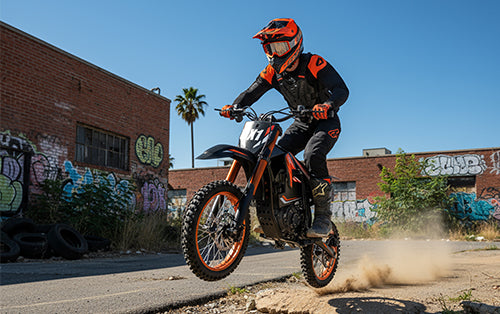
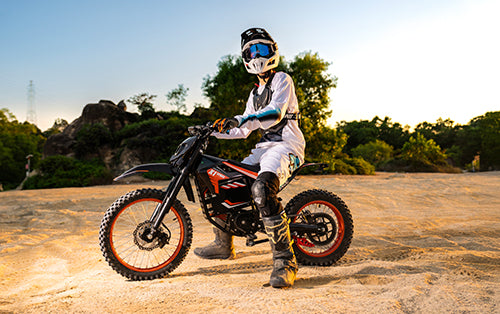
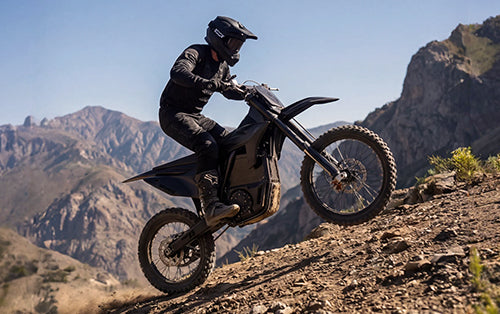
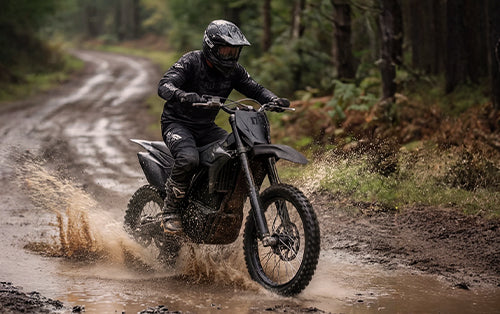
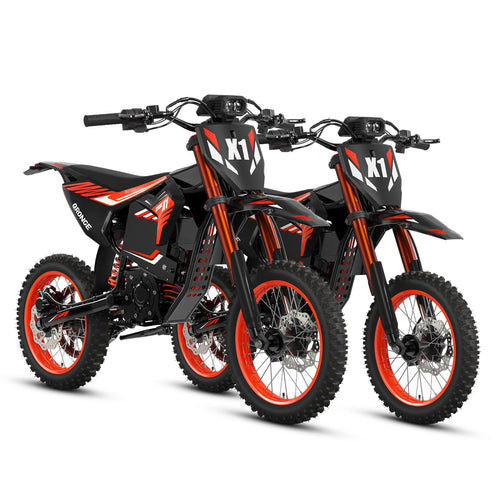
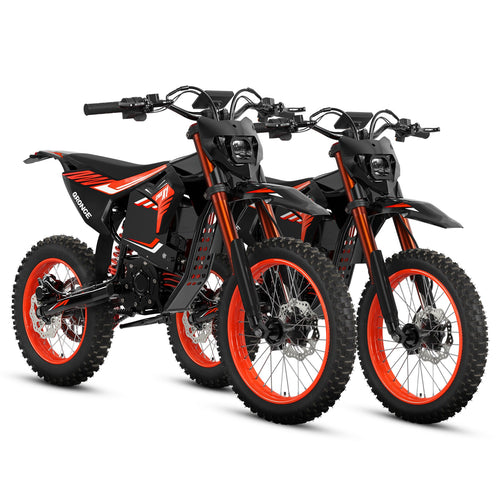

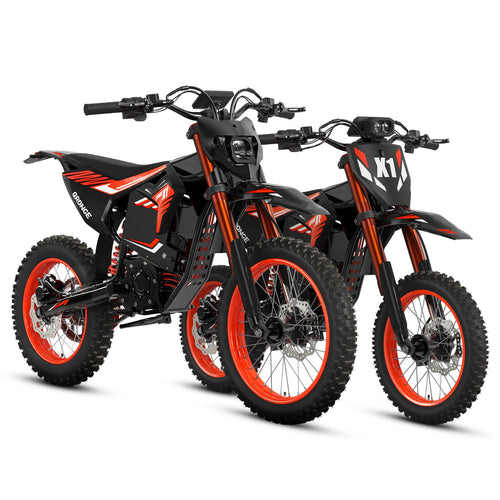




An electric motorcycle designed for adult riders should provide power and range that match the riding distance, terrain difficulty, and the rider’s level of control. An electric motorcycle for adults is not necessarily more practical just because it has more power or a longer advertised range. The real question is whether it can deliver enough power on common routes while still leaving a reasonable amount of battery for the return trip.
Campgrounds, farm roads, smooth trails, and demanding off-road terrain place very different demands on a motorcycle. Before deciding how much power and range you need, consider where you usually ride, how far you travel, and whether your routes include continuous climbs, mud, or loose surfaces.
How Much Power Does an Electric Motorcycle for Adults Need?
Motor power determines how much performance a motorcycle can deliver, but adult riders do not necessarily need to choose the highest-powered option.
On smooth trails, around campgrounds, and on private property, smooth starts, low-speed control, and basic climbing ability matter more. If the route includes gravel, continuous hills, and longer distances, the motorcycle needs more power in reserve.
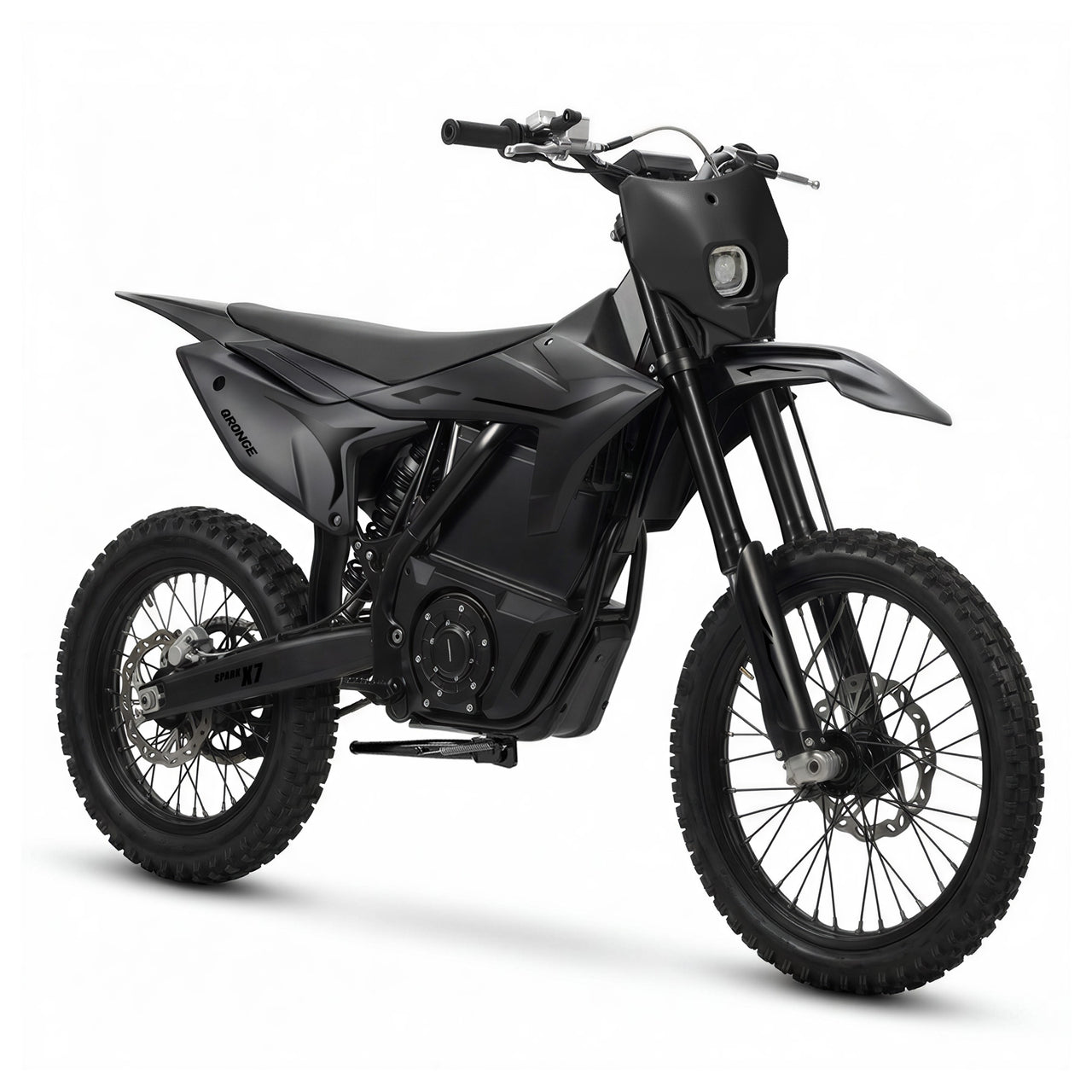
For adult riders with some off-road experience, a 6000W power level generally provides a balance of performance and control. A 12000W power level is better suited to steep hills, loose surfaces, and demanding off-road riding, but it also requires more riding experience and better throttle control.
|
Power Level |
Best-Suited Riding Conditions |
Model Specification Reference |
|
6000W |
Trails, farm roads, gravel roads, and continuous moderate hills |
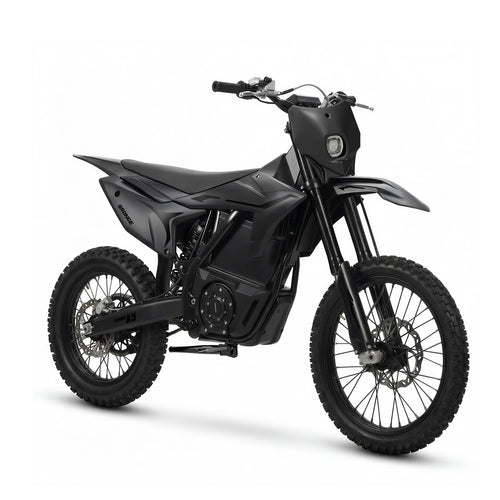
X5 Spark: 6000W, 300Nm |
|
12000W |
Steep hills, mud, loose surfaces, and demanding off-road routes |
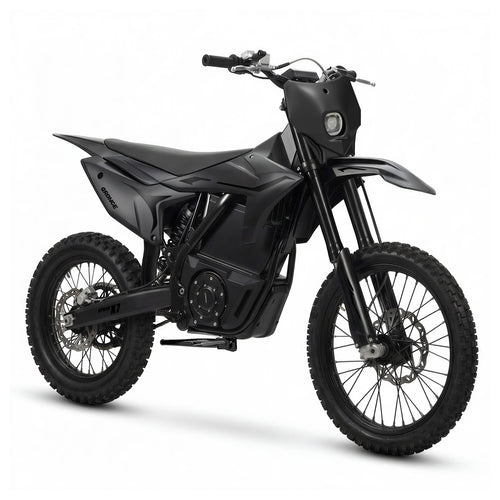
X7 Spark: 12000W, 600Nm |
When choosing a high-power electric motorcycle, wattage should not be the only consideration. More power provides stronger acceleration and greater climbing capacity, but it also produces a more direct power response. For riders without enough experience, excessive power may make the motorcycle harder to control.
Why Does Torque Affect Off-Road Performance?
Motor power mainly reflects sustained output, while torque directly affects power response during starts, climbs, and low-speed riding through difficult terrain.
In mud, gravel, and on hills, a motorcycle rarely maintains top speed continuously. Riders need stable power even at low speeds. Therefore, when choosing an electric motorcycle for adults, both power and torque should be compared instead of focusing only on top speed.
A 6000W motor with 300Nm is better suited to a balanced and stable trail-riding experience, while a 12000W motor with 600Nm provides a stronger response on steep hills and under heavier loads. The better configuration depends on the actual route, not simply on which numbers are higher.
Further Reading: To understand how battery voltage affects speed, power delivery, and riding range, read [60V or 72V? How Do You Really Choose the Right Fast Electric Dirt Bike?]
How Much Range Does an Electric Motorcycle for Adults Need?
The range should cover the planned route, the return trip, and an extra battery reserve. If you plan to ride 30 miles, you should not choose a model with an advertised range of only 30 miles, because hills, cold weather, detours, and frequent acceleration all increase power consumption.
For short rides around campgrounds, the priority is keeping enough battery for the return trip. For half-day trail rides and farm patrols, a larger battery capacity should be prioritized. For longer or more remote routes, battery capacity, riding mode, and terrain-related power use should all be considered.
|
Battery Configuration |
Advertised Maximum Range |
Best-Suited Routes |
|
60V 50Ah |
Up to 110 miles |
Medium- to long-distance trails, farms, and outdoor routes |
|
72V 50Ah |
Up to 120 miles |
Long-distance, high-load, and demanding off-road routes |
These specifications help show the differences between battery levels, but the maximum range should not be treated as a fixed distance that can be reached on every ride. The actual range of a long-range electric motorcycle will still be affected by rider weight, average speed, hills, and surface conditions.
Why Does Real-World Range Vary?
Power consumption is usually lower when riding slowly on smooth, hard-packed surfaces. Riding through mud, sand, continuous hills, or in a high-performance mode will use significantly more battery power.
Common factors that affect real-world range include:
- Riding speed and power mode
- Rider weight and additional load
- Hills and frequent acceleration
- Mud, sand, and loose surfaces
- Cold temperatures, tire pressure, and battery condition
A higher-powered model does not necessarily have a shorter range. What really affects battery use is how the power is used and the battery capacity. A high-powered motorcycle can still deliver good range when ridden smoothly, while a lower-powered model may also drain the battery quickly when climbing at full load for long periods.
What Else Should You Consider When Choosing Power and Range?
Power and range determine how far a motorcycle can travel and how difficult a route it can handle, but wheel size, suspension, brakes, and tires affect whether that performance can be delivered consistently.
Larger wheels make it easier to roll over ruts and gravel, while suspension affects stability over repeated bumps. The braking system must match the motorcycle’s speed and weight. Tires with more grip usually provide better control on difficult terrain, but they may also increase rolling resistance and power consumption.
Therefore, when choosing an adult electric motorcycle, power, battery capacity, torque, and the overall setup should be considered together. For regular trails and medium- to long-distance routes, balanced power and a large battery can be prioritized. Riders who often face steep hills and demanding off-road terrain, and who have stronger riding skills, can then consider a higher performance level.
The right choice is not the electric motorcycle with the biggest specifications, but one that can complete real-world routes while allowing the rider to maintain stable control.


