





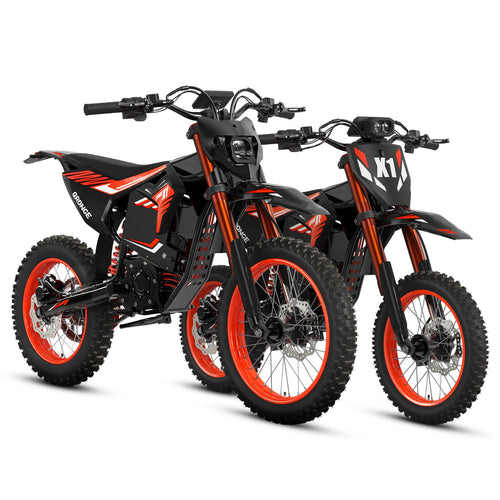




Slight heat while charging an electric dirt bike is usually normal. However, if the battery, charger, or charging port becomes noticeably hot, or if there are warning signs such as a burnt smell, plastic smell, discolored connector, interrupted charging, or battery swelling, charging should be stopped immediately, and continued use is not recommended.
Many users worry that a warm battery means something is wrong when charging an electric dirt bike for the first time. In fact, some heat during charging is not uncommon. What really needs to be checked is where the heat is coming from, whether it is normal warmth or abnormal overheating, and whether there are any other warning signs.
For electric dirt bike charging safety, safe charging is not only about whether the battery can be fully charged. It also includes whether the charger is compatible, whether the charging port is dry, whether the connector is stable, and whether the battery is in a suitable condition for charging.
What Kind of Heat Is Normal During Charging?
When an electric dirt bike is charging, both the charger and the battery are working. The charger needs to convert household power into current that the battery can use, and the battery may also generate a small amount of heat while receiving energy.
If the charger case is only slightly warm, the battery case feels a little warmer than usual, and there is no unusual smell, noise, interrupted charging, or case deformation, there is usually no need to worry too much.
Some users may notice that the charger gets warmer the longer it charges. This is also fairly common. As long as the temperature is not too hot to touch and the charging status remains stable, you can usually continue to observe it.
Simply put, slight warmth is acceptable, but obvious overheating should not be ignored. Many users search for an electric dirt bike charger that gets hot because what they really want to know is not whether it gets warm, but how hot is too hot.
What Kind of Heat Is Not Normal?
If an electric dirt bike shows obvious abnormalities while charging, it is not recommended to continue charging.
For example, if the battery case feels noticeably hot to the touch, the area around the charging port becomes especially hot, the plug, outlet, or charging cable heats up noticeably, or you smell a burnt, plastic, or sharp odor, you should stop charging immediately.
Some other situations also need special attention, such as a charging connector that turns black, becomes discolored, feels loose, or shows signs of melting, a charger that makes unusual buzzing sounds, shows abnormal indicator lights, has a deformed case, or charging that repeatedly stops and cannot remain stable.
If an electric dirt bike battery overheats while charging occurs, do not keep unplugging and plugging it back in, and do not wait for it to “finish charging.” A safer approach is to disconnect the power, let the battery and charger cool down naturally, and then contact the brand’s after-sales support to confirm the cause.
Why Does Heat Build Up During Charging?
Heat during electric dirt bike charging usually comes from three places: the charger, the battery itself, and the charging connector.
Charger heat mainly happens because the charger is converting current. This process creates some energy loss, so a warm charger case does not necessarily mean there is a problem. However, if the charger feels noticeably hot, has an unusual smell, makes abnormal sounds, or shows case deformation, that is not normal.
Battery heat is related to the internal charging process. When a lithium battery is charging, current enters the battery cells, and there is a certain amount of internal resistance inside the battery, which can create a small amount of heat. If it is only slightly warm, you can usually continue to observe it. But if the temperature keeps rising, or the battery becomes noticeably hot shortly after charging begins, charging should be stopped.
Another situation that is easier to overlook is heat from the charging connector. Electric dirt bikes are often used in outdoor environments, so the charging port may come into contact with dust, mud, sand, or moisture. If the connector is not clean or if the plug is not fully inserted, resistance increases as current passes through, and heat can become concentrated at a very small contact point.
This is also why electric dirt bike battery connector safety is important. Charging safety is not only about the battery itself. It also depends on whether the battery, charger, connector, and wiring are all in stable condition.
Why Should Charging Port Heat Be Taken Seriously?
Compared with normal warmth from the battery case, local heat around the charging port deserves more attention.
This is because the charging port is where current passes through in a concentrated area. If the connector has dust, moisture, mud, oxidation, looseness, or poor contact, the local temperature may rise faster. This is especially true when the plug is only partially inserted. It may look connected, but the actual contact is unstable, and long-term charging in this condition may increase the risk of connector damage.
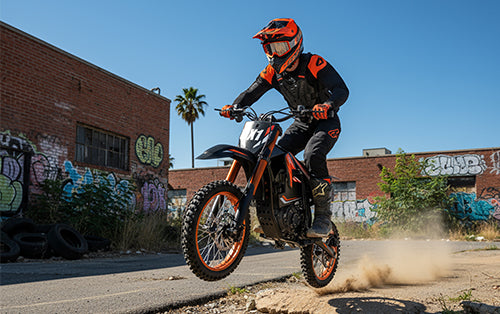
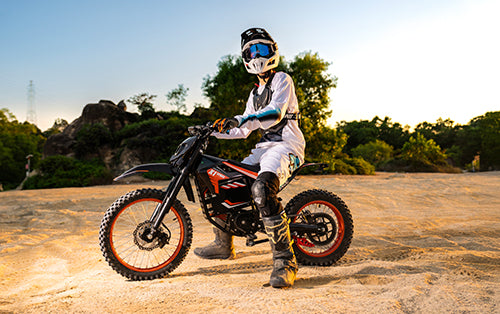
Common electric dirt bike riding scenarios include forest trails, campsites, farms, mud, sand, and outdoor routes. These environments make it easier for the charging port to come into contact with dust and moisture, so checking the connector before each charge is necessary.
If you notice an electric dirt bike charging port overheating, especially if the area around the charging port feels noticeably hot, the connector turns black, the plastic softens, the plug feels loose, or there is an unusual smell, do not continue using it. Do not modify the connector yourself or replace it with an incompatible charging cable.
Further Reading: 60V or 72V? How to Truly Choose the Right Electric Dirt Bike?
After learning about charging safety, you can continue reading to better understand the relationship between different voltages, power, and riding scenarios.
Can You Charge an Electric Dirt Bike Right After Riding?
If it was only a light ride and both the bike and battery are in normal condition, you can generally charge it according to the instructions.
However, if the bike has just gone through long climbs, mud riding, sand riding, high-load riding, hot weather, or the battery case already feels noticeably warm, it is not recommended to charge it right away. A safer approach is to let the bike and battery cool down naturally for a while before connecting the charger.
Charging immediately after riding may keep the battery working at a higher temperature and add more charging stress. Especially in summer, under direct sunlight, or after continuous off-road riding, letting the battery temperature stabilize first is better for battery safety and long-term use.
These are also some practical electric dirt bike battery charging tips: do not only focus on when the battery can be fully charged, but also whether the battery is currently in a suitable condition to start charging.
What Should You Check Before Charging?
Before charging, first check whether the charging port is dry. Do not charge when the connector is damp, has moisture, or right after the bike has been washed. If moisture enters the connector, it may affect contact stability and may also increase the risk of abnormal heat.
Next, check whether there is mud, sand, dust, or any foreign matter in the connector. If the charging port is clearly dirty, clean it first before connecting the charger. Do not force the charging plug in when there is foreign matter in the connector.
You should also make sure the plug is fully inserted. A half-inserted or loose plug can easily cause unstable contact, which may lead to local heat, interrupted charging, or even connector damage.
The charging cable and plug should also be checked. If the cable insulation is damaged, the plug is loose, the connector is deformed, or the case is cracked, continued use is not recommended. Do not simply wrap it with tape and keep charging.
Finally, make sure the charger is compatible. Do not only check whether the connector can be plugged in. You should also check whether the voltage, current, connector specification, and battery management system are compatible. An incompatible charger may cause abnormal charging, increased heat, and may even affect battery life.
How to Charge More Safely?
If you want the battery and charging system of an electric dirt bike to stay stable, daily charging habits are important.
It is recommended to use the original charger or a charger recommended by the manufacturer. Do not casually use third-party chargers from unknown sources. When charging, choose a dry and well-ventilated location, keep it away from flammable materials, and avoid charging under high-temperature direct sunlight.
It is not recommended to leave the bike charging unattended for long, nor to charge it overnight while sleeping. After the battery is fully charged, disconnect the charger to avoid leaving it connected for too long.
If the battery, charger, cable, or connector already shows damage, deformation, unusual smell, water exposure, looseness, or other issues, do not continue using it. Do not disassemble the battery pack or modify the charging connector by yourself.
For lithium battery charging safety for electric dirt bikes, what really matters is keeping the entire charging system compatible, dry, stable, and well-ventilated, rather than only looking at battery capacity or charging speed.
When Should You Stop Using It and Contact After-Sales Support?
If the battery, charger, or charging port shows obvious abnormalities, it is not recommended to continue judging the issue by yourself, and you should not repeatedly try to charge it.
If the charging port turns black, becomes discolored, or shows burn marks, it may indicate abnormal heat at the connector. If the charger overheats abnormally, makes unusual sounds, or has a deformed case, it should not continue to be used. If the battery is noticeably swollen, leaking, deformed, or has a burnt smell or plastic smell, charging should be stopped immediately.
If charging repeatedly disconnects, the charging speed suddenly becomes noticeably slower, the plug feels loose after connection, or the bike displays an abnormal error, it is also recommended to contact after-sales support to confirm the cause.
Do not replace the plug, wiring, or third-party charger with incompatible parts by yourself. For electric dirt bikes using lithium batteries, the battery, BMS, charger, connector, and wiring usually need to work as a matched system. If any part is incompatible, it may affect charging stability.
Proper Charging Habits Can Reduce Risk and Protect Battery Life
Slight heat while charging an electric dirt bike does not necessarily mean there is a problem, but obvious overheating, connector abnormalities, unusual smells, discoloration, or interrupted charging should all be taken seriously.
Proper charging habits can reduce abnormal risks with the battery, charger, and connector, and also help keep the battery in a more stable condition. Taking a few extra seconds to check before each charge is often more important than dealing with a problem after it happens.


