


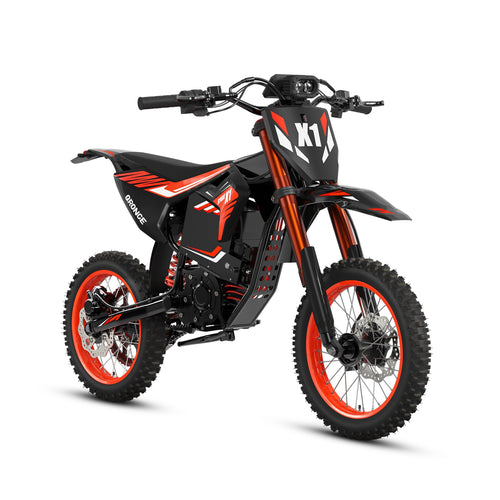
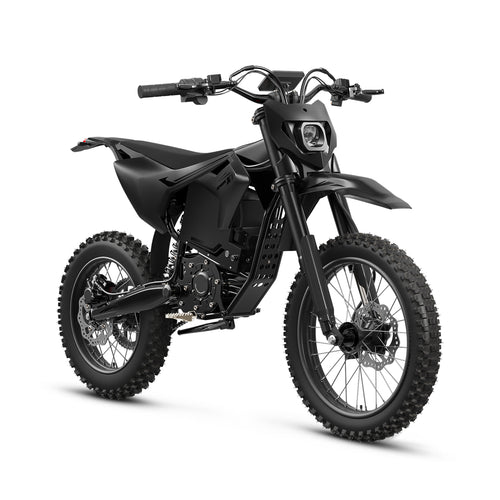
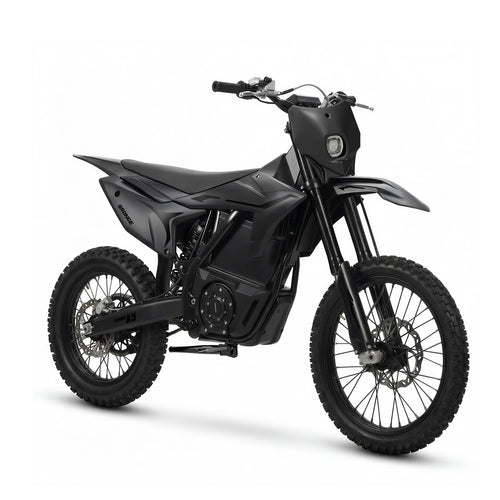
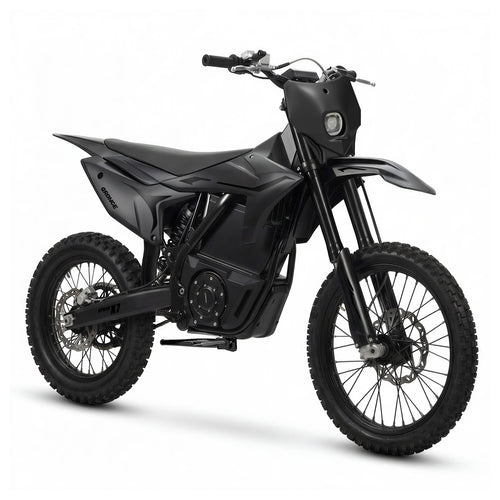


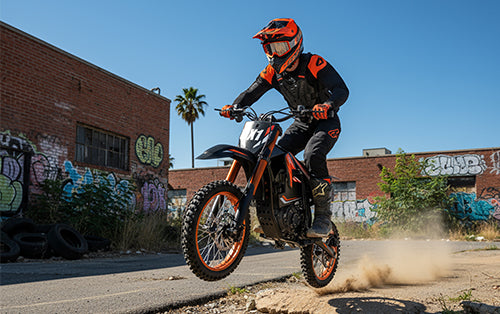
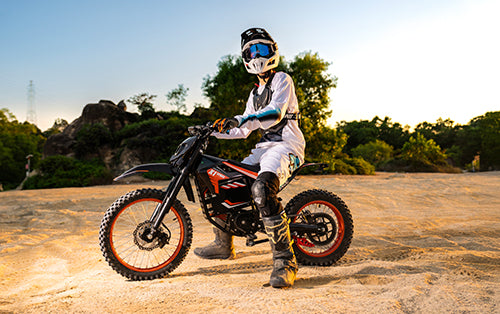
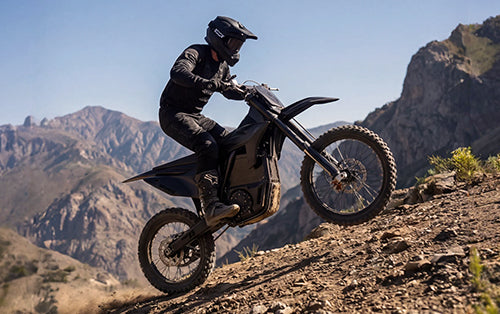
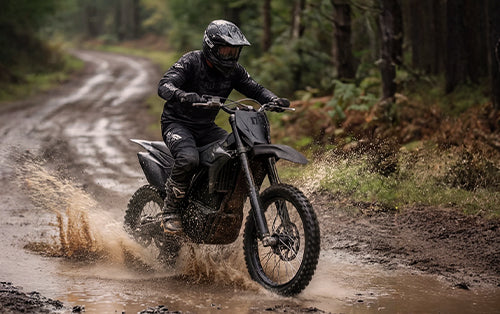
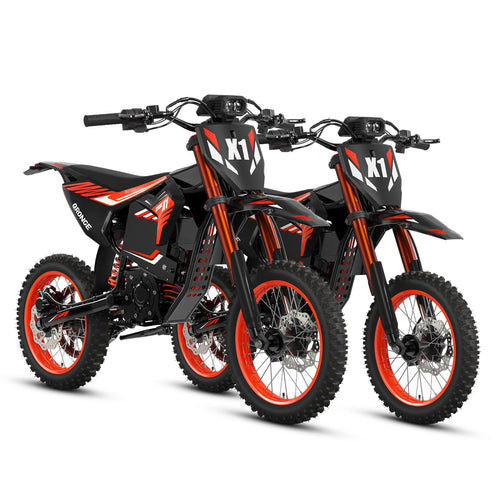
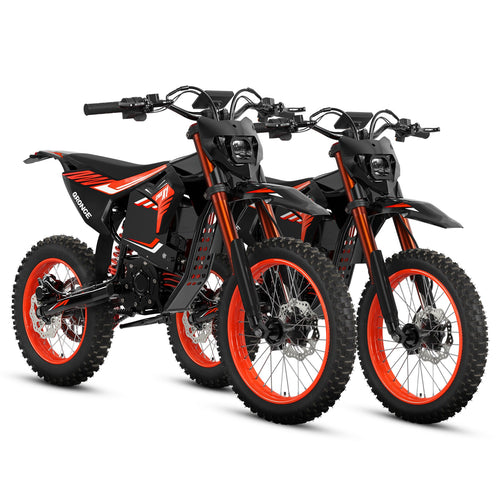





When choosing a hunting dirt bike, you should not look only at top speed or price. During hunting season, on farm roads, forest trails, gravel paths, and rides around campgrounds, what matters more is the bike’s overall performance in real outdoor conditions.
An electric dirt bike suited for outdoor hunting scenarios usually needs several key capabilities: enough power reserve, torque that supports low-speed riding, range that covers the full round trip, tires that can handle rough ground, and stable overall control.
Next, we’ll compare the real differences between the five most popular electric dirt bikes currently on the market for hunting season and outdoor routes, focusing on power, torque, range, speed, and tire setup.
Core Specification Comparison
|
Product Model |
Motor Power |
Battery Capacity |
Top Speed |
Range |
Tires / Wheel Setup |
|
QRONGE X5 Spark |
6000W peak |
60V 50Ah |
65 mph |
110 miles |
Front 19"×2.8" / Rear 16"×3.5" |
|
QRONGE X7 Spark |
12000W peak |
72V 50Ah |
70 mph |
120 miles |
Front 19"×2.8" / Rear 16"×3.5" |
|
HappyRun G300 Pro |
6500W peak |
72V 30Ah |
50 mph |
70+ miles |
Front 70/100-19 / Rear 70/100-17 |
|
Yozma IN 10 Pro |
5500W peak |
60V 27Ah |
50 mph |
60 miles |
17" / 14" |
|
Aipas S1 AMP |
4000W |
60V 28Ah |
50 mph |
60 miles |
Front 14×3.0 / Rear 12×3.0 |
Start with the Real Route
The use case for a hunting dirt bike is usually not limited to flat roads. In many situations, riders may face forest trails, farm roads, gravel paths, grass, mud, and routes around campgrounds. The bike needs to maintain stable power output across different surfaces while also considering round-trip distance, remaining battery capacity, and riding safety.
If your main use is short-distance outdoor riding, a 50 mph class bike with 60–70 miles of range can already cover many basic needs. If the route is longer, or if you want to reduce charging pressure, a larger battery and longer range will offer more advantages.
So, the key to choosing this type of bike is not simply “which one has the biggest specs,” but whether the bike matches your route intensity, riding experience, and actual riding distance.
Power Comparison: Deciding Climbing Ability and Load Reserve
Motor power directly affects how a bike performs when starting, accelerating, climbing, and riding through complex terrain. For hunting season and outdoor routes, the more power reserve a bike has, the easier it is to maintain stable output on mud, slopes, gravel roads, and when carrying gear.
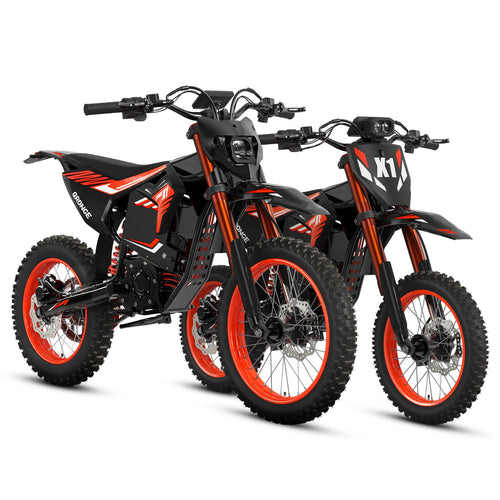
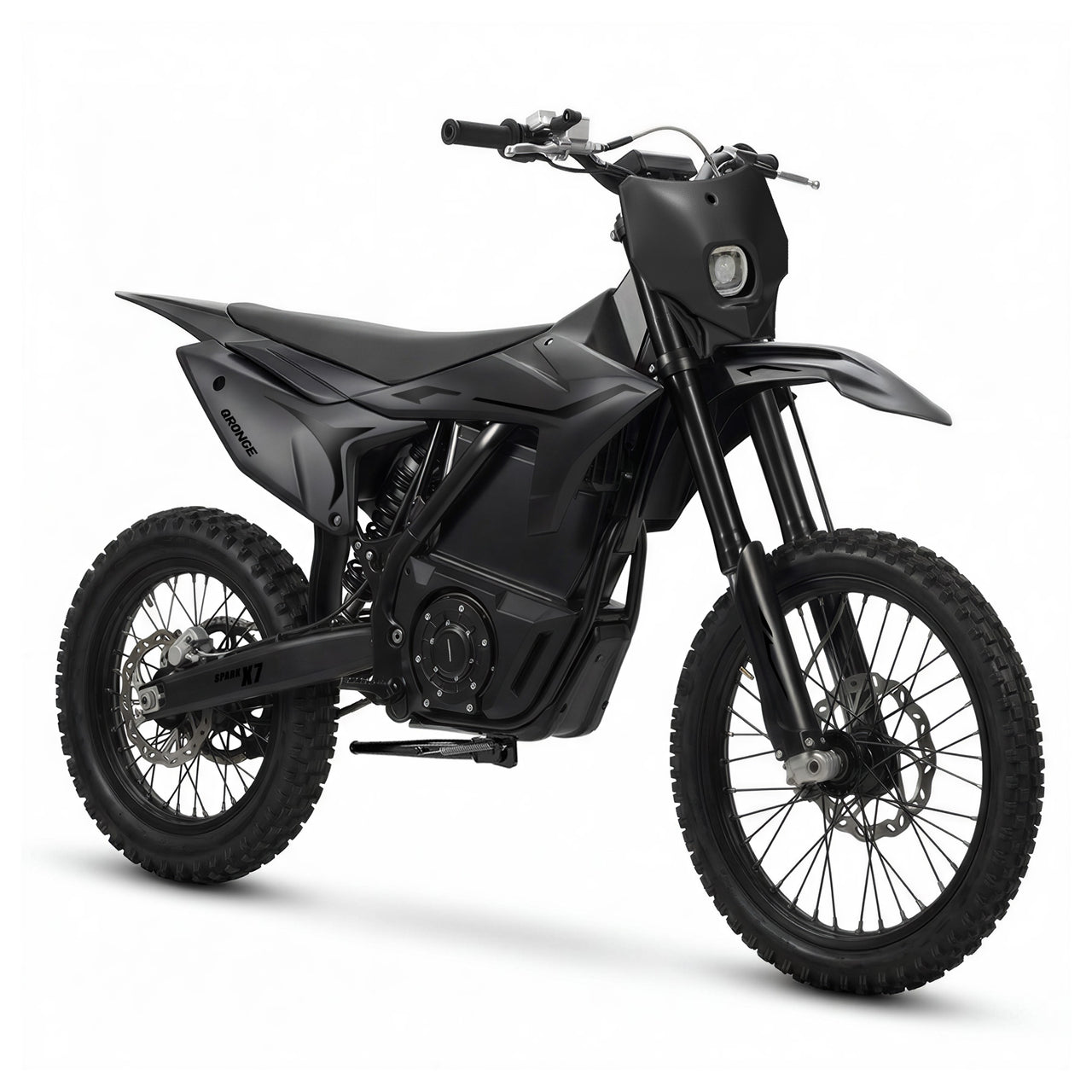
The X7 Spark’s 12000W peak output is the highest among the five models, giving it a more performance-focused position for stronger power needs and more complex terrain. The X5 Spark’s 6000W peak output sits in the mid-to-high power range, offering more reserve than 4000W and 5500W class models, while also being better suited for adult outdoor routes.
The HappyRun G300 Pro’s 6500W peak output and the Yozma IN 10 Pro’s 5500W peak output are both mid-to-high power options, suitable for light-to-moderate off-road riding and outdoor routes. The Aipas S1 AMP’s 4000W output is more practical, making it suitable for short forest trails, routes around campgrounds, and basic off-road riding.
From a power perspective, the X7 Spark leans more toward high performance, the X5 Spark is more balanced for adult outdoor riding, while the HappyRun G300 Pro and Yozma IN 10 Pro offer different choices within the mid-to-high power range.

Range Comparison: Affecting Route Planning and Charging Pressure
Outdoor riding is not just about one-way distance. During hunting season, farm roads and forest trail routes, riders usually also need to consider the return trip, remaining battery capacity, terrain consumption, and riding mode. Many outdoor environments do not offer easy charging access, so range directly affects route planning.
The X7 Spark’s 120 miles and the X5 Spark’s 110 miles make them the longer-range options among the five models, suitable for long forest trails, farm roads, campground round trips, and multi-scenario outdoor use.
The HappyRun G300 Pro’s 70+ miles is suitable for medium-distance outdoor routes. The Yozma IN 10 Pro and Aipas S1 AMP both offer 60 miles, making them better suited for short-to-medium forest trails, routes around campgrounds, and light-to-moderate off-road riding.
If you only need short recreational rides or movement around campgrounds, a 60-mile class bike can already cover many needs. If your route is longer, or if you do not want to think about charging too often, the larger batteries and longer range of the X5 Spark and X7 Spark will be more reliable.

Speed Comparison: Performance Limit, Not the Only Standard
Top speed represents a bike’s performance limit, but the core of a hunting dirt bike is not constant high-speed riding. On real outdoor routes, forest trails, mud, grass, gravel roads, and slopes usually require stable control more than simply chasing maximum speed.
The X7 Spark’s 70 mph is the highest among the five models, matching the high-performance positioning of a fast electric dirt bike. The X5 Spark’s 65 mph also offers strong speed performance, while staying more balanced across power, range, and adult riding needs.
The HappyRun G300 Pro, Yozma IN 10 Pro, and Aipas S1 AMP all reach 50 mph, placing them in the mid-speed range. They are more suitable for light-to-moderate off-road riding, forest trails, and outdoor recreational routes.
Speed should not be judged only by the number. A more reasonable way to evaluate it is by considering riding experience, route difficulty, terrain complexity, and vehicle control. The higher the speed, the higher the requirements for rider judgment, safety gear, and riding conditions.

Tire Comparison: Deciding Terrain Adaptability
Tires and wheel setup affect a bike’s stability on mud, gravel, grass, forest trails, and uneven ground. Hunting season routes are usually not standard paved roads, so wheel setup directly affects passability, traction, and riding posture.
Both the X5 Spark and X7 Spark use a Front 19"×2.8" / Rear 16"×3.5" setup. The larger front wheel helps the bike pass over uneven ground, while the wider rear tire helps improve traction and stability. This type of setup is more aligned with the needs of adult electric dirt bike riding.
The HappyRun G300 Pro uses a Front 70/100-19 / Rear 70/100-17 setup, which is also more suited for off-road routes. The Yozma IN 10 Pro’s 17" / 14" setup and the Aipas S1 AMP’s Front 14×3.0 / Rear 12×3.0 setup are more compact and more flexible, making them better suited for shorter routes and light-to-moderate off-road riding.
If the route is narrower and shorter, smaller-wheel models will be more agile. If the route is more complex, or if you care more about stability, passability, and an adult riding posture, larger-wheel setups like those on the X5 Spark, X7 Spark, and HappyRun G300 Pro will have more advantages.

Which One Is Right for You?
When choosing the best hunting dirt bike in 2026, the goal is not to find the model with the biggest specs, but to find the one that best matches your route, terrain, and riding needs.
If you care more about high performance, speed, and complex terrain, the X7 Spark will be more suitable for advanced outdoor routes. If you care more about long range, strong power, and adult outdoor riding, the X5 Spark will be the more balanced choice.
The HappyRun G300 Pro, Yozma IN 10 Pro, and Aipas S1 AMP are more focused on short-to-medium outdoor routes, making them suitable for campground areas, short forest trails, and light-to-moderate off-road needs.
A bike truly suited for hunting season and outdoor off-road riding should help you ride more steadily, go farther, and feel more confident.


