


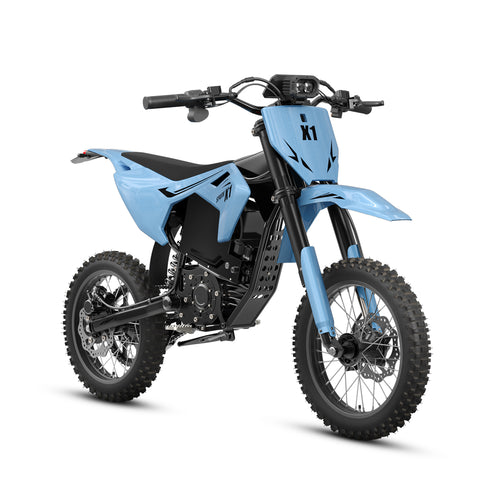
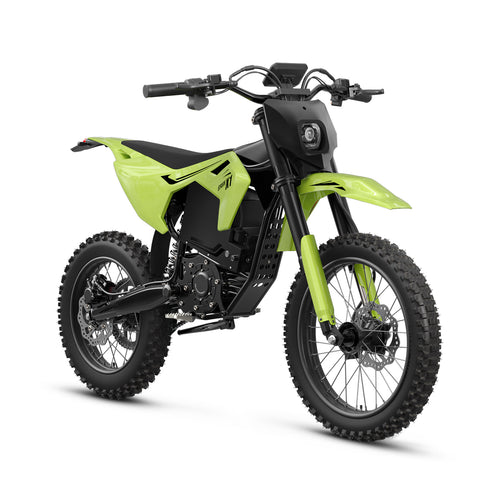

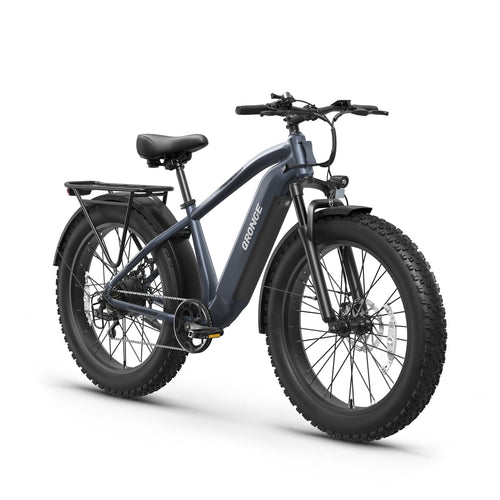
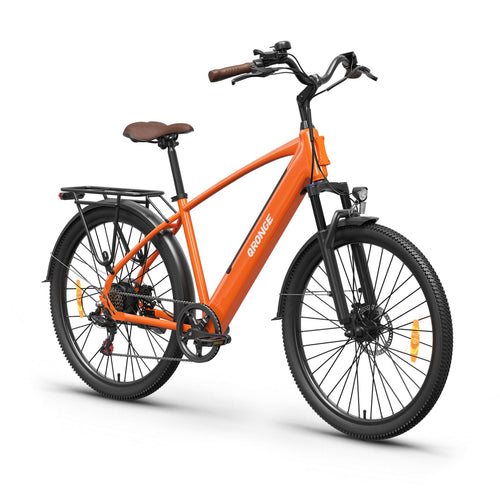
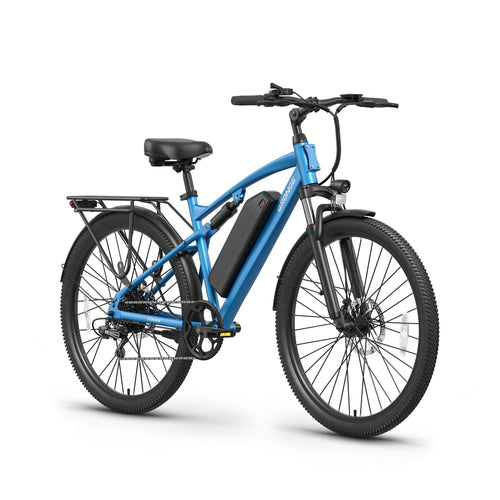
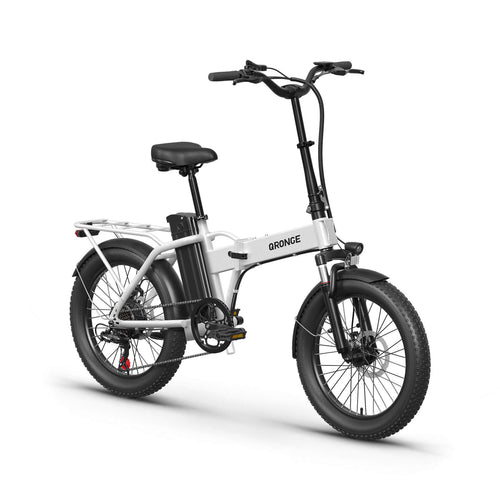
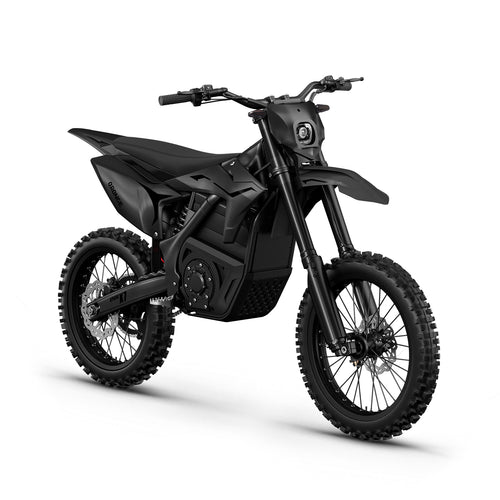


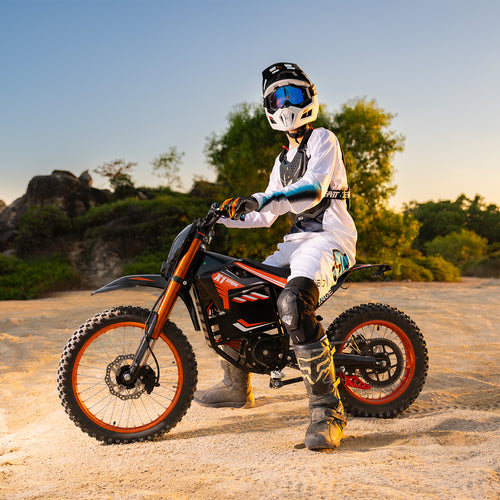
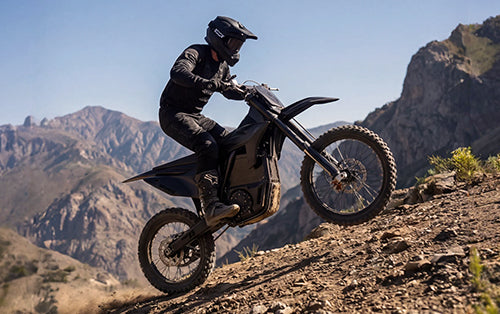

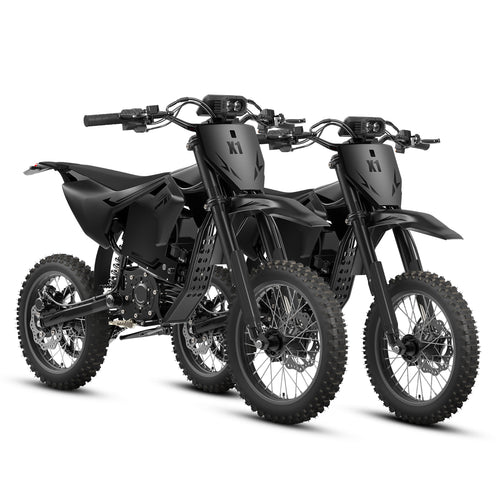
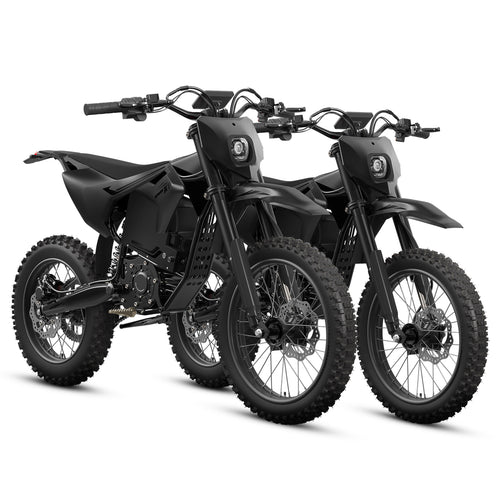
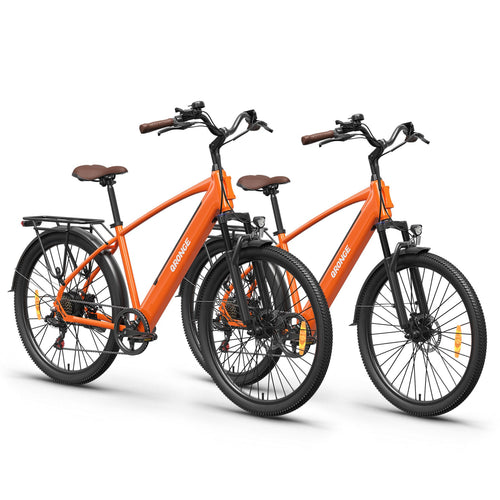
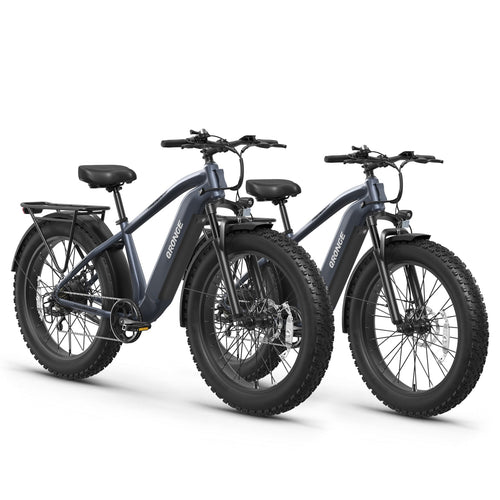
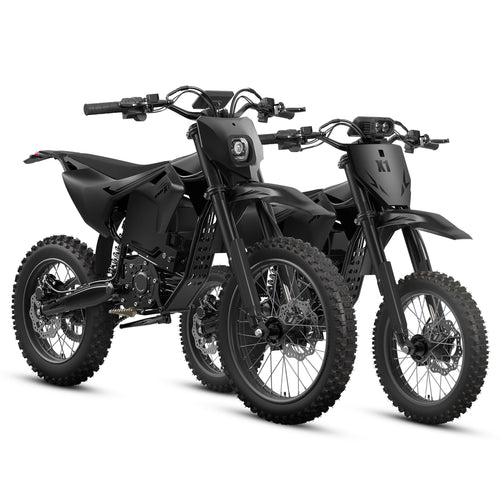
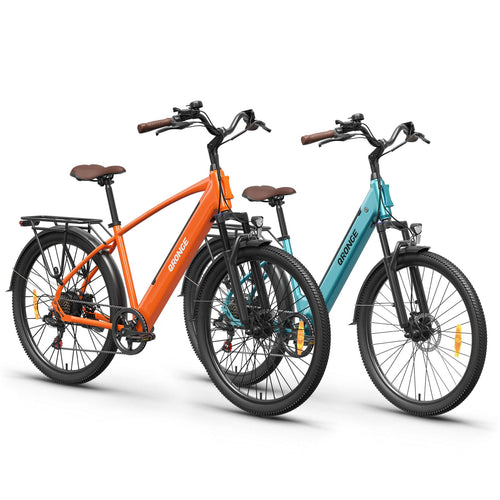


How far an electric motorcycle can travel on a single charge depends on the model, battery capacity, and riding conditions. For example, Qronge’s current electric dirt bike models offer a maximum range of about 60–120 miles, but sustained high speeds, hills, soft terrain, cold temperatures, and extra load can all reduce the actual riding distance.
When choosing a bike, do not treat the maximum range as a fixed distance you can achieve on every ride. A more practical approach is to first calculate the full distance of a typical ride, including the return trip and possible detours, then determine whether the bike can cover that route under similar speed, terrain, and load conditions.
How Far Can an Electric Motorcycle Actually Go?
Electric motorcycle range is usually expressed as the maximum distance the bike can travel on a single charge, but that number needs to be considered together with the test conditions.
So, if a bike is rated for a maximum range of 100 miles, that does not mean every rider should plan a 100-mile route.
A more practical approach is to first calculate the full distance of a typical ride, including the return trip and any possible extra mileage, then see whether the bike can cover that distance at a similar speed, terrain, and load conditions.
For example:
|
Riding Situation |
What to Consider for Range |
|
Regular short-distance rides |
Whether one charge can cover multiple typical rides |
|
Long-distance rides |
Total trip distance and charging options along the way |
|
Continuous uphill riding |
Extra energy use from climbing and the return trip |
|
Off-road riding |
Changes in energy use caused by terrain, surface conditions, and frequent acceleration |
What Factors Affect Real-World Range?
Many factors can affect real-world range, but riders should pay the most attention to speed, terrain, load, and riding conditions.
Speed
Sustained high-speed riding usually uses more energy than riding at a steady lower speed.
If most rides involve higher speeds, range estimates based on similar riding conditions are more useful than planning a route around the maximum range listed on the product page.
Terrain and Surface Conditions
Continuous climbing requires more power, while soft mud, gravel, sand, and other high-resistance surfaces can also increase energy use.
That means two 30-mile routes can place very different demands on the battery if one is on flat, hard-packed ground and the other includes frequent climbs and soft terrain.
For an off-road electric motorcycle, the map distance only shows how long the route is. It does not fully reflect how much energy the bike will need to complete it.
Rider and Gear Weight
The rider, gear, and any additional load all increase the weight the bike has to move.
If the route also includes continuous climbing, frequent starts, or soft terrain, these factors can combine and have a greater effect on range.
For outdoor riding, protective gear, backpacks, and other items carried on the bike should also be considered part of the actual riding conditions.
Weather and Bike Condition
Cold temperatures, headwinds, and tire pressure can also change energy use.
Low tire pressure increases rolling resistance, so checking tire condition, battery level, and the route before setting out is more reliable than relying only on the remaining range shown on the display.
In other words, the official range is useful for understanding a bike’s capabilities, but route planning should be based on actual riding conditions.
How Do You Charge an Electric Motorcycle?
How an electric motorcycle is charged depends on the specific model. Some models can plug directly into a standard household outlet, some support higher-power Level 2 charging, and a smaller number can use DC Fast Charging. Some electric dirt bikes need to be connected to a suitable AC power source using the manufacturer-supplied charger.
A simple way to understand the differences:
|
Charging Method |
What It Is |
Common Use |
|
Level 1 Charging |
Uses standard household AC power |
Overnight parking, daily charging |
|
Level 2 Charging |
Uses higher-power AC charging equipment |
Home charging, public charging |
|
DC Fast Charging |
Sends higher-power DC electricity directly to the battery |
Faster charging when needed |
Not every electric motorcycle supports all three charging methods.
Some models can use a standard household outlet and Level 2 AC charging but do not support DC Fast Charging. Even if a DC fast charger is nearby, it cannot be used if the motorcycle itself does not support that charging method.
When evaluating charging speed, the order should be:
What charging method the bike supports — what connector and power source it requires — its maximum charging power — how long charging takes.
Do not look only at the power rating shown on the charging station.
If You Have a Fixed Charging Location
If there is a suitable power source near the garage, parking area, or riding starting point, charging can begin after the ride. Charging time can usually overlap with overnight parking, so even if it takes several hours, it may not affect normal use the next day.
For models that use a manufacturer-supplied charger, make sure the outlet voltage and charging environment meet the specified requirements, and avoid using incompatible chargers or adapters.
If You Mainly Use Public Charging
If you often need to charge away from home, check in advance whether charging stations along your regular routes are compatible with the motorcycle.
In addition to location, check the connector, charging method, charging speed, and pricing.
A nearby public charging station does not necessarily mean the motorcycle can use it directly.
How Much Does It Cost to Charge an Electric Motorcycle?
There is no single cost to charge an electric motorcycle. The actual cost depends on how much electricity is used and the local electricity rate.
The basic calculation is:
Charging Cost = Electricity Used (kWh) × Electricity Rate ($/kWh)
For example, a 60V 50Ah battery has a nominal capacity of about:
60V × 50Ah ÷ 1,000 = 3 kWh
If the local electricity rate is $0.20/kWh, the theoretical cost to charge from 0% to 100% would be about:
3 kWh × $0.20 = $0.60
The actual amount of electricity drawn from the outlet is usually slightly higher than the battery’s nominal capacity because some energy is lost during charging. At the same time, the battery usually still has some charge left after a ride, so each recharge does not necessarily require the full 3 kWh.
When comparing different models, looking only at “how much it costs to fully charge” is not enough. A more useful figure is the actual electricity cost per 100 miles:
Cost per 100 Miles = Charging Cost ÷ Actual Riding Distance × 100
For example, if a charge costs $0.60 and supports 50 miles of actual riding:
$0.60 ÷ 50 × 100 = $1.20/100 miles
This method allows battery capacity, actual range, and local electricity rates to be compared using the same unit. For a more accurate result, use the actual electricity consumption recorded at the outlet instead of estimating only from the battery’s nominal capacity.
If public charging is used, charging service fees, parking fees, or other related costs should also be included.
What Other Costs Come With Owning an Electric Motorcycle?
Electricity is only one part of the long-term cost of ownership.
Electric motorcycles do not have traditional gas engines, so they usually do not require common maintenance items such as engine oil, spark plugs, or fuel-system service. However, the rest of the bike still has normal wear and maintenance needs.
Before buying, the costs can be divided into several categories:
|
Cost Item |
What to Consider |
|
Electricity |
Actual charging cost per 100 miles |
|
Charging Equipment |
Whether additional home charging equipment is needed |
|
Tires |
Size, price, and wear caused by riding conditions |
|
Brakes |
Routine maintenance, such as brake pads and brake fluid |
|
Drivetrain |
Chain, belt, or other drivetrain components |
|
Suspension and Mechanical Parts |
Regular inspections based on riding intensity |
|
Battery |
Warranty period, warranty terms, and repair options |
|
Insurance and Registration |
For models that require them |
Among these, the battery warranty is more important to confirm before purchase than simply knowing the battery price.
The battery is an important part of the motorcycle, so it is important to understand more than just its capacity. This includes the warranty period, what is covered, and what repair or replacement options the brand provides if a problem occurs.
For motorcycles that are frequently used off-road, the inspection frequency for tires, brakes, chains, and suspension should also reflect the actual riding intensity. Mud, impacts, and frequent braking on off-road terrain create different maintenance needs than lighter use.
How Should You Plan Range for Off-Road Riding?
Off-road riding is harder to predict than a fixed route, so it cannot be planned around a single range number.
A trail or off-road route may include hard-packed surfaces, gravel, continuous climbs, mud, sand, and low-speed technical sections. The route distance may stay the same, but the energy needed to complete these sections can vary.
When planning the range of an electric dirt bike, at least three factors should be considered:
Total route distance, return-trip terrain, and charging options.
For example, if a 15-mile one-way route is mostly downhill on the way out, the return trip may involve a continuous climb. The battery remaining after the outbound trip cannot be used to estimate the return trip at the same rate.
Likewise, entering mud, sand, or more difficult terrain can increase energy use beyond the original plan.
For remote off-road routes, it is better to confirm in advance:
- The actual distance of the full loop;
- Whether the return to the starting point involves continuous climbing;
- Whether the route may become longer than planned;
- Whether extra gear will be carried;
- Whether there are points where the route can be exited early;
- Whether charging is available after returning to the starting point.
It is not recommended to plan a route too close to the bike’s theoretical range just to use the last remaining battery capacity.
What Battery Size Fits Your Riding Needs?
Battery capacity is usually measured in kWh. A larger capacity can store more energy, but it is only one factor that determines range.
For riders, the right battery should cover most normal rides while leaving some room for changes in the route.
A larger battery capacity is usually more important when:
- Individual rides are longer;
- Routes often include continuous climbs;
- Off-road routes include a lot of soft terrain;
- Extra gear is often carried;
- Charging is difficult to find near the riding area.
If ride distances are fairly consistent and there is a reliable place to charge after each ride, there may be no need to choose the largest battery simply for a higher range number.
A larger battery also means considering the bike’s overall weight, price, size, and charging needs.
So, when comparing electric motorcycles, battery capacity, real-world range, and riding style should be considered together, rather than treating kWh as a performance number where bigger is always better.
Further Reading: If you also want to understand how electric motorcycle power compares with gas engine size, continue with “How Many CC Is an Electric Motorcycle? A Guide to kW, Horsepower, and Gas Engine Displacement.”
Enough Range Matters More Than Maximum Range
An electric motorcycle needs to meet actual riding needs, not simply offer the highest possible range.
First, look at how many miles the full route requires, then consider how speed, terrain, and load may change energy use. Next, confirm charging conditions and operating costs, and finally decide how large a battery you need. This way, range, cost, and actual use can better match each other.


