



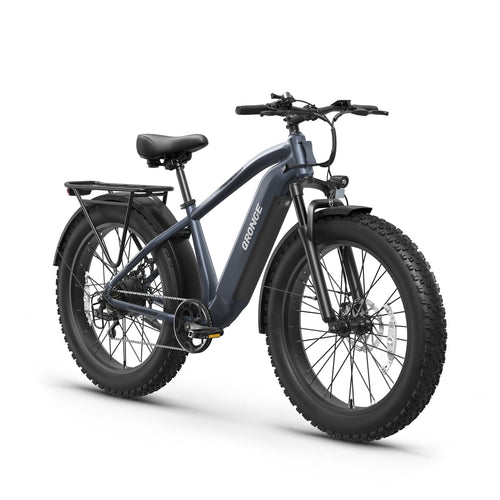
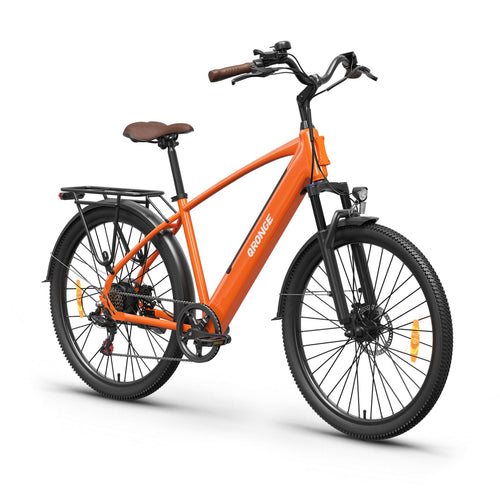
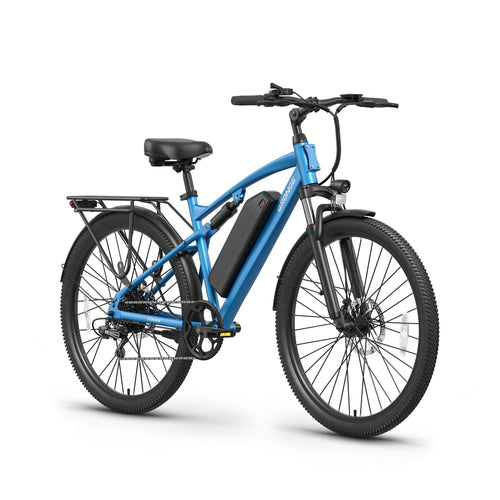
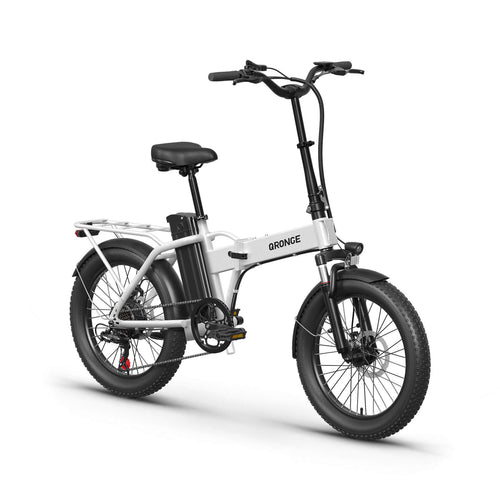





Electric Bike vs Electric Motorcycle: How to Choose Based on Speed, Range, Laws, and Ownership Costs
Both electric bikes and electric motorcycles use batteries and electric motors, but they solve different problems when it comes to real-world use.
For riders who commute a few miles each day in the city, important factors often include whether the vehicle can use bike lanes, how easy it is to park, whether one charge can cover the daily trip, and whether the bike can be stored safely during work hours. For longer distances, faster road conditions, or riding environments such as trails, hills, and OHV areas, factors like sustained power, vehicle stability, and regulations become more important.
When comparing electric bike vs electric motorcycle, the key factors are not just individual specifications. Riders should also consider speed, range, riding access, long-term costs, and how well the vehicle fits into their daily lifestyle.
Notice: This article separates road-legal electric motorcycles from electric dirt bikes, as they have different road access requirements and are designed for different riding environments.
Quick comparison between electric bikes and electric motorcycles
|
Comparison |
Electric bike |
Electric motorcycle |
|
Power source |
Pedal assist, with some models supporting throttle control |
Primarily powered by the motor |
|
Speed |
Usually limited by electric bike classifications |
Typically offers higher sustained speeds |
|
Climbing and power |
Shared between the motor and rider input |
Usually has greater power reserves |
|
Range |
Pedaling can help reduce battery consumption |
Primarily relies on the battery for propulsion |
|
Charging |
Usually has a smaller battery and is easier to recharge regularly |
Usually has a larger battery |
|
Overall weight |
Usually lighter |
Usually heavier |
|
Bike lanes |
Easier to use where allowed by local regulations |
Usually cannot be treated as a regular bicycle |
|
Public roads |
Depends on local e-bike classifications |
Road models must meet applicable motor vehicle requirements |
|
Off-road use |
Depends on the model and trail access rules |
Off-road models are better suited for motorized off-road environments |
|
License, registration, and insurance |
Usually fewer requirements when meeting local e-bike definitions |
May be required for road use |
|
Parking |
More flexible but has higher theft concerns |
Requires more parking space |
|
Transportation |
Relatively easier |
Off-road models may require a pickup truck or trailer |
|
Maintenance |
Many mechanical parts are similar to bicycle maintenance, but batteries, motors, and controllers may still require brand support |
Mechanical components are closer to motorcycle systems, and electrical systems often require brand or professional service support |
|
Ownership costs |
Usually lower |
Usually higher |
The right choice depends on the actual route. Power that is enough for city riding may not be enough for steep hills or motorized off-road trails. On the other hand, a powerful electric motorcycle used only for short daily commutes may add unnecessary weight, parking challenges, and regulatory requirements.
Speed and power: How fast does your route actually require?
Many riders look at top speed first when choosing a vehicle, but in daily use, the more important question is what speed your route actually requires.
If your commute mainly includes neighborhood streets, bike lanes, and urban areas with frequent traffic lights, maintaining a higher speed may not make as much difference as expected. Riders will often spend more time slowing down, stopping, starting again, and finding parking.
For example, on a 10-mile city commute, if most of the route has bike-friendly infrastructure, a regular electric bike may already handle the main needs. Even with a faster vehicle, traffic lights, intersections, and real road conditions can limit the actual time saved.
However, when a route requires riding alongside faster vehicle traffic for longer periods, handling continuous climbs, or carrying heavier loads, power requirements increase significantly. In these situations, riders should look beyond top speed and consider whether the vehicle can provide enough sustained power.
Off-road riding requires a different type of power
Once riding on trails, steep hills, or loose terrain, top speed becomes less important.
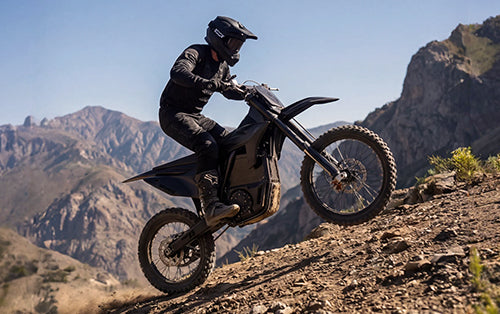
Riders are more likely to notice whether the torque is sufficient, whether throttle control feels manageable, whether power drops during climbs, and whether the suspension and tires can handle continuous impacts with stability.
This is one of the biggest differences between an electric dirt bike and a regular commuter electric bike.
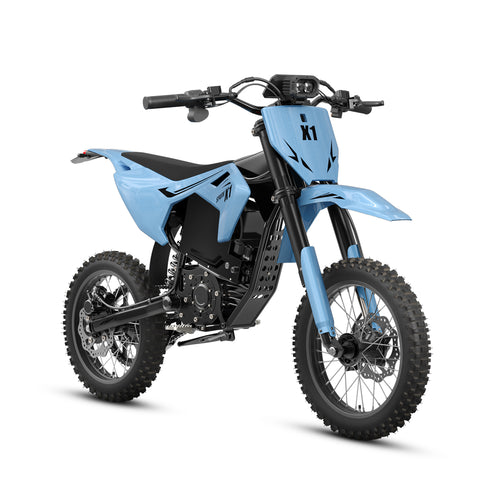
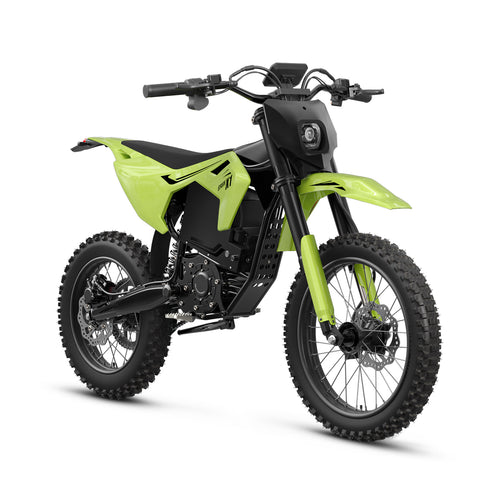
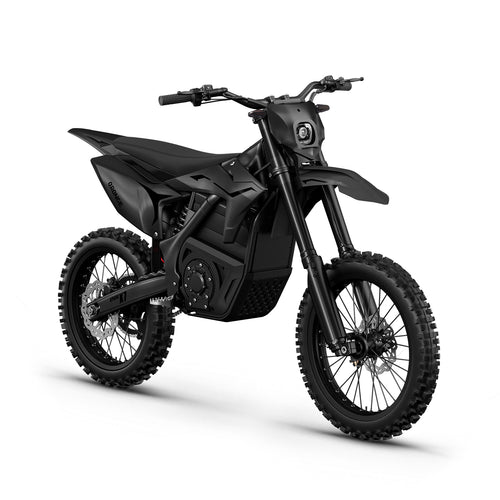
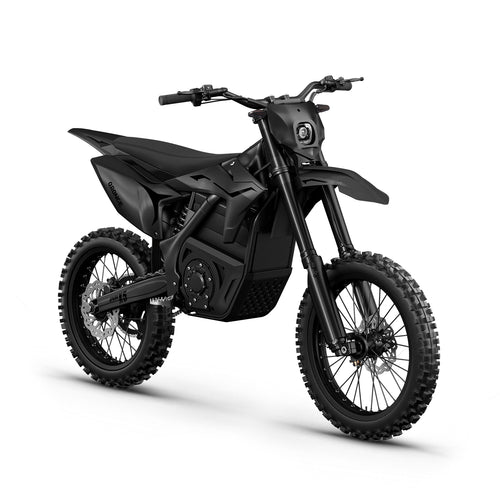
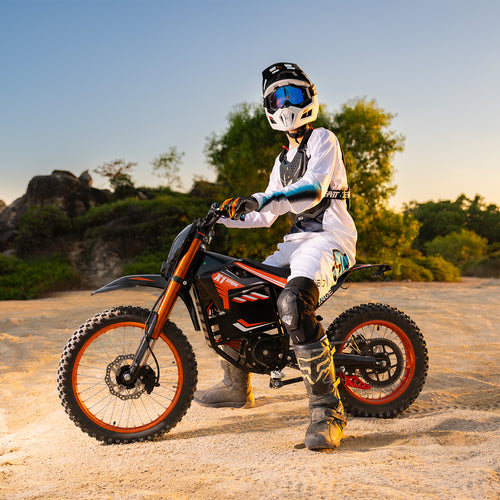
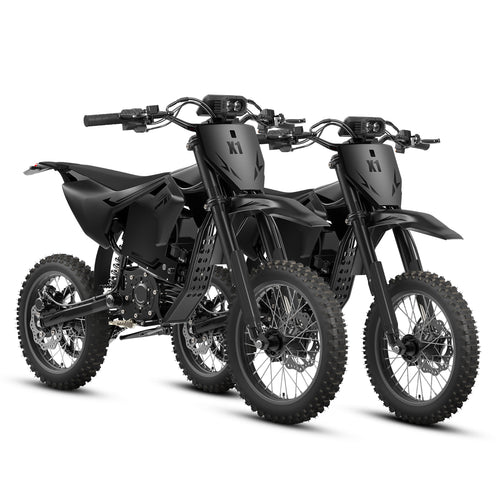
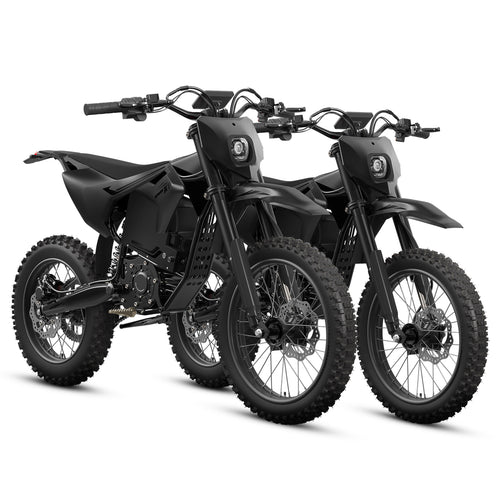
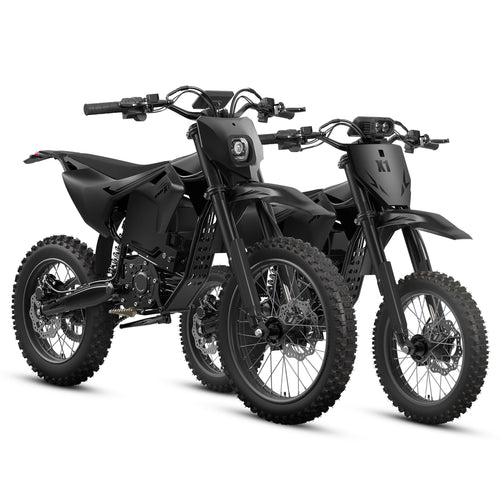
For example, the Qronge X1 Spark M uses a 4500W peak mid-drive motor and is designed for more compact off-road riding. The X5 Spark increases output to a 6000W peak motor with 300Nm of torque, while the X7 Spark uses a 12000W peak motor with 600Nm of torque for adult riders who need higher power in off-road environments. As power levels increase, the difference is not only higher speed, but also stronger climbing performance and greater power reserves on challenging terrain.
X7 Spark
Range and charging: Can one charge cover your actual route?
For daily use, the most practical range question is not “which vehicle has the bigger number,” but whether one charge can reliably cover your daily round trip.
If your daily commute is 30 miles, you need to leave room for hills, detours, cold temperatures, cargo, and battery reserve instead of choosing a vehicle whose maximum range only matches 30 miles.
Electric bikes and electric motorcycles use range differently
An electric bike can use rider pedaling to share part of the workload, and lowering the assist level can also reduce battery consumption. An electric motorcycle, however, relies mainly on the battery for starting, acceleration, cruising, and climbing, so sustained higher speeds, long hills, and challenging terrain will have a more direct impact on battery usage.
For the same route, these two vehicle types cannot be compared based on a single range number alone.
Charging conditions directly affect the commuting experience
If you can charge consistently at home and your daily riding distance is well below the vehicle’s actual range, charging usually will not become a major issue.
However, for longer commutes, you also need to consider whether charging is available at your workplace, whether the battery is easy to remove, and whether the vehicle needs to be charged every day. Without a convenient charging option, even a vehicle with good range can become less practical for daily use.
How are electric bikes and electric motorcycles different in terms of regulations?
Regulations are one of the biggest areas where electric bikes and electric motorcycles cannot be treated the same.
The Consumer Product Safety Commission (CPSC) defines low-speed electric bicycles under its jurisdiction as having fully operable pedals, an electric motor of less than 750W, and a motor-only speed below 20 mph under specified test conditions. State-level riding rules may further use classifications such as Class 1, Class 2, and Class 3, but these classifications are not exactly the same in every state.
Therefore, the fact that a product page labels a vehicle as an “e-bike” does not directly determine where it can legally be ridden.
Can a high-power model still be considered a regular e-bike?
It depends on local regulations, not just the vehicle’s appearance or name.
Even if a vehicle has pedals and looks like a bicycle, it may exceed local e-bike classifications because of its power output, assisted speed, or overall design.
This directly affects questions riders care about, such as whether the vehicle can use bike lanes, whether registration is required, and whether motor vehicle regulations apply.
Do electric motorcycles require a license, registration, and insurance?
If a vehicle is primarily intended for public-road use, licensing, registration, insurance, and equipment requirements depend on the specific vehicle category and state regulations.
There is no single answer that applies to every model across the United States. State rules for electric bike and electric motorcycle classifications, as well as road-use requirements, are not identical. Before purchasing, riders should check the current regulations where they live instead of relying on rules from another state.
Off-road electric motorcycles and road electric motorcycles are not the same
This distinction is especially important for electric dirt bikes.
NHTSA separates motor vehicles primarily manufactured for public-road use from vehicles such as dirt bikes that are primarily designed for off-road use. A vehicle having headlights, a display, or the ability to reach higher speeds does not by itself prove that it meets public-road requirements.
For example, the official Qronge X7 Spark page clearly states that the model is for off-road use only and requires riders to follow applicable local regulations.
Further reading: If you want to learn more about whether electric dirt bikes can be street legal, and why features like lights, mirrors, and turn signals alone do not determine road eligibility, continue reading “Are Electric Dirt Bikes Street Legal?”
Where are electric bikes and electric motorcycles better suited for riding?
Different riding environments have different requirements for vehicles.
|
Use case |
Better option to consider |
Main reason |
|
Short to medium urban commutes |
Electric bike |
Easier parking and access to permitted bicycle infrastructure |
|
Everyday neighborhood riding |
Electric bike |
Lighter weight and more flexible in low-speed environments |
|
Campus and college areas |
Electric bike |
Short distances and limited parking space |
|
Riders who want to keep pedaling |
Electric bike |
The motor helps reduce pedaling effort |
|
Riders who frequently need indoor storage |
Electric bike |
Weight and size are usually easier to manage |
|
Longer road riding |
Road-legal electric motorcycle |
Better suited for maintaining higher road speeds |
|
Roads that allow motorcycle access, including certain highways or faster roads |
Electric motorcycle that meets local registration and road-access requirements |
Regular electric bikes are generally not suitable for these roads, and access depends on local regulations |
|
Private land and trails |
Electric dirt bike |
Power, suspension, and tires are better suited for off-road riding |
|
OHV and dedicated off-road routes |
Off-road electric motorcycle |
Better matches motorized off-road riding environments |
|
Steep hills and challenging terrain |
High-performance electric dirt bike |
More dependent on torque, suspension, and traction capability |
Even if an electric bike is legally classified as an e-bike, it does not automatically mean it can access all parks, trails, or public lands. E-bike access on federal lands may be determined separately by different agencies and local land managers, so specific route rules should always be confirmed before riding.
Ownership costs of electric bikes and electric motorcycles
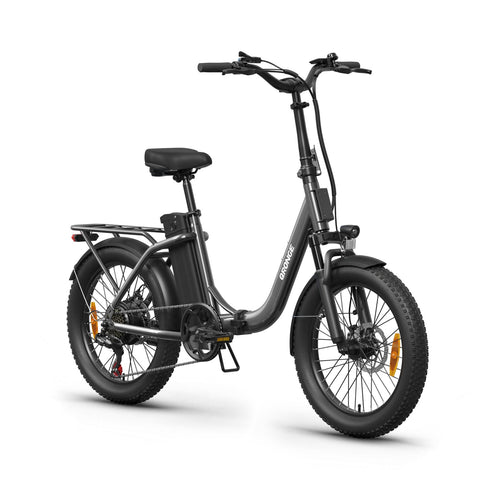
Electric bikes typically involve costs such as the purchase price, electricity, battery replacement, tires, brakes, chains, maintenance, and security equipment.
In addition to charging and regular wear items, electric motorcycles may also involve registration, insurance, licensing-related costs, protective gear, and higher-spec tires, brakes, and suspension maintenance. For off-road models, riders also need to consider transportation equipment such as pickup trucks, trailers, or securing equipment.
Therefore, when the purchase prices of the two vehicle types are similar, the more important comparison is how much you will spend each year after buying the vehicle and whether the additional capability is actually useful for your riding needs.
Daily use: Parking, theft, and vehicle weight
These factors are easy to overlook when focusing on specifications, but they often determine whether a vehicle can realistically be used every day.
If a high-value electric bike needs to be parked outside an office for seven or eight hours every day, secure parking conditions may matter more than having dozens of extra miles of range. Whether there is a fixed place to lock the bike, how long the vehicle stays in a public area, how much foot traffic the location has, and whether the bike can be brought into an office or home can all affect daily usability.
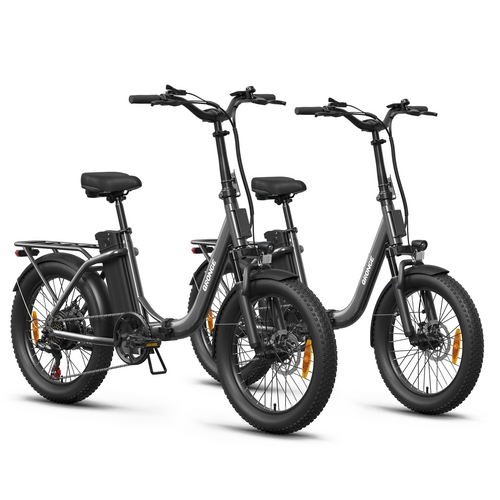
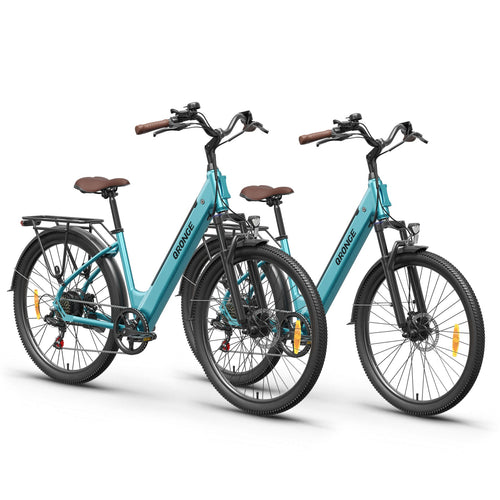
The advantage of an electric bike is its relatively smaller size. It can fit into bike parking areas, and some models are easier to bring into offices or homes. However, it can also be easier to carry away, so riders should consider secure locking points, whether the battery can be removed, and where the bike will be stored overnight.
Weight creates another practical difference. An e-bike that can be pushed into an elevator, carried up a few steps, or mounted on a suitable bike rack requires very different storage and transportation considerations compared with a 200-plus-pound electric dirt bike. For example, the X5 Spark weighs 238 lbs. For riders who mainly use this type of vehicle in off-road areas, transportation is an important factor to consider before purchasing.
Maintenance, parts, and support
Whether a vehicle can be repaired after purchase is a long-term consideration that can matter more than many specifications.
When buying an e-bike, riders should confirm whether local shops are willing to service that brand and whether replacement parts for the battery, motor, controller, and display are available. Some bike shops mainly service the models they sell, so even basic issues such as tire repairs may require checking in advance. If motor or electrical system issues occur later, brand support and parts availability become even more important.
Electric motorcycles and electric dirt bikes also require checking parts availability and technical support. However, riders should additionally consider suspension, brakes, tires, and wear items caused by off-road riding. For high-power models, after-sales support is not an extra feature; it is part of the overall ownership cost.
How to choose between an electric bike and an electric motorcycle?
If your daily riding mainly involves short to medium urban distances, bike infrastructure, and frequent parking, an electric bike is usually more flexible, lightweight, and easier to use.
If your actual route requires higher sustained road speeds, you should look for an electric motorcycle that meets local road requirements instead of simply increasing the power of a regular e-bike.
If your main goal is riding on private land, trails, OHV areas, and other off-road environments where motorized vehicles are allowed, an electric dirt bike is the more suitable category. In this case, the factors that matter most are torque, suspension, tires, vehicle size, range, and transportation needs—not just top speed.


