


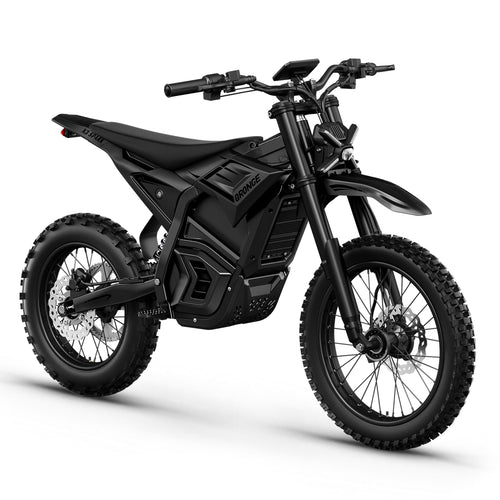
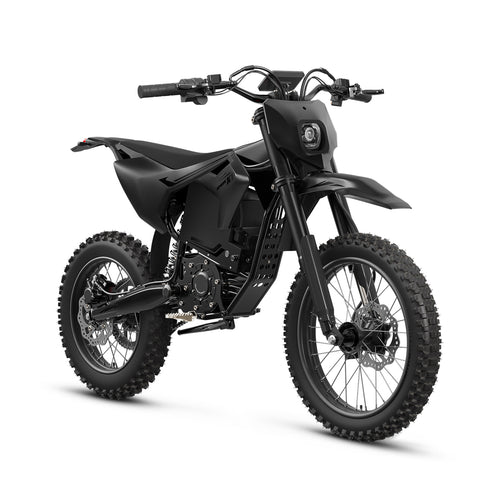
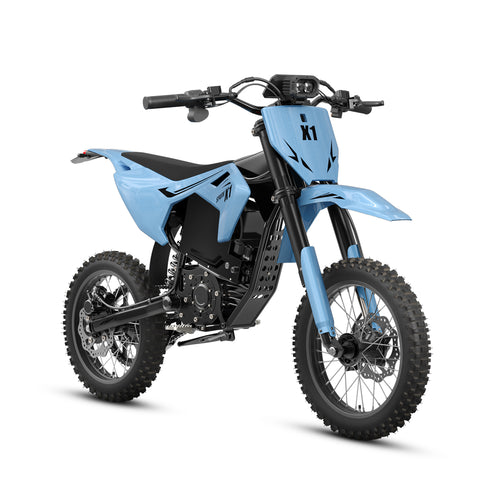



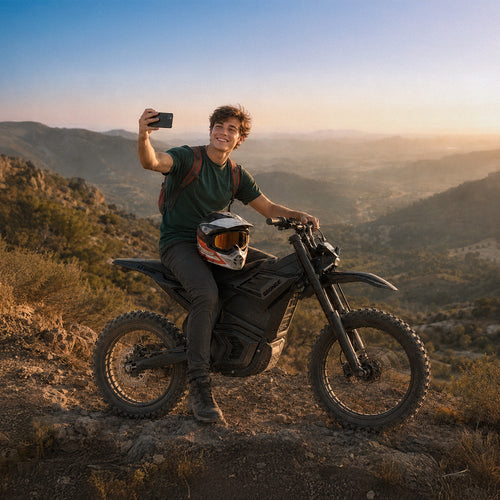
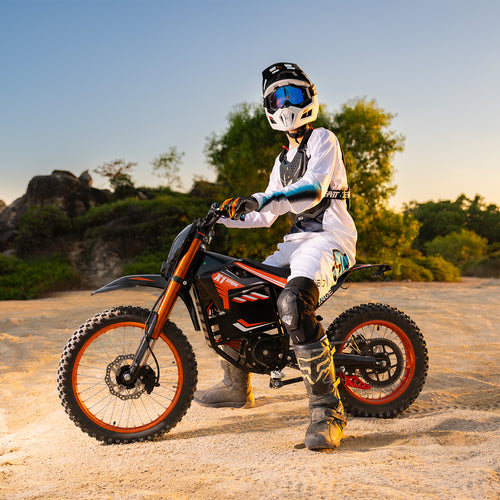

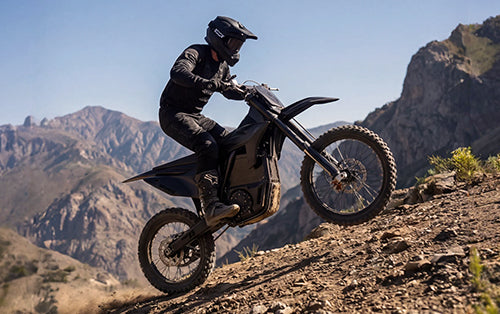

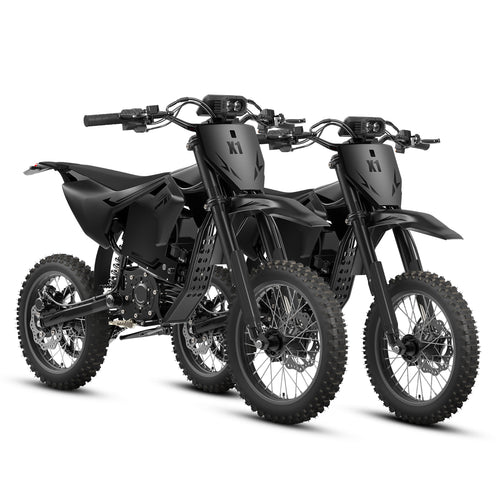
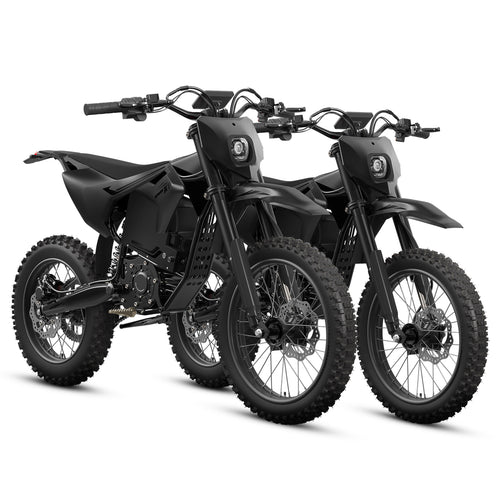


As temperatures drop, a forest trail route that was once easy to complete may require riders to turn back earlier than usual. Even with a fully charged battery at the start, riders may experience faster battery drain, weaker acceleration, or difficulty climbing hills during the ride.
Cold temperatures do affect the range and power of an electric dirt bike. Cold weather reduces the usable energy and power output of lithium-ion batteries. Based on winter electric motorcycle riding experience, range loss can reach 20%–35% in cold conditions and may be even greater in extreme cold. The actual impact also depends on battery temperature, riding mode, and terrain.
Understanding the actual effects of cold temperatures and adjusting battery preparation, throttle control, and route planning can help reduce unnecessary range loss during winter rides.
Why Do Electric Dirt Bikes Slow Down and Lose Power in Cold Weather?
Cold Temperatures Reduce the Energy a Battery Can Deliver
Lithium-ion batteries charge and discharge through the movement of ions inside the battery. As temperatures drop, ion movement slows down, internal resistance increases, and the amount of usable energy the battery can deliver at that temperature may decrease.
This explains why an electric dirt bike may not cover the same distance in cold weather as it does in warmer conditions, even with a fully charged battery. However, a temporary reduction in range caused by cold weather does not mean the battery is permanently damaged. Once the battery returns to a suitable operating temperature, some of the performance affected by the cold may recover.
Why Do Acceleration and Hill Climbing Feel Weaker Even With Battery Power Remaining?
In addition to affecting range, cold temperatures can also affect the battery's ability to deliver power instantly.
When an electric dirt bike travels at a steady speed on a flat trail, it typically does not need to maintain high power output. However, when climbing steep hills, riding through mud, or accelerating again, the motor requires more current from the battery. In cold conditions, increased internal resistance can cause a more noticeable voltage drop under heavy loads, a phenomenon known as voltage sag.
Riders may notice the following changes:
- Weaker acceleration response: Throttle response may feel less immediate than in warmer weather.
- Reduced climbing performance: Maintaining the same riding pace on longer or steeper hills may become more difficult.
- More noticeable effects at low battery levels: When the battery charge is already low, cold temperatures combined with demanding riding conditions may further reduce power.
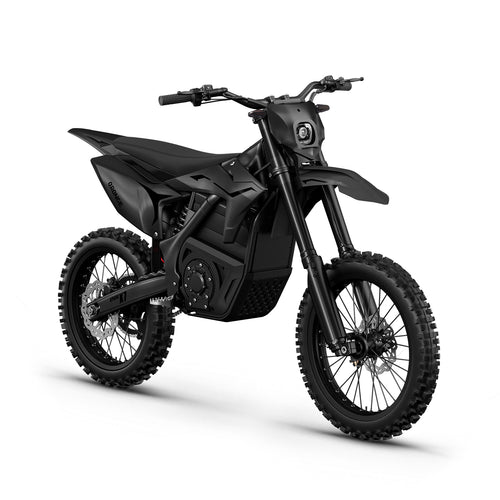
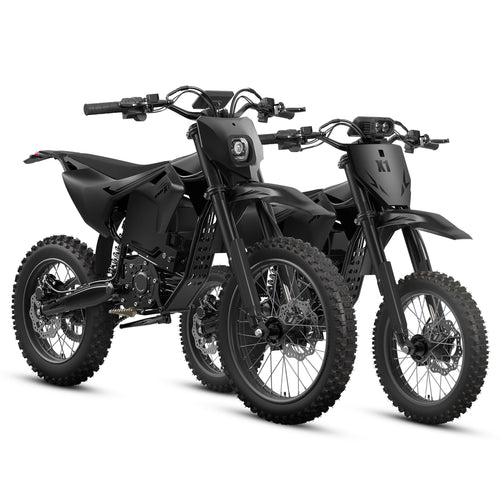
Even a 72 V electric dirt bike with a higher-voltage battery system cannot completely avoid these effects. For example, the Qronge X7 Spark features a 72V 50Ah battery with substantial energy storage capacity, but its ability to deliver power in cold conditions is still affected by temperature and load.
Therefore, a higher battery voltage does not mean the bike will maintain the same power in winter. For a high-performance electric dirt bike, what matters more is how much current the battery can deliver under actual riding conditions and how much power the bike needs to produce.
Further Reading: Why Does My Electric Dirt Bike Lose Power at 20%–30% Battery?
How Much Range Can an Electric Dirt Bike Lose in Cold Weather?
At different temperatures, an electric dirt bike's range loss can increase from a few percent to more than 30%.
The following are rough estimates based on winter electric motorcycle riding experience. For easier understanding, the calculations use a bike that can actually travel 60 miles in warm weather under the same route conditions and riding mode.
|
Temperature |
Estimated Range Loss |
Range Based on 60 Miles |
Impact on Riding |
|
10–15°C |
5%–10% |
54–57 miles |
Riding feels similar to normal temperatures, with little noticeable change in power. |
|
0–9°C |
10%–20% |
48–54 miles |
Battery drains faster, requiring riders to turn back earlier on longer rides. |
|
-10 to -1°C |
20%–35% |
39–48 miles |
Acceleration and hill-climbing power weaken, and remaining range decreases faster. |
|
Below -10°C |
35%–50% or more |
About 30–39 miles, potentially less than 30 miles in extreme conditions |
Range and power decrease noticeably, with weaker performance at low battery levels. |
Note: The percentages in the table are estimates based on experience shared in publicly available industry articles, not cold-weather test results for Qronge models. Actual performance also depends on battery temperature, riding load, and bike configuration. In extreme cold, some bikes may not be suitable for continued use.
Overall, the colder the temperature, the more noticeable the range loss may be, especially on long climbs or muddy terrain, where actual riding distance may decrease further. Therefore, winter riding requires not only planning routes ahead and reserving enough battery for the return trip, but also reducing unnecessary range loss through proper battery preparation, power control, and post-ride maintenance.
How to Reduce the Effects of Cold Weather on Range and Power
The key to winter riding is not just extending range, but also reducing unnecessary battery load and maintaining good handling in cold, slippery conditions.
Before Riding: Prepare the Battery and Check the Tires and Brakes
1. Avoid Exposing the Battery to Extreme Cold for Long Periods
If the bike has a removable battery, follow the manual to store it in a dry place at a suitable temperature and reinstall it correctly before riding.
If the battery has been exposed to cold temperatures for a long time, allow it to warm up naturally. Do not use a heat gun, open flame, or other intense heat source to heat it directly. Also, do not assume that leaving the battery indoors for 30 minutes is enough for it to reach the permitted operating temperature. Before setting off, make sure the battery has sufficient charge, the connections are secure, and there are no abnormal warning alerts.
2. Recheck Cold Tire Pressure
As temperatures drop, the air pressure inside the tires may also change. Tire pressure that was properly adjusted in warmer weather should be checked again when winter arrives.
Different winter terrains also have different tire requirements:
- Muddy and soft dirt trails: Properly adjusting tire pressure within the tire's recommended range can help increase the contact patch.
- Gravel and hard surfaces: Maintain sufficient tire support to avoid rim impacts or pinch flats caused by low tire pressure.
- Snowy or icy surfaces: Traction depends more on tire type and surface conditions. Lowering tire pressure alone cannot guarantee safety.
Do not automatically lower tire pressure by 3–8 PSI just because the weather gets colder. First, measure cold tire pressure according to the bike and tire requirements, then adjust based on the load and actual terrain.
Further Reading: What Tire Pressure Should an Electric Dirt Bike Use? A Tire Pressure Guide for Different Terrain
3. Check the Brakes, Chain, and Riding Gear
Winter forest trails may have wet leaves, muddy water, frozen dirt, or snow. These conditions can reduce tire traction and affect braking distance. Before riding, check the response of the front and rear brakes, the condition of the chain, and tire wear. Riding gear should provide both warmth and flexibility, avoiding gloves that are too thick to operate the throttle and brakes comfortably. If the trail is noticeably icy or snow is covering obstacles, consider changing your route or postponing the ride.
During the Ride: Use Smooth Throttle Control and Adjust Riding Modes
1. Avoid Sudden High Power Output When Starting
When setting off in cold conditions, there is no need to use the most powerful riding mode right away. If the battery is within its permitted operating temperature range, start on a familiar, gentle section of trail, accelerate smoothly, and monitor changes in battery level and throttle response. Do not try to "warm up" the battery through repeated hard acceleration or prolonged hill climbing under heavy loads.
2. Choose Riding Modes Based on Terrain
Flat forest trails generally do not require continuous maximum power. Using gentler power output helps control battery consumption and reduces the risk of losing traction during sudden acceleration. When approaching hills or challenging terrain, increase power output as needed. For electric dirt bikes with selectable riding modes, this makes it easier to manage riding pace than using the highest power output throughout the ride.
3. Slow Down Early to Avoid Losing Traction on Slippery Surfaces
Winter off-road riding requires greater attention to coordinating throttle and brake control.
- Slow down before entering turns to avoid sudden, sharp steering on slippery surfaces.
- On muddy and gravel trails, apply the throttle smoothly to reduce sudden rear-wheel spin.
- When riding downhill, maintain a controlled speed and coordinate the front and rear brakes to avoid sudden wheel lockup.
In addition, battery consumption may be noticeably faster than usual in winter. If the battery level drops faster than expected, shorten the route promptly rather than waiting until the battery is nearly depleted before heading back.
After Riding: Charge Properly and Remove Mud and Debris
1. Do Not Charge the Battery Immediately When It Is Too Cold
Low temperatures can affect the charging process of lithium-ion batteries. If the battery temperature is too low, charging may cause lithium plating, which can shorten battery life.
For lithium-ion batteries that do not support low-temperature charging, charging should generally be avoided when the battery temperature is below 0°C (32°F). After riding, allow the battery to naturally return to the charging temperature range permitted for the model before connecting the charger.
It is important to note that warmer indoor air does not mean the inside of the battery has reached a suitable charging temperature. Also, use a charger compatible with the bike and keep the charging port dry. If abnormal heating, unusual odors, or discoloration of the charging port occurs, stop charging and inspect the battery.
Further Reading: Is It Normal for an Electric Dirt Bike to Get Hot While Charging?
2. Remove Dirt from the Chain, Brake Components, and Electrical Connections
After winter rides, muddy water, wet dirt, and road salt may remain on the wheels, chain, and underside of the frame.
Pay particular attention to the following:
- Chain and drivetrain components: Remove mud and grit, then apply a suitable chain lubricant after drying.
- Brake components: Check for wear and debris buildup, and avoid getting lubricant on the brake rotors or pads.
- Battery and electrical connections: Keep connectors dry and avoid spraying high-pressure water directly onto electrical components.
If the bike will not be used for several weeks, adjust the battery's charge level according to the bike's storage requirements. For many lithium-ion batteries, 40%–60% is a common reference range for long-term storage, but the specific model's requirements should still be followed, and the battery condition should be checked regularly.
How to Tell if It's a Normal Cold-Weather Effect or a Problem With the Bike
Reduced range in cold weather does not necessarily mean the battery is damaged. However, if performance changes are much more noticeable than usual or are accompanied by obvious abnormalities, they should not simply be attributed to the weather.
|
What Happens During the Ride |
Possible Cause |
Recommended Action |
|
Range decreases in cold weather but improves when temperatures rise |
Temporary reduction in usable battery energy caused by cold temperatures |
Track battery consumption under the same riding mode and route conditions |
|
Normal performance on flat trails but noticeably weaker power on long climbs |
Combined effects of battery temperature, low charge, and riding load |
Reduce the load and turn back early if necessary |
|
Repeated power loss or error warnings even after the battery returns to its permitted temperature |
Possible issues with the battery, controller, or electrical system |
Stop testing and contact technical support |
|
Battery swelling, unusual odors, burnt connectors, or abnormal heating |
Possible battery or electrical safety issues |
Stop using or charging immediately and do not disassemble the battery |
For occasional changes in range, first rule out differences in temperature, riding mode, and terrain. However, if the bike still cannot maintain normal power output or frequently displays error warnings when the battery is at a suitable temperature and charging normally, arrange an inspection as soon as possible.
Get Ready for Your Next Cold-Weather Off-Road Ride
Cold weather does not necessarily mean you have to stop off-road riding, but routes and power usage need to be adjusted. Preparing the battery, checking tire pressure, controlling the throttle properly, and reserving enough battery power for the return trip can help reduce unnecessary range loss and make winter trail riding more manageable.


