






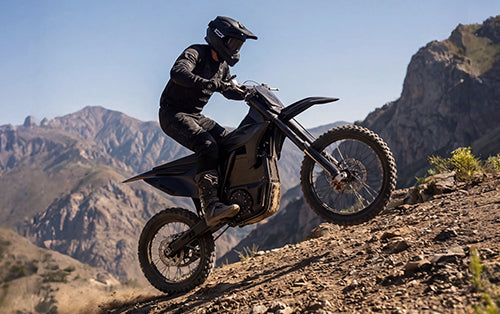




When winter snow covers off-road trails, dirt bike tires that normally provide stable traction on dirt and gravel may suddenly lose grip while turning or climbing hills. This is especially true on trails where snow covers an icy surface, as even tires with deep tread may struggle to maintain traction.
Therefore, when choosing dirt bike tires for snow, it's important to consider more than whether a tire is designed for off-road use. Riders also need to determine whether their trails have light snow, deep snow, packed snow, or ice. Regular knobby tires and tires equipped with metal studs are suited to different conditions, and not every winter ride requires switching to studded tires.
Can You Ride A Dirt Bike In Snow With Regular Tires?
Regular dirt bike tires can be used on some lightly snow-covered trails and soft terrain, but they may not provide enough traction on packed snow or ice. Whether it's safe to continue riding depends not only on snow depth but also on the ground conditions beneath the snow, tire wear, and the rider's experience.
Regular off-road tires, also known as knobby tires, typically feature raised rubber tread blocks. On dirt, gravel, and loose terrain, these knobs dig into the surface to generate traction, while the wider gaps between them help clear some dirt and snow.
On trails covered with light snow, the tires may still provide some grip if the knobs can penetrate the snow and reach the dirt underneath. However, as the snow gets deeper, the knobs may churn through loose snow without reaching solid ground. This can cause the rear wheel to spin and the bike to gradually sink into the snow.
An even greater concern is ice hidden beneath the snow. Ice provides very different traction conditions from loose dirt, and even deep-tread knobby tires struggle to grip icy surfaces the way metal studs can. Under these conditions, the bike may suddenly slide sideways during acceleration, braking, or turning.
Therefore, regular knobby tires are not completely unsuitable for snow, but they are better suited to off-road conditions with light snow, little or no ice, and familiar terrain. If a trail has continuous ice, hidden obstacles, or steep descents, riders should consider switching to specialized tires or avoiding the ride altogether.
What's The Difference Between Knobby Tires And Studded Tires?
The biggest difference between knobby tires and studded tires is how they generate traction. Knobby tires rely primarily on rubber tread blocks interacting with the ground, while studded tires use metal studs protruding from the tread to provide additional grip on ice or frozen surfaces.
Knobby Tires: Best For Loose Dirt And Light Snow
Knobby tires feature multiple individual rubber tread blocks, usually with wide gaps between them. This design works well on dirt, loose gravel, and some lightly snow-covered trails because the knobs can dig into softer surfaces as the tire rolls.
However, how well knobby tires perform in winter depends on whether they can clear snow and whether the tread blocks can reach firm ground. If snow becomes packed into a smooth surface or a layer of ice forms underneath, the rubber knobs may struggle to generate enough traction.
Studded Tires: Best For Ice And Frozen Ground
Studded tires typically have metal studs installed in tires with suitable tread patterns. These studs protrude from the tire surface and provide additional grip when they contact ice, making them particularly suitable for frozen trails, packed snow, and icy conditions.
However, metal studs have limitations. When the snow is too deep for the tires to reach ice or firm ground, the studs cannot automatically provide enough forward traction. On hard surfaces such as exposed rocks, the way the metal studs contact the ground may also affect normal grip.
Knobby Tires Vs Studded Tires Comparison
|
Comparison |
Knobby Tires |
Studded Tires |
|
Tread Design |
Deep tread with raised rubber knobs |
Rubber knobs with metal studs |
|
Light Snow Trails |
Suitable for some light snow conditions |
Can be used, but may offer no significant advantage |
|
Deep Powder Snow |
May experience wheelspin or get stuck |
May still experience wheelspin or get stuck |
|
Packed Snow |
Traction depends on snow conditions |
Generally provides better traction |
|
Ice |
Significantly limited traction |
Better suited for riding on ice |
|
Regular Dirt Trails |
Generally more versatile |
Depends on the tread pattern and stud configuration |
|
Exposed Rocks |
Generally more suitable |
May experience slipping and wear |
|
Operating Costs |
Lower routine operating costs |
Requires additional purchases and maintenance |
For riders who frequently ride on trails with a mix of dirt and light snow, regular knobby tires are generally more practical. However, if the riding conditions mainly involve frozen ground and continuous ice, specialized studded tires are a better fit. Choosing the right tires is not simply about whether they have studs, but whether they suit the most common and potentially hazardous surface conditions along the riding route.
What Tires Should You Choose For Different Snow Conditions?
Even when riding in snow, different conditions such as light snow, deep snow, packed snow, and ice may require different tire setups. Before choosing tires, it's best to check whether the snow on the trail is loose, whether there are visible icy patches, and whether the route includes exposed dirt or rocks.
Light Snow And Loose Trails: Regular Knobby Tires May Be Enough
When a trail has only a thin layer of loose snow with dirt underneath, regular knobby tires in good condition can usually provide some traction. The knobs can penetrate the light snow and reach the ground beneath, while the gaps between them help clear some of the snow.
However, even when the snow is shallow, riders should watch out for shaded slopes, low-lying areas in the woods, and heavily traveled sections of the trail. These areas may contain ice that is difficult to see. Riders with limited winter riding experience should stick to gentle, familiar trails with little or no ice.
Deep Snow And Powder: Studs Alone Won't Improve Traction
The main challenge in deep snow and powder is not whether the tires can grip ice, but whether they can maintain traction in loose snow.
As the rear wheel spins, it may continuously throw loose snow backward without reaching solid ground underneath. If the wheel sinks further, the bottom of the bike's frame may even come into contact with the snow, creating additional resistance to forward movement.
Wider tires can increase the contact area in some conditions, but tire width is not the only factor. Tire diameter, tread design, tire pressure, overall bike weight, and snow density all affect actual performance. Snow conversion kits or track systems designed specifically for deep snow should not be confused with regular metal-studded tires.
Therefore, riders should not assume that adding more studs will prevent the bike from getting stuck in deep snow. They should first determine whether the bike and tire setup are suitable for the snow depth and avoid areas where the snow is too deep when necessary.
Packed Snow: Studded Tires Offer Better Traction
Packed snow is generally harder than loose powder, especially on trails that have been ridden over repeatedly or exposed to large day-to-night temperature changes or melting and refreezing. These conditions can gradually create a smooth, hard snow surface.
Under these conditions, regular knobby tires have difficulty digging into the surface as they would in loose dirt, making sideways sliding more likely. Tires equipped with suitable studs can gain additional grip on some frozen surfaces, helping riders maintain better control during low-speed acceleration, braking, and turning.
However, packed snow conditions can vary. If the snow underneath remains loose or the studs cannot reach a firm surface, actual traction may still be limited.
Ice-Covered Trails: Specialized Studded Tires Are the Better Choice
On trails covered with continuous ice, specialized studded tires are generally more suitable than regular knobby tires. Metal studs can mechanically grip the ice when they make contact, reducing reliance on friction between rubber and the smooth icy surface.
Traction from both the front and rear tires is important. Losing front-wheel grip can directly affect steering stability, while rear-wheel slippage can cause the bike to slide sideways. Even with studded tires installed, riders should slow down early, maintain smooth throttle control, and avoid sudden braking while turning.
If fresh snow covers the ice and makes the actual ground conditions difficult to judge, riders should not overlook the risks simply because studded tires are installed. Snow can hide rocks, ruts, tree roots, and other obstacles, and specialized tires cannot eliminate these hazards.

Are Studded Dirt Bike Tires Worth the Extra Cost?
Whether studded dirt bike tires are worth the extra cost depends mainly on how often you ride in winter, the conditions of your usual trails, and how much you're willing to spend on installation and maintenance.
If you only ride on lightly snow-covered trails once or twice a year and the routes have little or no ice, buying specialized studded tires may not be worth the expense. On the other hand, if you frequently ride on frozen ground, packed snow, or ice throughout the winter, having a dedicated set of winter tires is generally more practical.
There are two common options: buying tires with studs already installed or adding specialized studs to compatible knobby tires.
Pre-studded tires typically have tread patterns and stud configurations designed to work together, eliminating the need to determine the number, length, and placement of studs yourself. However, they come with a higher initial purchase cost.
Installing studs yourself may cost less in materials and allows riders to choose the type of studs based on their needs. However, installation requires careful consideration of tread block thickness, stud length, and fastening methods. Using unsuitable screws may puncture the tire structure, damage the inner tube, or cause the studs to loosen and fall out while riding. (Before installation, measure the actual thickness of the tire's tread blocks and select the appropriate stud size according to the manufacturer's requirements. For details, refer to the official Grip Studs installation instructions.)
Kold Kutter and Grip Studs are two products frequently discussed among winter off-road riders. Kold Kutter generally uses screw-style ice studs, while some Grip Studs models feature carbide tips. These products differ in durability, installation methods, and suitable terrain, so they should not be considered interchangeable simply because they look similar.
In addition, the cost of winter tires includes ongoing maintenance. Frequent riding over rocks, hard ground, or snow-free sections may increase stud wear. If studs become loose or fall out, riders also need to check the tire for damage and inspect whether the remaining studs are securely attached.
For riders who frequently ride in winter, keeping a separate set of winter wheels can reduce the hassle of repeatedly removing and installing tires. However, this also adds the cost of rims, installation, and storage. Before making a purchase, consider how often the tires will actually be used throughout the winter rather than comparing purchase prices alone.
Can You Use Studded Tires On Regular Dirt Trails?
Studded tires can be used on some mixed terrain, but they are not suitable as a year-round replacement for regular knobby tires. Their advantages on ice may change when riding over exposed rocks, hard ground, or other unfrozen surfaces.
This is because metal studs change how the tire contacts the ground. On ice, the studs can penetrate or grip the surface, but on hard rocks, they cannot dig into the ground in the same way and may instead cause the tire to slip.
At the same time, prolonged riding on hard surfaces without snow or ice may accelerate stud wear. Some screw-type stud setups may also experience worn-down stud heads or reduced holding strength.
If winter trails mainly consist of frozen dirt and snow, with only occasional short sections of exposed ground, riders can refer to the tire manufacturer's guidelines to determine whether continued use is appropriate. However, if the route frequently alternates between dry dirt trails, gravel, and rocks, greater attention should be paid to how the tires handle mixed terrain.
In addition, some off-road riding areas or racing events restrict the use of screw-type studded tires. Riders should check local rules before heading out rather than assuming all studded tires are permitted.
For riders who regularly encounter very different terrain conditions in winter and other seasons, changing tires seasonally is often more practical than using the same set of studded tires year-round.
What Else Should Electric Dirt Bike Riders Consider In Winter?
Electric dirt bikes also require tires suited to snow conditions, but beyond the tires themselves, riders need to consider motor power delivery, tire compatibility, and how cold temperatures affect battery performance.
Control Motor Torque To Reduce Wheelspin On Snow And Ice
Electric dirt bikes respond directly to throttle input, and higher drive torque can help provide power on dirt and hills. However, on snow and ice with limited traction, a sudden increase in torque may also cause the rear wheel to spin rapidly.
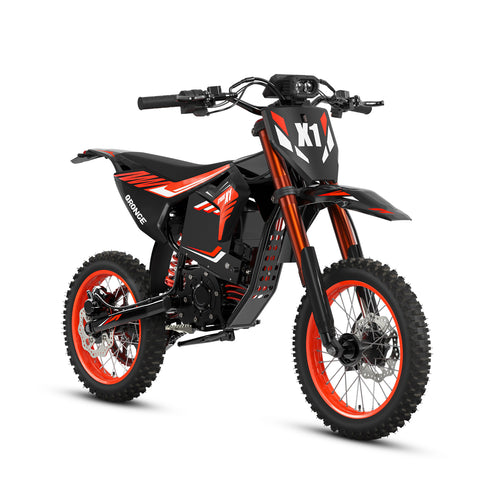
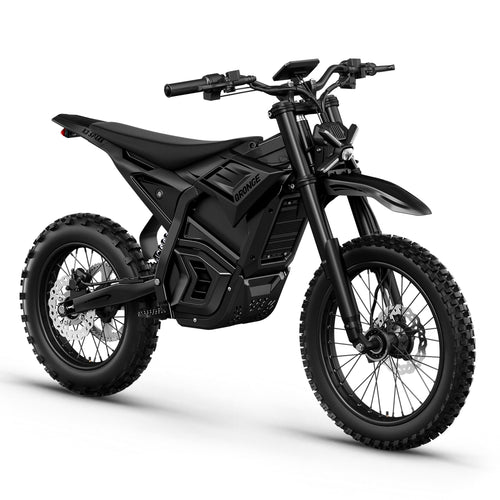
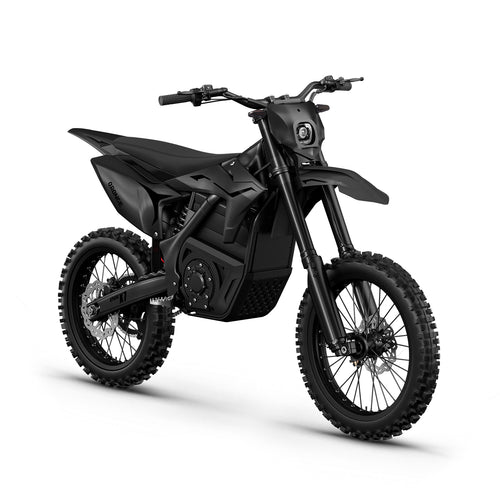
For example, the Qronge X5 Spark features a motor with 6000W peak power and 300Nm of torque. In regular off-road conditions, this power setup helps the bike handle hills and challenging terrain. However, when riding on snow or ice, how effectively that power reaches the ground still depends on tire traction.
Therefore, riders should not rely on higher motor power alone to overcome slipping in snowy conditions. Smooth throttle control, slowing down in advance, and using a gentler power mode when supported by the bike are generally more practical than suddenly increasing power.
Check Tire Size And Compatibility Before Switching To Snow Tires
Before installing studded snow tires, riders should first confirm that the tire specifications match the original rims. Different electric dirt bikes may have different front and rear wheel sizes, so tires should not be assumed to fit simply because they come from the same brand or are designed for similar off-road use.
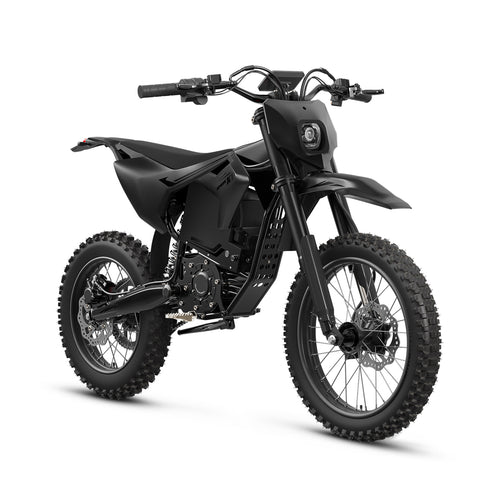
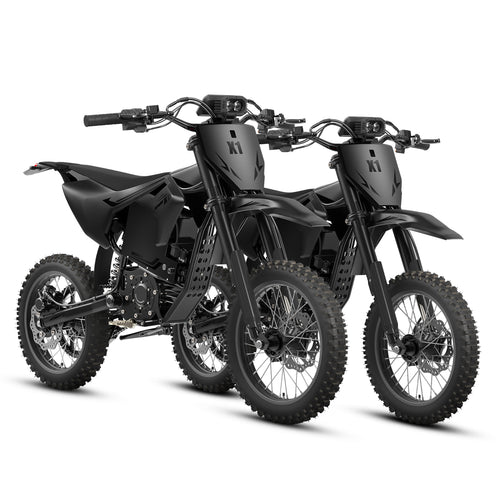
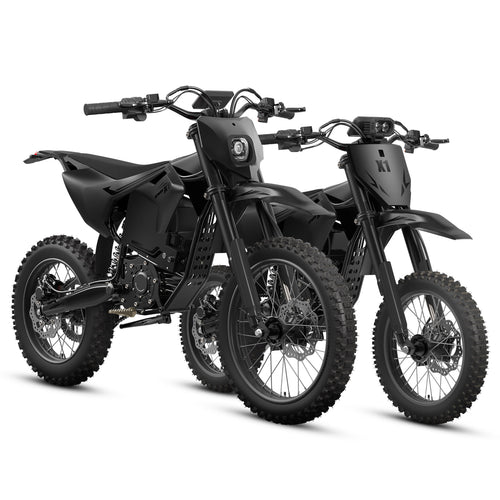
For example, Qronge models have different wheel configurations: the X1 Spark M uses 14/12-inch wheels, the X1 Spark L uses 17/14-inch wheels, and the X5 Spark uses 19/16-inch wheels. Each setup requires separate checks for compatible tire sizes, tire widths, load ratings, and frame clearance.
When using metal studs, it's especially important to check how far they protrude from the tire surface to prevent interference with the fenders, forks, swingarm, chain, or other components. Changes in tire diameter, width, or weight may also affect handling and drivetrain performance. Before making modifications, riders should confirm the installation setup with the tire manufacturer or an experienced mechanic based on the specific model's technical requirements.
Check The Battery And Bike Condition Before Riding In Cold Weather
Besides traction, cold temperatures can also affect an electric dirt bike's actual range and power performance. As temperatures drop, the usable energy and instantaneous power delivery of lithium batteries may decrease, while long climbs, deep snow resistance, and frequent acceleration can place additional demands on the battery.
Therefore, before riding in winter, riders should make sure the battery temperature is within the manufacturer's permitted operating range, plan shorter and familiar routes, and reserve enough battery power for the return trip. After riding, if the battery temperature is too low, it should be allowed to return naturally to the permitted charging temperature according to the product instructions before connecting the charger.
After riding in snow, riders should also remove accumulated snow, mud, and debris from the wheels, chain, and braking components, keep electrical connections dry, and inspect the tires for missing studs, damaged tread blocks, or other abnormalities.
Further Reading | Why Do Electric Dirt Bikes Lose Range And Power In Cold Weather?
How To Choose The Right Tires Before Your Next Winter Off-Road Ride
There is no single tire that works for every snow condition. Regular knobby tires can handle some light snow and loose trails, but specialized studded tires generally perform better on packed snow and ice. If the riding route mainly involves deep snow, riders also need to consider tire flotation, tread design, and the bike's ability to handle the terrain rather than relying solely on additional studs.
For electric dirt bikes, choosing the right tires also requires considering motor power delivery, front and rear wheel specifications, and cold-weather operating conditions. Selecting tires suited to the terrain, confirming compatibility before making modifications, and adjusting riding techniques based on available traction can help reduce unnecessary slipping and tire wear.


