





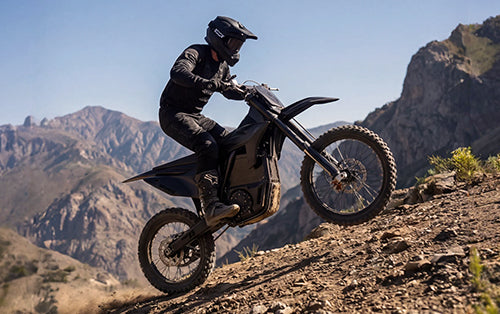



When an electric dirt bike is ridden for long periods on steep climbs, deep sand or muddy terrain, under repeated full-throttle use, or in hot conditions, the motor, controller, and battery can all generate heat. When the temperature of certain key components approaches the system’s preset protection range, some models will automatically limit power output to help prevent damage from continued high-load operation.
So, if an electric dirt bike feels normal at the start of a ride but suddenly loses acceleration after a period of demanding off-road riding, it does not necessarily mean the motor is damaged. The bike may be entering thermal derating.
What matters most is when the power loss occurs, whether performance returns after the bike cools down, and whether the problem is happening more often. If the bike repeatedly loses power after only a few minutes of light riding, or if performance does not return after it has fully cooled down, especially with error messages, a burning smell, or unusual localized heat, it should not simply be treated as normal thermal protection.
Why Does An Electric Dirt Bike Automatically Reduce Power When It Overheats?
While riding, an electric dirt bike’s power system is constantly handling electrical current and mechanical load, and some of that energy is eventually converted into heat.
Some models use temperature sensors to monitor the motor, controller, or battery. When the temperature reaches a preset protection range, the control system may first begin to gradually reduce the allowed power output. If the temperature continues to rise, it may further limit or even temporarily stop power output.
Simply put, the process can be understood as:
Sustained high load → temperature rises → the system detects that the temperature is approaching its limit → power output is reduced → further limits are applied if necessary
This active reduction in power is known as thermal derating.
It does not necessarily mean the bike has a problem. In fact, thermal protection is designed to prevent the power system from continuing to operate at excessively high temperatures.
Because different models use different temperature monitoring points, protection thresholds, and response strategies, there is no single temperature that can be used to determine whether every electric dirt bike is overheating. It is also not recommended to judge the internal system condition simply by whether the exterior feels hot to the touch.
Which Parts Of An Electric Dirt Bike Actually Heat Up While Riding?
Riders often say that “the bike is overheating,” but the heat may actually be coming from different components.
|
Component |
Common Sources of Heat |
Possible Signs |
|
Motor |
Sustained high torque, long climbs, high riding resistance |
Weaker acceleration, temperature warning |
|
Controller |
Handling high current for extended periods |
Limited output, reduced power |
|
Battery |
Sustained high discharge, hot conditions |
Reduced available output, protection system activation |
|
Connectors and Wiring |
Loose connections, damage, or poor contact |
Localized overheating, discoloration, or a burning smell |
So, if the bike feels like it is “losing power,” that does not automatically mean the motor is overheating.
The motor, controller, and battery work together as part of the power system. If any one of these components enters a protection mode, it can affect how much power ultimately reaches the wheel.
Why Does Trail Riding Make An Electric Dirt Bike Heat Up More Easily?
Temperature is not affected only by how fast the bike is going.
What matters more is:
How much load the bike is carrying and how long that load lasts.
This is why a bike may ride normally on relatively smooth ground but heat up more easily once it enters real off-road terrain.
Long, Steep Climbs
Low speed does not mean the power system is under a light load.
On a steep climb, even if the bike is moving slowly, the motor may still need to deliver high torque continuously to keep the bike, rider, and gear moving uphill.
If the climb is long and the bike continues using high power output, heat will keep building up.
So, a long, low-speed technical climb can still place a heavy thermal load on the power system.
Deep Sand, Mud, And Soft Terrain
When riding through deep sand, mud, or soft ground, the tires have to overcome greater rolling resistance.
To maintain the same riding pace, the bike often needs to produce more power. The longer that load continues, the more heat may build up in the motor and controller.
So, the same distance does not necessarily mean the same load.
Ten minutes on smooth, hard-packed dirt and ten minutes climbing through deep sand can put very different levels of stress on the power system.
Repeated Full-Throttle Use And Acceleration
A brief period of high power output does not necessarily mean the bike will overheat.
What is more likely to cause heat buildup is:
Accelerate → slow down → accelerate hard again → repeat
This is common on consecutive turns, trail exits, climbs, and technical sections.
If there is almost no lower-load riding between periods of high load, the heat generated earlier may not have enough time to dissipate before more heat is produced, causing the temperature to gradually rise.
Staying Near Maximum Output For Long Periods
The peak power listed in a product’s specifications represents a high output level that the power system can reach under certain conditions. It does not mean the bike can maintain that output indefinitely.
Reaching high power briefly and operating under sustained high load are two different working conditions.
This is also an easy point to overlook when reading electric dirt bike specifications: Peak Power is not the same as Continuous Power.
A higher peak power number alone does not tell riders how much output the bike can sustain during long climbs, deep sand, or continuous off-road riding.
Sustained High Load In Hot Weather
Outside temperature also affects cooling conditions.
When the weather is already hot, it is harder for the heat generated by the power system to dissipate into the surrounding air. If the bike is also being used for long climbs, deep sand riding, or sustained high-power output, heat may build up more quickly.
So, even on the same route, the same bike may experience different thermal conditions in cool weather than it does in hot weather.
Why Do Some Electric Dirt Bikes Overheat On The Same Trail While Others Don’t?
Thermal derating is rarely caused by a single factor.
During off-road riding, it is usually influenced by a combination of:
- Hill grade and surface resistance
- Rider and gear weight
- Tire condition and tire pressure
- Chain and drivetrain resistance
- Ambient temperature
- Current battery condition
- How well the motor and controller are matched
- Whether the stock power settings have been modified
- Cooling design and thermal protection strategy
So, a more accurate way to judge heat buildup than simply asking “how many watts does this bike have?” is this: thermal load is usually determined by the amount of load, how long it lasts, the riding environment, and the bike’s current overall condition.
For example, low tire pressure, an overly tight chain, or increased drivetrain resistance can all make the bike work harder to maintain the same riding condition.
That is also why unusual heat buildup should not be judged by looking at the motor alone.
How Can You Tell Normal Thermal Protection From A Real Problem?
This is one of the most important things to determine when the bike suddenly loses power.
|
Situation |
More Likely Normal Thermal Protection |
More Likely to Need Further Inspection |
|
Happens after a long climb, deep sand, or sustained high load |
✓ |
|
|
Power returns after the load is reduced and the bike fully cools down |
✓ |
|
|
Happens repeatedly after only a few minutes of light riding |
✓ |
|
|
Happens sooner with each ride |
✓ |
|
|
Shows a temperature warning right after a cold start |
✓ |
|
|
Power does not return even after the bike fully cools down |
✓ |
|
|
There is a noticeable burning smell, discoloration, or melted connectors |
✓ |
|
|
Frequent error messages begin after a crash, impact, or water exposure |
✓ |
One thing is especially important to understand:
An Overheat Warning does not always mean the bike is physically overheating.
If the temperature sensor, external wiring, connections, or control system has an issue, it may also produce abnormal temperature readings.
For example, some riders have experienced temperature errors or power cutouts during normal riding without any obvious high load, or only after an impact or water exposure.
In these situations, troubleshooting should go beyond simply “letting the motor cool down.”
If the bike repeatedly shows abnormal temperature warnings while cold or under a light load, a better approach is to record the error message and the conditions in which it appears, then have the issue checked further instead of repeatedly testing the bike under high load.
What Should You Do If Your Electric Dirt Bike Suddenly Loses Power Mid-Ride?
If you notice a clear drop in power during off-road riding, or if a temperature warning appears on the display, do not keep using full throttle just to see whether the bike “can still run.”
1. Reduce Power Demand And Find A Safe Place To Stop
If the bike is actually in thermal protection mode, continuing to ride under high load will only cause more heat to build up.
Once you find a safe place to stop, let the bike come out of high-load operation.
2. Check The Warning Information On The Display
Look for temperature warnings, error codes, or other alerts.
If the bike can identify errors from different systems, record the specific message and note the riding conditions at the time, such as:
- Whether you had just finished a long climb
- Whether you were riding in deep sand or mud
- Whether you had been using a higher-power riding mode for an extended period
- Whether the ambient temperature was high
This information is more useful for identifying the cause than simply saying, “the bike suddenly lost power.”
3. Let The Bike Cool Down Naturally
There is no single rule for how many minutes an electric dirt bike must cool down.
Actual cooling time depends on which component is hot, the bike’s design, the ambient temperature, and the temperature at the time.
A better approach is to follow the bike’s own warnings and the instructions for that specific model, rather than waiting a fixed five or ten minutes and immediately returning to high-load riding.
4. Check For Visible External Issues
After stopping, look for:
- Heavy buildup of mud, sand, or debris
- Damage to external wiring
- Obvious discoloration around connectors
- An unusual burning smell
- Unusual resistance from the tires or drivetrain
These are basic visual checks.
If the issue involves the inside of the battery or controller, motor disassembly, or electrical wiring modifications, it is not recommended to take those components apart yourself.
5. If The Problem Keeps Returning After Cooldown, Have It Checked Further
If the bike has fully cooled down but the same problem quickly returns during normal riding, it should not simply be blamed on “riding too hard earlier.”
At that point, the temperature sensor, wiring, controller, motor, or other related systems may need further inspection.
Further Reading: If you want to learn whether it is safe to charge the battery immediately after riding while it is still warm, and what types of heat from the battery, charger, or charging port deserve attention, read “Is It Normal for an Electric Dirt Bike to Get Hot While Charging?”
How Can You Reduce Unnecessary Heat Buildup During Trail Riding?
The motor, controller, and battery all generate some heat during normal operation, so the goal is not to keep the entire power system cool at all times.
What matters more is reducing unnecessary sustained high thermal load.
Adjust Power Output Based On Trail Conditions
Not every off-road section requires the highest power mode.
On smoother trails or connecting sections, reducing power demand when appropriate can help limit sustained high-current output and give the system more time to recover.
Pay Attention To The Bike After Long Climbs
If you have just completed a long technical climb and the next section still includes deep sand, mud, or repeated steep climbs, pay closer attention to any changes in power or temperature warnings.
The point is not to set a rule for how often you must stop, but to avoid long periods of continuous high-intensity riding with no lower-load sections.
Keep The Tires And Drivetrain In Normal Condition
Tire condition, tire pressure, the chain, and other drivetrain components all affect how much resistance the bike has to overcome while moving.
If mechanical resistance increases significantly, the motor may have to work harder to complete the same route.
That is why basic checks before and after off-road riding are not only about wear. They can also affect how the bike performs on the next ride.
Clean Off Mud And Debris
After riding in mud or sand, clean away built-up mud, sand, and other debris according to the bike’s instructions.
When cleaning, do not spray electrical connection points directly with high-pressure water, and avoid improper cleaning while the bike is still noticeably hot.
Do Not Increase Power System Output Without Proper Consideration
After replacing the battery or controller, or changing output settings, the operating conditions of the originally matched power system will also change.
Being able to set a higher output does not mean the stock motor, battery, and other components are designed to handle that new load continuously.
If the bike begins overheating or losing power more easily after modifications, first consider whether the power system components are properly matched rather than simply looking for stronger cooling.
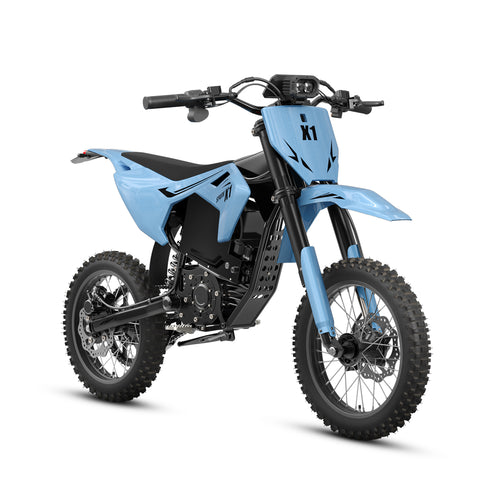
X1-M-L
Does A Higher Peak Power Electric Dirt Bike Always Overheat More Easily?
Not necessarily. Thermal performance cannot be judged by peak power alone.
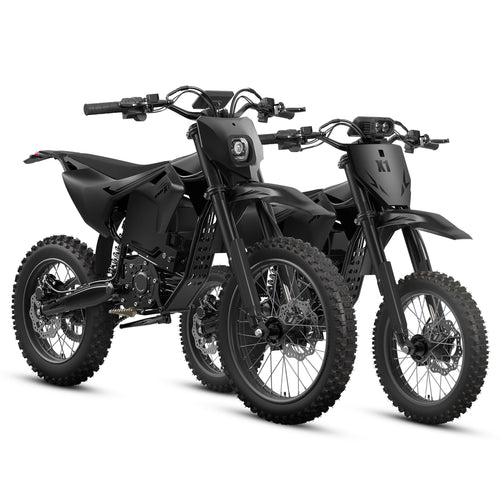
For example, the Qronge X5 Spark uses a 6000W peak motor, while the X7 Spark uses a 12000W peak motor. These figures mainly reflect the different power levels of the two models and, by themselves, do not determine which bike is more likely to trigger thermal protection.
What really needs to be considered together is:
Motor + controller + battery + output settings + cooling design + actual riding load
If the entire power system is properly matched for the intended output, a higher peak power rating does not necessarily mean the bike will overheat more easily.
Likewise, if one part of the power system is not properly matched to the actual output, noticeable heat buildup can still occur during sustained high-load riding even if the peak power figure is not especially high.
So, when choosing an electric dirt bike, it is not enough to ask, “What is the maximum wattage?” The actual riding route and riding intensity should also be taken into account.
When Power Drops, What Matters Most Is When It Happens
A temporary drop in power after long climbs, deep sand, mud, or sustained high-load riding may mean the system is entering thermal derating. To determine whether further inspection is needed, the key is whether the bike returns to normal after cooling down and whether the same problem starts occurring under lighter loads.
If temperature warnings are triggered frequently during normal riding, the bike does not recover after cooling down, or the issue is accompanied by a burning smell, unusual error codes, or localized overheating, you should not keep testing the problem by repeatedly riding the bike.
⚡ If power loss keeps happening, first consider the riding load and temperature changes before deciding whether to continue riding.
🏍️ Explore Qronge Electric Dirt Bikes For Sale


